Abstract
Soft starter technology has emerged as a pivotal solution for controlling the motor starting process within pump systems. Compared to traditional Direct-On-Line (DOL) starting methods, soft starters for pump systems can significantly reduce starting current, minimize mechanical stress, and enhance overall system reliability.
Pump motor soft starters facilitate smooth motor acceleration by gradually increasing the voltage applied to the motor during the startup phase, thereby preventing sudden mechanical and hydraulic shocks to piping and mechanical components. This controlled starting process helps mitigate the water hammer effect, reduce equipment wear, and extend the service life of both the motor and the pump.
This paper introduces the operating principles of soft starters, analyzes the challenges associated with traditional pump motor starting methods, and explains how soft starters enhance pump system performance. Furthermore, the paper explores practical applications of soft starters, highlighting the solutions provided by Zhejiang Xinhang Electric Co., Ltd. (Zhejiang NENA Electric Co., Ltd.)—a manufacturer specializing in industrial motor control and soft starter solutions for pump systems.
1.Introduction to Soft Starter Technology
What is a Soft Starter?
A soft starter is an electronic device designed to control the motor starting process by gradually increasing the voltage applied to the motor. Unlike Direct-On-Line (DOL) starting, which applies full voltage instantaneously, a soft starter enables the motor to accelerate smoothly.
This technology is particularly crucial for pump applications, as pumps are highly susceptible to sudden mechanical and hydraulic shocks. Pump soft starters ensure controlled acceleration, thereby protecting both the motor and the piping system.
Basic Operating Principles of Motor Soft Starters
Semiconductor devices, such as Thyristors (SCRs), are utilized to regulate the voltage supplied to the motor.
The starting sequence typically involves:
- Reduction of the initial motor voltage
- Gradual increase in voltage
- Smooth motor acceleration
- Application of full voltage once the rated speed is reached
NENA Soft Starter Starting Mode Description:
1.Point tests
This method is used for the aging of the whole soft starter. This method can trigger the thyristor for a long time with a certain conduction Angle, which can save energy and carry the motor or bulb fo a long time.
Related parameters: soft stat mode,starting voltage
Parameter setting: "start mode"=fixed point test,"start voltage"=25%
2.Voltage ramp
The voltage ramp method initiates motor operation by controlling the soft starters output voltage rise rate. This gradual transition from baseline to rated voltage ensures smooth acceleration throughout startup. By adjusting the initial voltage, operators can enhance the motors starting torque. To prevent current overloads, a current limiting multiplier factor can be configured. The setting of the current limiting multiple should be determined according to different load types. The value should be as small as possible without affecting the start, and the value should be set to the maximum if the current limiting function is not required. The characteristic curve is shown in Figure 7-1, and the empirical parameters are referenced in Table 7-1.
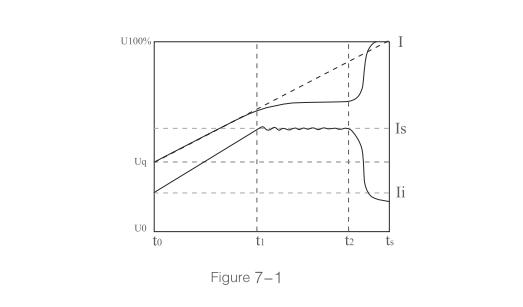
Related parameters: soft start mode, starting voltage, rated current, current limiting
multiple, starting time
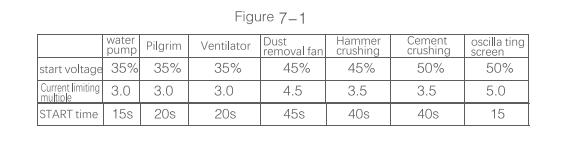
Note: This method is not suitable for motor shaft end operating conditions without load.During no-load connection,the low mechanical inertia may cause the motor to enter a vibration zone, which is normal. You can set the "current limiting multiplier"<2.0 times to eliminate this effect. After connecting actual loads, adjust this parameter accordingly. Typically such operational conditions only occur during testing.Rest assured, its safe to use.
3.constant current
The characteristic curve for the constant-current mode is shown in Figure 7-2. Unlike the voltage ramp mode, this method undergoes a very brief ramp phase before rapidly entering current-limiting mode, where it remains until the startup process is complete. Refer to Table 7-2 for reference values for empirical parameters.
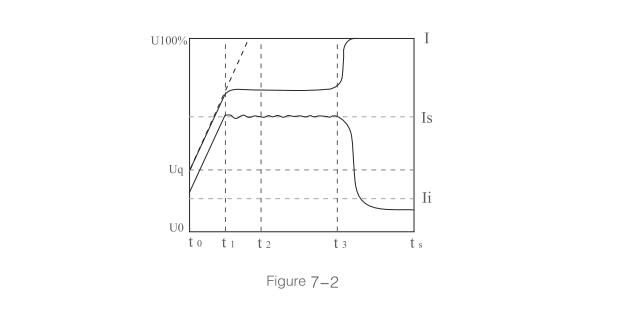
Related parameters: soft start mode, starting voltage, rated current, current limiting multiple, starting time Parameter setting: "start mode"= constant current, "starting voltage"=45%, and "rated current"

4.Current ramp
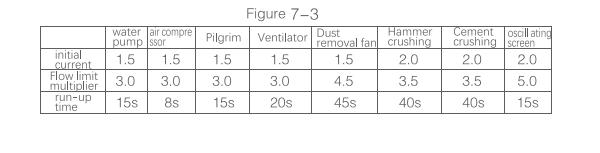
The current ramping method uses current as the control target, with the current gradually increasing according to a preset ramp throughout the startup process until reaching the set current multiplier. This method demonstrates exceptional load adaptability, delivering optimal
startup performance for both high-inertia and low inertia loads. The characteristic curve is shown in Figure 7-3, and parameter settings should be referenced from Table 7-3.
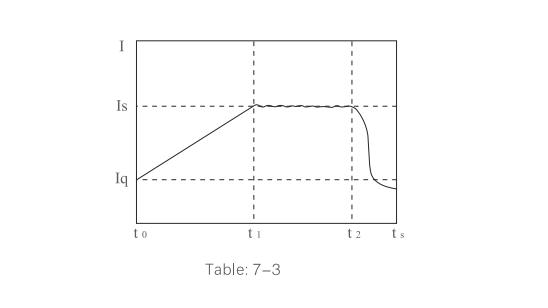
Related parameters: soft start mode, starting voltage,rated current, current limiting
multiple,starting time Parameter setting: "start mode" = constant current,"starting voltage"=45%, and "rated current"
2.Challenges Associated with Traditional Pump Motor Starting (Without a Soft Starter)
In the absence of a soft starter, pump motors typically employ Direct On-Line (DOL) starting. While simple, this method presents several challenges:
- High Inrush Current Surges
- During direct starting, the motor's starting current can reach 6 to 8 times its rated current.
- These high currents can cause voltage fluctuations within the power grid, disrupting the stable operation of other electrical equipment.
- Significant Mechanical Stress on Pumps and Piping
- Instantaneous torque spikes can impose excessive mechanical stress on the pump shaft, couplings, and bearings, thereby accelerating wear and tear.
- Risk of Water Hammer and Hydraulic Shock
- Rapid changes in water flow velocity can trigger the "water hammer" effect, potentially damaging pipes, valves, and other system accessories.
- Compromised Lifespan of Electrical Systems and Equipment
- Frequent starting under high-current conditions accelerates the aging of motor insulation and increases wear on electrical components.
3. How Soft Starters Enhance Pump System Performance (With a Soft Starter)
By facilitating a controlled acceleration of the motor, soft starters enable a smooth pump startup, thereby improving overall system performance:
- Smooth and Controlled Motor Acceleration
- Voltage is ramped up gradually, allowing the pump to reach its operating speed smoothly and minimizing mechanical shock.
- Reduced Starting Current and Voltage Drop
- The reduction in starting current prevents sudden voltage dips within the power grid, thereby enhancing the stability of the electrical system.
- Minimized Pump Vibration and Mechanical Wear
- Smooth starting reduces impact forces, extending the operational lifespan of the pump shaft, couplings, and bearings.
- Enhanced Overall System Reliability
- Stress on both electrical and mechanical systems is minimized, leading to a reduction in failure rates.
Comparison of Pump Starting Effects: With vs. Without a Soft Starter
|
Advantage Category
|
Specific Function
|
Comparative Effect
|
|
Reduced Mechanical Stress
|
Gradual startup prevents sudden torque surges
|
Direct starting often leads to premature wear of pump shafts, couplings, and bearings
|
|
Prevention of Water Hammer and Hydraulic Shock
|
Smooth acceleration ensures stable water pressure
|
Direct starting can trigger water hammer, damaging pipes and valves
|
|
Enhanced Energy Efficiency
|
Low starting current minimizes energy loss
|
Direct starting involves high current, resulting in wasted energy
|
|
Extended Equipment Lifespan
|
Alleviates electrical and mechanical stress, prolonging service life
|
Frequent direct starts accelerate motor insulation aging, shortening equipment lifespan
|
|
Reduced Maintenance Costs
|
Stable system operation leads to a low failure rate
|
Direct starting is prone to causing equipment malfunctions, increasing maintenance frequency
|
4. Typical Applications of Water Pump Soft StartersWater Supply Systems
Municipal and industrial water supply systems rely on stable water pump operation.
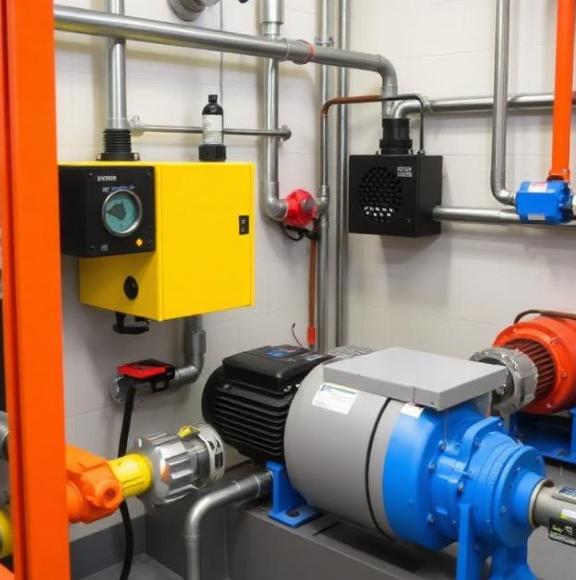
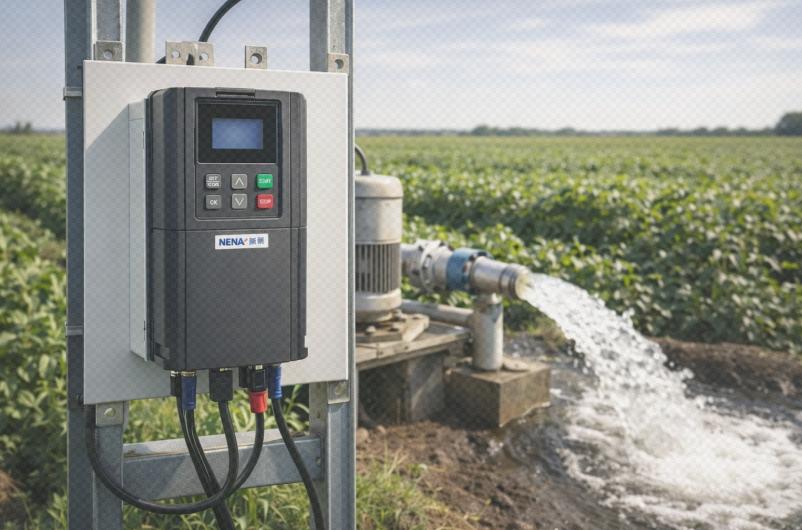
Agricultural Irrigation Pumps
Soft starters protect irrigation pumps from the effects of frequent start-stop cycles.
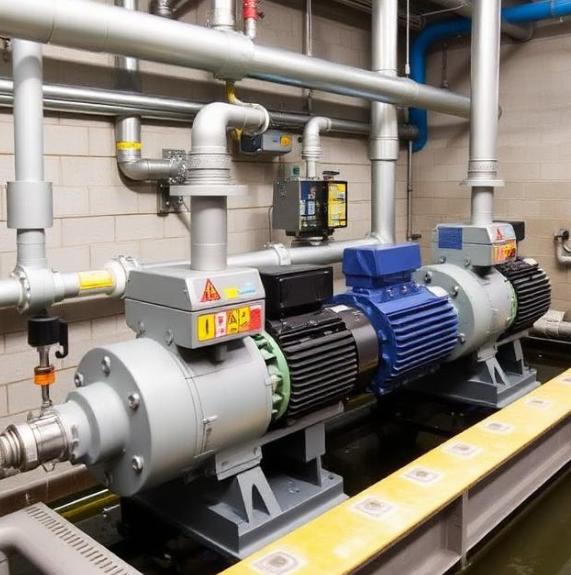
Note: This image was generated by AI.
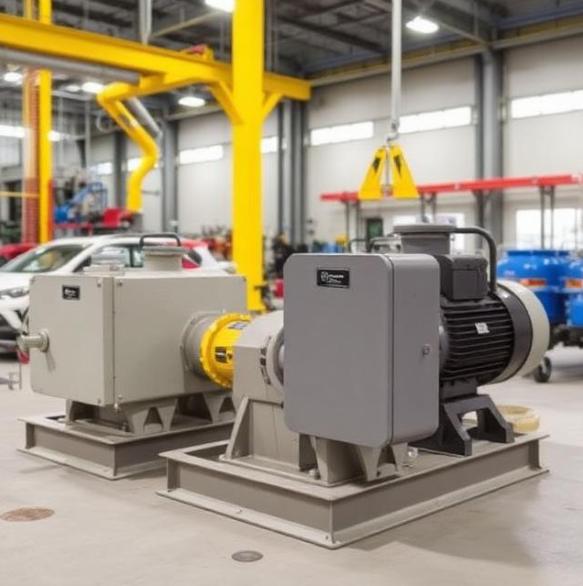
Industrial Pumping Systems
Widely applied in industries such as chemicals, oil and gas, and manufacturing.
Wastewater and Sewage Treatment Plants
Help prevent hydraulic shock in sewage pipelines.
Fire Pump System
Ensures that the pump starts reliably in an emergency.
5. Zhejiang Xinhang Electric Co., Ltd. (Zhejiang NENA Electric Co., Ltd.) Soft Starter Solutions
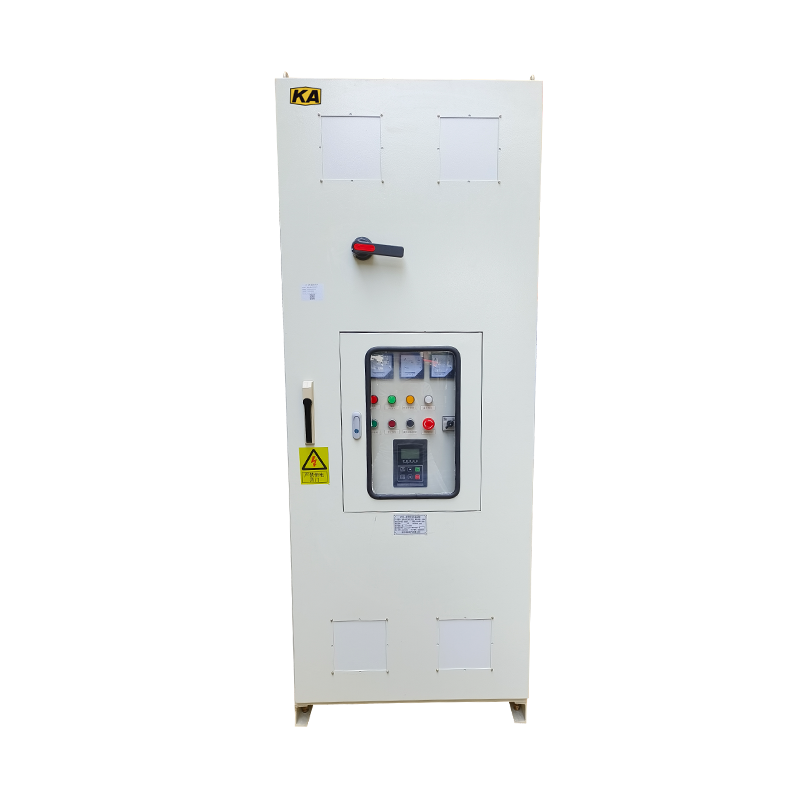
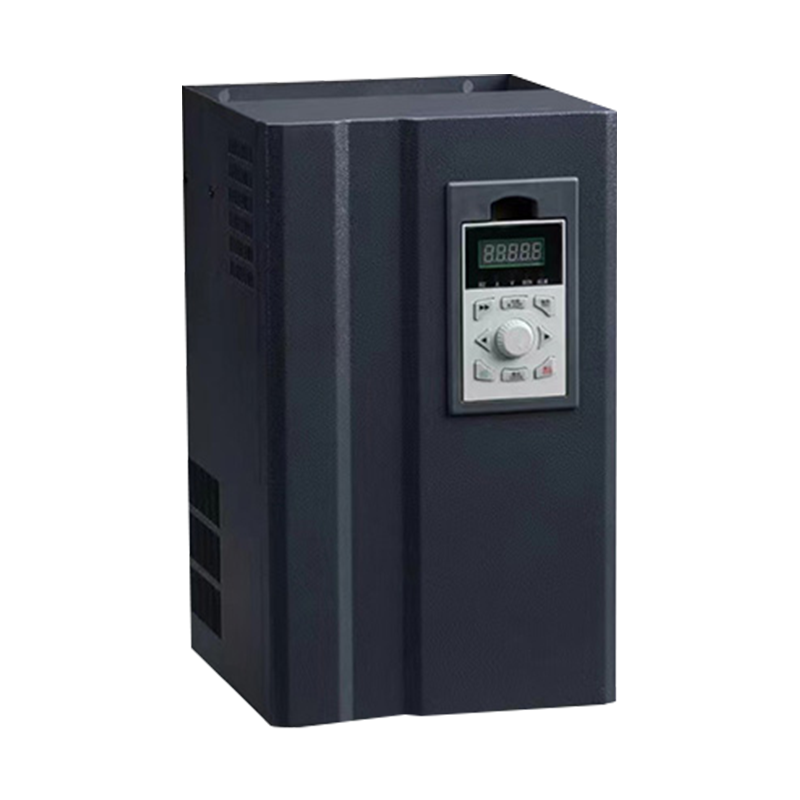
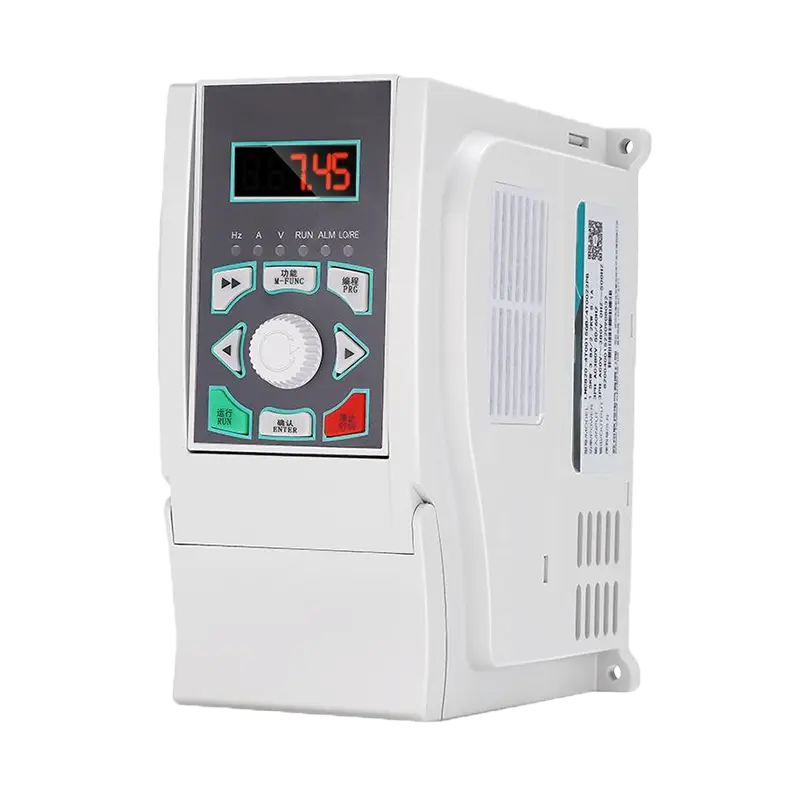
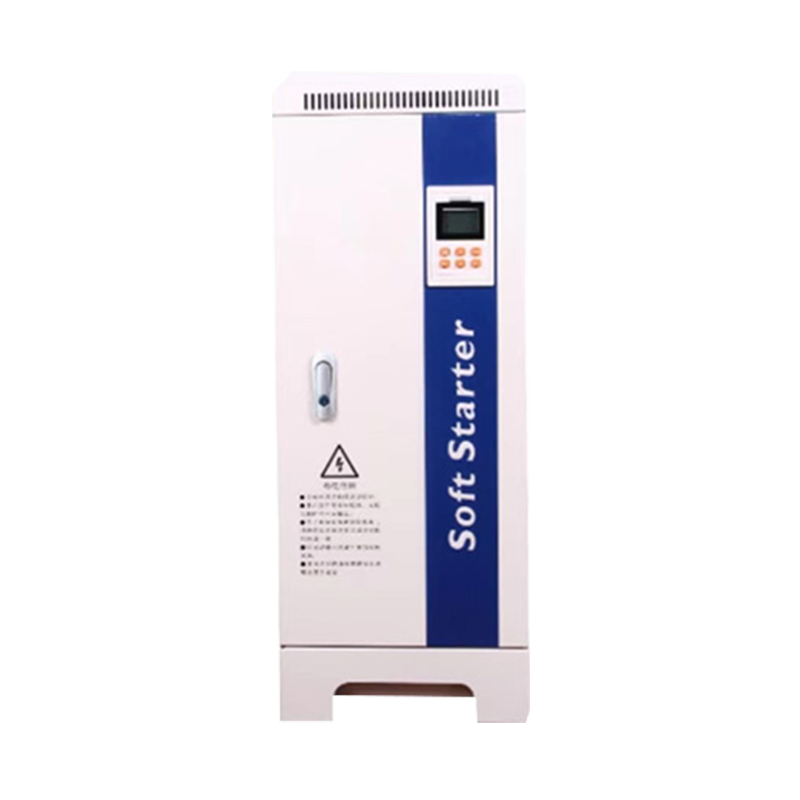
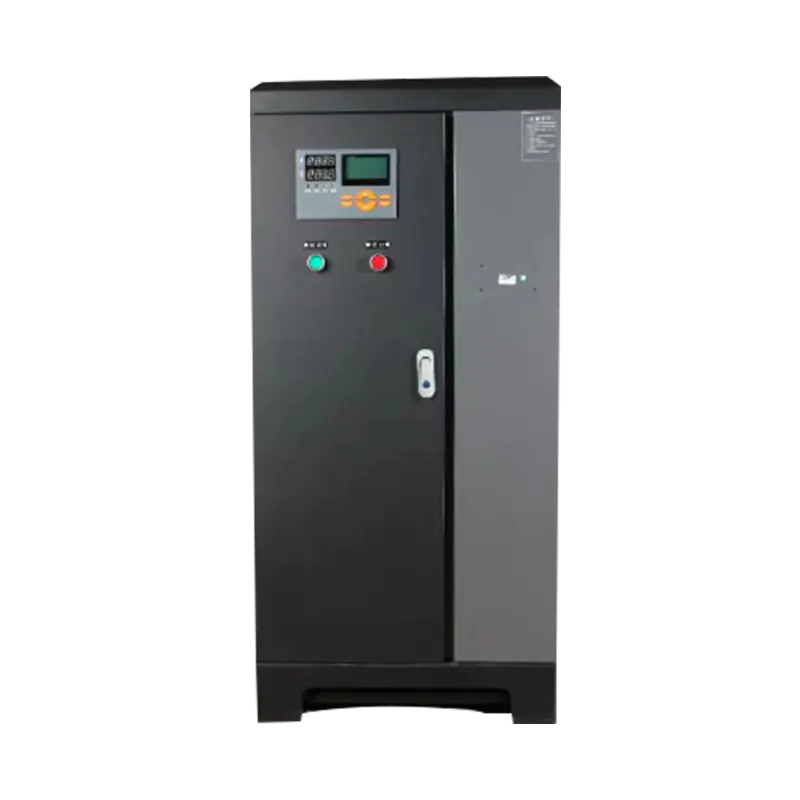
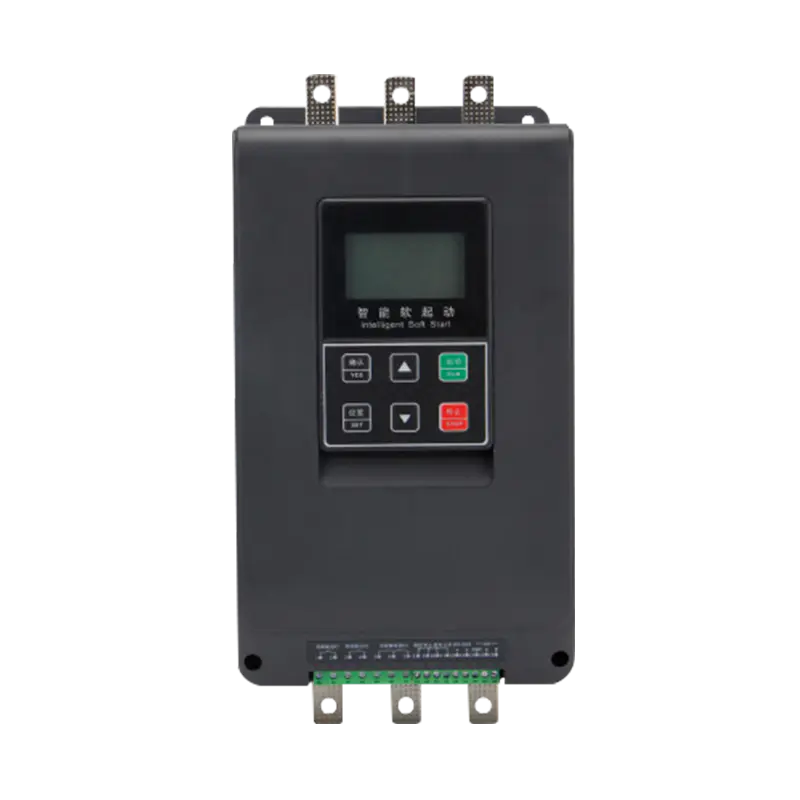
Zhejiang Xinhang Electric Co., Ltd. specializes in the manufacturing of motor control equipment, including advanced soft starters designed for industrial motors and pump systems.
Key Features of NENA Soft Starters in Pump Applications
Intelligent Protection and Control Functions
NENA soft starter protection functions may include:
1.short-circuit protection
2.Overcurrent protection
3.Overheat protection
4.overload protection
5.Voltage is out of phase
6.Power loss balance
7.Instant stop
8.Under-voltage protection
9.Overvoltage protection
10.Possible fault causes
11.Underload
12.Phase sequence error
NENA soft starters are widely applicable to all three-phase squirrel-cage asynchronous motors and are typically used for water pumps, air compressors, belt conveyors, fans, cranes, crushers, vibrating screens, ball mills, grinders, and similar equipment.
6. Selecting the Appropriate Soft Starter for Pump Systems
Input Voltage and Phase
Ensure compatibility with power supply specifications.
Output Voltage, Phase, and Power
The soft starter must match the motor's rated power and voltage.
Pump Type and Load Characteristics
Different types of pumps require distinct starting characteristics.
Environmental and Installation Conditions
Consider factors such as temperature, humidity, dust concentration, and available installation space.
Protection and Control Functions
Advanced protection features enhance operational safety; furthermore, the use of external keypads and PLC control enables intelligent industrial automation.
7. Comparison of Soft Starters vs. Variable Frequency Drives in Pump Applications
In pump systems, both soft starters and Variable Frequency Drives (VFDs) are utilized for motor control.
|
Featurer
|
Soft Starter
|
Variable Frequency Drive (VFD)
|
|
Motor Starting
|
Smooth Start
|
Smooth Start
|
|
Speed Control
|
No
|
Yes
|
|
Energy Savings
|
Moderate
|
High
|
|
Cost
|
Lower
|
Higher
|
|
Applications
|
Fixed-Speed Pumps
|
Variable-Speed Pumps
|
For fixed-speed pumping systems requiring simple and reliable motor starting, soft starters are typically the preferred choice.
Conclusion
Soft starters play a vital role in modern pumping systems, enabling smooth motor starts, reducing electrical and mechanical stress, and enhancing system reliability. Compared to traditional motor starting methods, soft starters for pumping systems significantly improve equipment protection and operational efficiency.
The advanced solutions offered by Zhejiang NENA Electric Co., Ltd. help pumping systems achieve safer operation, superior performance, and extended equipment service life. As the demands for efficiency and reliability continue to rise across various industries, soft starter technology will remain an indispensable and critical component within pumping motor control systems.



 English
 中文简体
中文简体 عربى
عربى




 浙公网安备33038202003754号