【Abstract】
With the continuous upgrading of building energy efficiency standards and the trend toward larger-scale HVAC (Heating, Ventilation, and Air Conditioning) systems, efficient and smooth starting control of fan motors has become one of the core topics in engineering design. The inrush current caused by traditional Direct-On-Line (DOL) starting can reach 6–8 times the motor's rated current, causing severe damage to the power grid, mechanical drive trains, and equipment service life. The Built-in Bypass Soft Starter, as a new generation of motor control technology, deeply integrates thyristor (SCR) soft starting with a built-in bypass contactor into a single unit. It achieves smooth reduced-voltage starting while automatically switching to bypass operation upon completion of the start-up process, thereby completely eliminating the long-term on-state conduction losses of power electronic devices. This paper presents a systematic discussion on the application of built-in bypass soft starters in HVAC fan systems from the dimensions of technical principles, system architecture, performance comparison, HVAC scenario adaptation, and engineering practice, aiming to provide authoritative reference for engineers and procurement decision-makers.
【Keywords】Built-in Bypass Soft Starter; HVAC Fan System; Motor Soft Starting; Energy-Saving Control; Heating, Ventilation and Air Conditioning; Motor Protection
Introduction
The Heating, Ventilation, and Air Conditioning (HVAC) system is one of the largest energy-consuming subsystems in modern buildings, accounting for 40%–60% of total building energy consumption. Fans, as the core actuating components of HVAC systems, undertake the critical functions of air circulation, heat exchange, and fresh air delivery. In large commercial buildings, industrial plants, data centers, and medical facilities, the power rating of HVAC fan motors typically ranges from tens of kilowatts to several hundred kilowatts. The starting control method directly affects the system's reliability, energy efficiency performance, and operating costs.
The traditional Direct-On-Line (DOL) motor starting method is simple and straightforward; however, the surge current generated at the instant of starting (typically 6–8 times the rated current) causes significant impact on the power supply network, leading to voltage sags, nuisance tripping of circuit breakers, and interference with adjacent equipment. For fan loads, the sudden torque surge also accelerates mechanical wear on belts, couplings, and impeller bearings, significantly shortening the service life of the equipment.
Soft starter technology achieves a smooth transition of motor terminal voltage from a low value to the rated value through thyristor (SCR) phase control, effectively suppressing starting surges. However, in conventional online soft starters, the thyristors remain in a conducting state even after the motor reaches full-speed operation, generating an on-state voltage drop loss of approximately 1.5%–2.5%. The cumulative thermal losses from long-term operation are not negligible. To address this issue, the built-in bypass soft starter was developed — upon completion of the soft starting task, it automatically closes the built-in bypass contactor, directing the main current directly to the motor and completely bypassing the power electronic devices, thus combining the advantages of soft-start protection with direct-run efficiency.
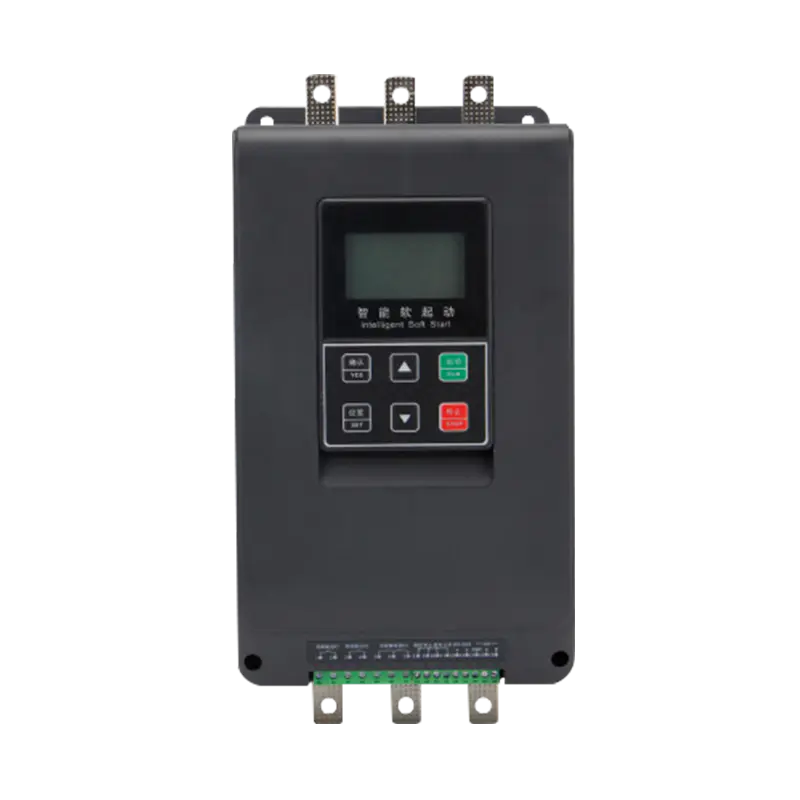
Zhejiang NENA Electric Co., Ltd. has been deeply engaged in the field of motor control for many years, committed to providing high-quality and high-reliability built-in bypass soft starter solutions for the HVAC industry. This paper systematically elaborates on the working principles, core advantages, and engineering practices of this technology in HVAC fan systems
Starting Characteristics and Technical Challenges of HVAC Fan Systems
2.1 Starting Characteristics of Fan Loads
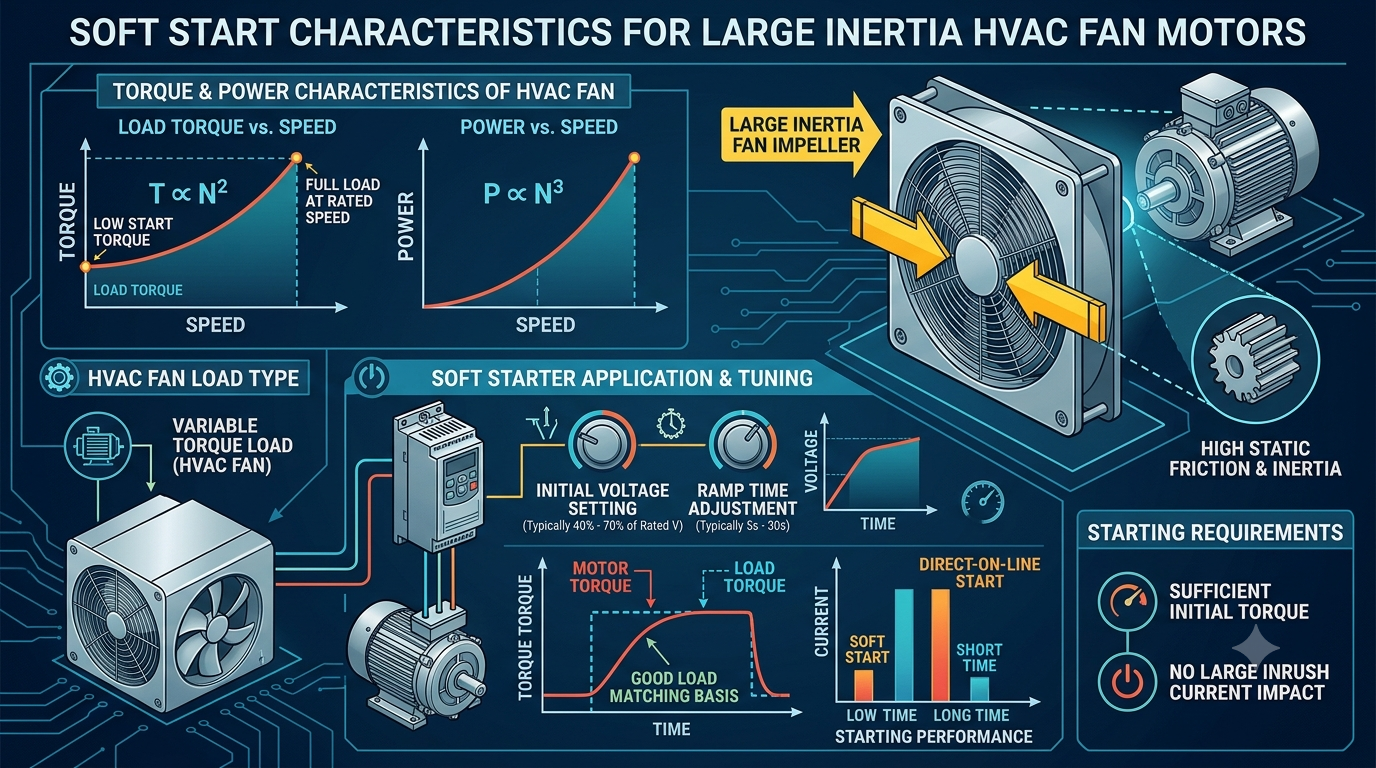
HVAC fans are physically classified as variable torque loads (square torque loads), where the load torque is proportional to the square of the speed, and the power is proportional to the cube of the speed. Specifically: at the initial stage of starting when the speed is low, the load torque is extremely small; as the speed increases, the load torque rises rapidly, reaching full-load conditions at rated speed. This characteristic means that the demand for driving torque during the fan starting process is relatively gentle, providing a favorable load-matching foundation for the application of soft starting technology.
However, large-inertia fan impellers (especially large-diameter axial fans and centrifugal fans) need to overcome significant static friction and inertial forces during the starting phase, requiring the starting device to provide sufficient initial torque while not generating excessive surge current. This places high demands on the fine adjustment of the soft starter's initial voltage setting (typically 40%–70% of rated voltage) and ramp time (typically 5–30 seconds).
2.2 Main Drawbacks of Traditional Starting Methods
Before the widespread adoption of built-in bypass soft starters, the common motor starting methods in HVAC engineering mainly included the following three, each with non-negligible limitations:
- Direct-On-Line (DOL) Starting: The simplest operation with the lowest cost, but it produces the largest inrush current (6–8 times the rated current), causes severe mechanical shocks, has a significant impact on the power grid, and is unsuitable for large-power fan applications.
- Star-Delta (Y-△) Reduced-Voltage Starting: It can reduce the starting current to 1/3 of that of direct-on-line starting; however, the secondary surge current generated during the switching transient is still considerable. Moreover, it can only provide a fixed starting voltage of 33% of the rated voltage, offers poor adjustment flexibility, and is not suitable for applications requiring fine control.
Autotransformer Reduced-Voltage Starting: It provides relatively high starting torque, but the equipment is bulky and costly. It also suffers from surge current during switching and requires complex maintenance.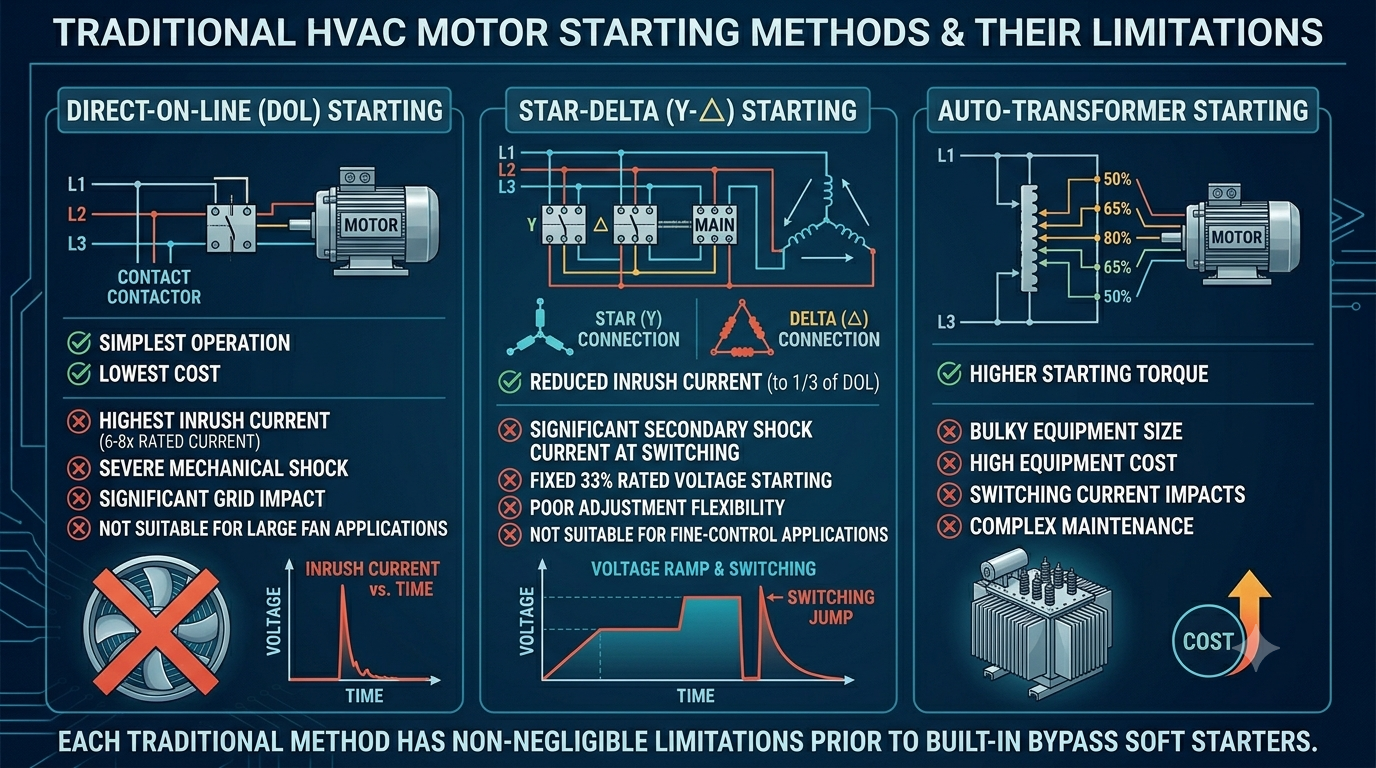
2.3 Limitations of Online Soft Starters
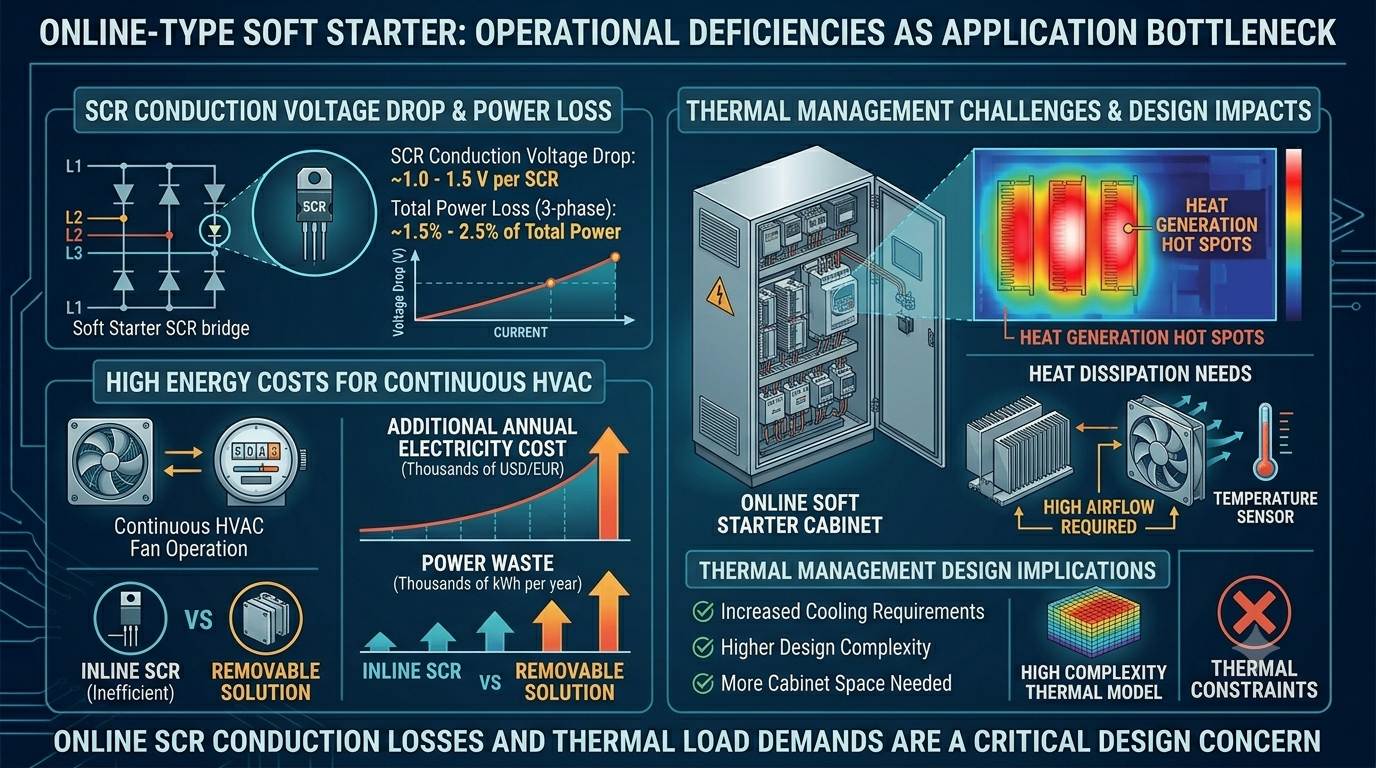
The online soft starter effectively addresses the issue of starting current surges; however, its inherent drawbacks during the operating phase have gradually become bottlenecks restricting its application. The on-state voltage drop of a thyristor under rated current is approximately 1.0–1.5 V per device. Based on a three-phase full-bridge circuit, the power loss during normal operation accounts for approximately 1.5%–2.5% of the total power. For continuously operating HVAC fans, this translates to tens of thousands of kilowatt-hours of additional electricity costs annually, while also generating a substantial amount of heat dissipation. This imposes higher demands on the thermal management design of the control cabinet.。
Technical Principles of Built-in Bypass Soft Starters
3.1 Core Operating Principles
The operating process of a Built-in Bypass Soft Starter can be divided into three distinct phases:
- Phase 1 — Soft Starting Phase: Upon receiving a start command, the control system employs a PWM phase-angle modulation algorithm to precisely control the firing angle of the thyristors (SCRs), causing the effective voltage applied across the motor stator windings to increase linearly from a preset initial value (typically 40%–70% of rated voltage) along a defined ramp, until it reaches the mains rated voltage. This process limits the starting current to 2–5 times the rated current (significantly lower than the 6–8 times associated with direct-on-line starting), while simultaneously achieving smooth torque ramp-up and eliminating mechanical shock.
- Phase 2 — Bypass Switching Phase: When the motor current is detected to have dropped to the steady-state operating level (typically 85%–105% of rated current), or when the soft-start ramp time has elapsed, the controller issues a close command to the built-in bypass contactor. Upon closure of the bypass contactor, the main circuit current bypasses the thyristor module and flows directly to the motor through the low-impedance bypass contacts, after which the thyristors are immediately turned off and withdrawn from operation.
- Phase 3 — Steady-State Operation Phase: The motor operates at full voltage under the support of the bypass contactor, and the overall system efficiency is equivalent to that of direct contactor control. Meanwhile, the integrated comprehensive protection functions (overload, undervoltage, phase loss, overtemperature, etc.) continuously monitor the motor operating status to ensure system safety.
3.2 Main Circuit Topology
The main circuit of a built-in bypass soft starter consists of two parallel branches: one is a three-phase anti-parallel thyristor (SCR) bridge, responsible for voltage regulation during the soft-starting phase; the other is a built-in bypass contactor, responsible for low-loss direct conduction during the running phase. The switching between the two branches is precisely coordinated by the microprocessor control unit, ensuring surge-free, arc-free, and smooth transitions.
Compared with the external bypass scheme (i.e., a soft starter and an external bypass contactor installed separately), the built-in bypass scheme integrates the bypass contactor and the soft starter within the same enclosure, eliminating the complexity of external wiring and potential failure points, thereby further enhancing system reliability and integration.
3.3 Protection and Control Functions
Modern built-in bypass soft starters incorporate a comprehensive intelligent protection system, primarily including:
- Motor Protection Electronic overload protection, locked-rotor protection, underload (no-load) protection, unbalance protection
- Power Quality Protection Overvoltage/undervoltage protection, phase-loss protection, phase-sequence protection
- Device Self-Protection Thyristor overtemperature protection, heatsink temperature monitoring
- Communication & Monitoring RS485 / Modbus RTU communication interface, supporting BAS/BMS system integration with real-time uploading of operating parameters
Performance Comparison of Built-in Bypass Soft Starters with Other Starting Methods
To visually demonstrate the comprehensive advantages of built-in bypass soft starters over other common starting methods, Table 1 provides a multi-dimensional comparison of four main starting control approaches.
Table 1 — Comprehensive Performance Comparison of Different Motor Starting Methods
|
Comparison Item
|
Direct-on-Line Starting
|
Star-Delta Starting
|
Online Soft Starter
|
Bypass-Integrated Soft Starter
|
|
Starting Current
|
6~8×In
|
2~3×In
|
2~5×In (adjustable)
|
2~5×In (adjustable)
|
|
Mechanical Shock
|
Severe
|
Moderate
|
Minor
|
Minor
|
|
Operating Efficiency
|
High
|
High
|
Medium (with SCR losses)
|
High (bypass operation)
|
|
Operating Heat Loss
|
Extremely Low
|
Extremely Low
|
1.5%~2.5%
|
<0.1% (bypass mode)
|
|
Installation Size
|
Compact
|
Medium
|
Medium
|
Medium (compact integration)
|
|
Parameter Adjustability
|
None
|
Limited
|
Comprehensive
|
Comprehensive
|
|
Protection Functions
|
Basic
|
Basic
|
Comprehensive
|
Comprehensive
|
|
BAS/BMS Integration
|
Not Supported
|
Not Supported
|
Supported
|
Supported
|
|
Overall Cost
|
Low
|
Low to Medium
|
Medium
|
Medium (significant long-term savings)
|
As can be seen from the table above, the built-in bypass soft starter achieves a qualitative leap over the online soft starter in three key indicators — operating efficiency, thermal loss control, and system integration — while fully retaining all the advantages of soft starters in terms of starting control precision and comprehensive protection.
Application Advantages in HVAC Fan Systems
5.1 Significantly Reduces Starting Shock and Protects Electrical Infrastructure
In large HVAC systems, multiple fan motors may start simultaneously (e.g., morning startup in buildings, group control startup of central air conditioning systems). If direct-on-line starting is used, the superimposed inrush current can easily cause distribution transformer overload alarms, bus voltage sags, and even protective tripping.
The built-in bypass soft starter limits the peak starting current of each fan motor to
2~3.5 times the rated current.
This not only greatly reduces the shock of individual motors but also leaves sufficient margin for the capacity planning of building electrical systems. It helps reduce the selection capacity of transformers and distribution equipment, saving initial investment costs.
5.2 Extends the Service Life of Fan Mechanical Transmission Systems
The main mechanical wear of fans occurs during startup. For belt-driven fans, the drive belts, and for direct-coupled fans, the couplings and impeller bearings are highly prone to tearing, pitting, and fatigue cracks under the instantaneous torque shock (up to 6~10 times the rated torque) generated by direct starting.
Soft starting prolongs the acceleration time to 5~30 seconds, enabling a smooth ramp-up of torque. It reduces the starting impact torque to 1.5~2.5 times the rated torque, significantly slowing down fatigue damage to transmission components. According to engineering practice statistics, the equipment overhaul cycle can be extended by 30%~50%.
5.3 Achieves Zero Additional Losses at Full-Speed Operation
HVAC fans typically operate continuously for long periods (generally 10~20 hours daily). For such applications, the thyristor losses of online soft starters during operation are particularly prominent.
Take a 75 kW fan as an example: the operating loss of an online soft starter is approximately 75 kW × 2% = 1.5 kW. Based on 6,000 hours of annual operation, the annual additional power consumption reaches 9,000 kWh, equivalent to about $630~$840 (calculated at an industrial electricity tariff of $0.07~$0.093/kWh).
The loss of the built-in bypass soft starter in bypass operation is close to that of ordinary contactors (<0.1%). Under the same conditions, the annual power saving can exceed 8,500 kWh.
5.4 Improves System Reliability and Service Life
In bypass operation mode, thyristors are not subjected to electrical and thermal stress during operation, the junction temperature of devices is greatly reduced, and the failure rate of semiconductors decreases significantly.
The built-in bypass contactor adopts industrial-grade high-durability contacts, and its current-carrying capacity in the bypass state is specially designed and optimized. In addition, the integrated design reduces the number of external wiring and terminals, lowering the probability of failures caused by loose wiring and poor contact.
Overall, the system's MTBF (Mean Time Between Failures) is increased by approximately 20%~35% compared with the external bypass solution.
5.5 Supports In-Depth Integration with Building Automation Systems (BAS/BMS)
Modern intelligent buildings require HVAC equipment to have comprehensive remote monitoring and automatic control capabilities.
The built-in bypass soft starter is equipped with a standard RS485 communication interface and supports mainstream industrial communication protocols such as Modbus RTU, enabling seamless integration with Building Automation Systems (BAS) and Building Management Systems (BMS).
Engineers can remotely read motor current, voltage, operating status, and fault codes in real time via the host computer, implement predictive maintenance, and provide reliable data support for group control scheduling of HVAC systems.
5.6 Compact Integration Simplifies Control Cabinet Design
The built-in bypass soft starter integrates the soft start module and bypass contactor into an all-in-one device. Compared with the external bypass solution, it saves 30%~40% of the installation space in the control cabinet, reducing wiring complexity and installation and commissioning time.
This has important practical value for building mechanical and electrical projects with limited equipment room space, while also reducing the risk of on-site construction errors.
Analysis of Typical HVAC Application Scenarios
6.1 Central Air Conditioning Chilled/Cooling Water Pumps and Cooling Tower Fans
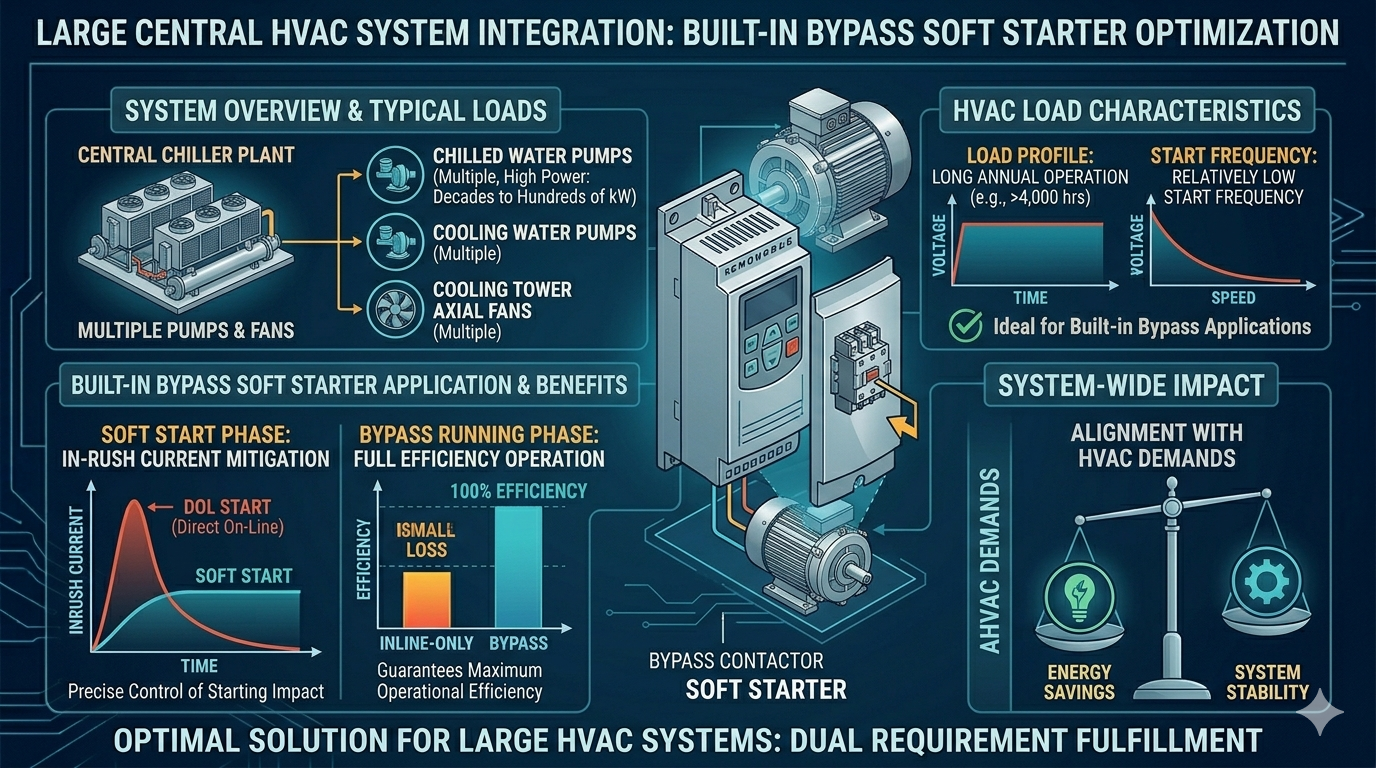
Large central air conditioning systems are usually equipped with multiple chilled water pumps, cooling water pumps, and cooling tower axial fans, with power ranging from tens to hundreds of kilowatts.
Such loads feature long annual operation hours (exceeding 4,000 hours per year under some working conditions) and relatively low starting frequency, making them highly suitable for the application of built-in bypass soft starters.
It precisely controls starting shock during soft start and ensures full-efficiency operation in bypass mode, fully meeting the dual requirements of central air conditioning systems for energy conservation and stability.
Analysis of Typical HVAC Application Scenarios
6.1 Chilled/Condenser Water Pumps & Cooling Tower Fans for Central Air Conditioning
Large-scale central air conditioning systems are commonly fitted with multiple chilled water pumps, condenser water pumps and cooling tower axial flow fans with power ranging from tens to hundreds of kilowatts.
These loads feature long annual operating hours (over 4,000 hours per year under partial working conditions) and relatively low start-stop frequency, making them ideal for built-in bypass soft starters. It accurately controls starting impact during soft starting and ensures full-efficiency operation under bypass running mode, fully satisfying the dual demands of central air conditioning systems for energy saving and operational stability.
6.2 Air Handling Unit (AHU) & Make-up Air Unit (MAU)
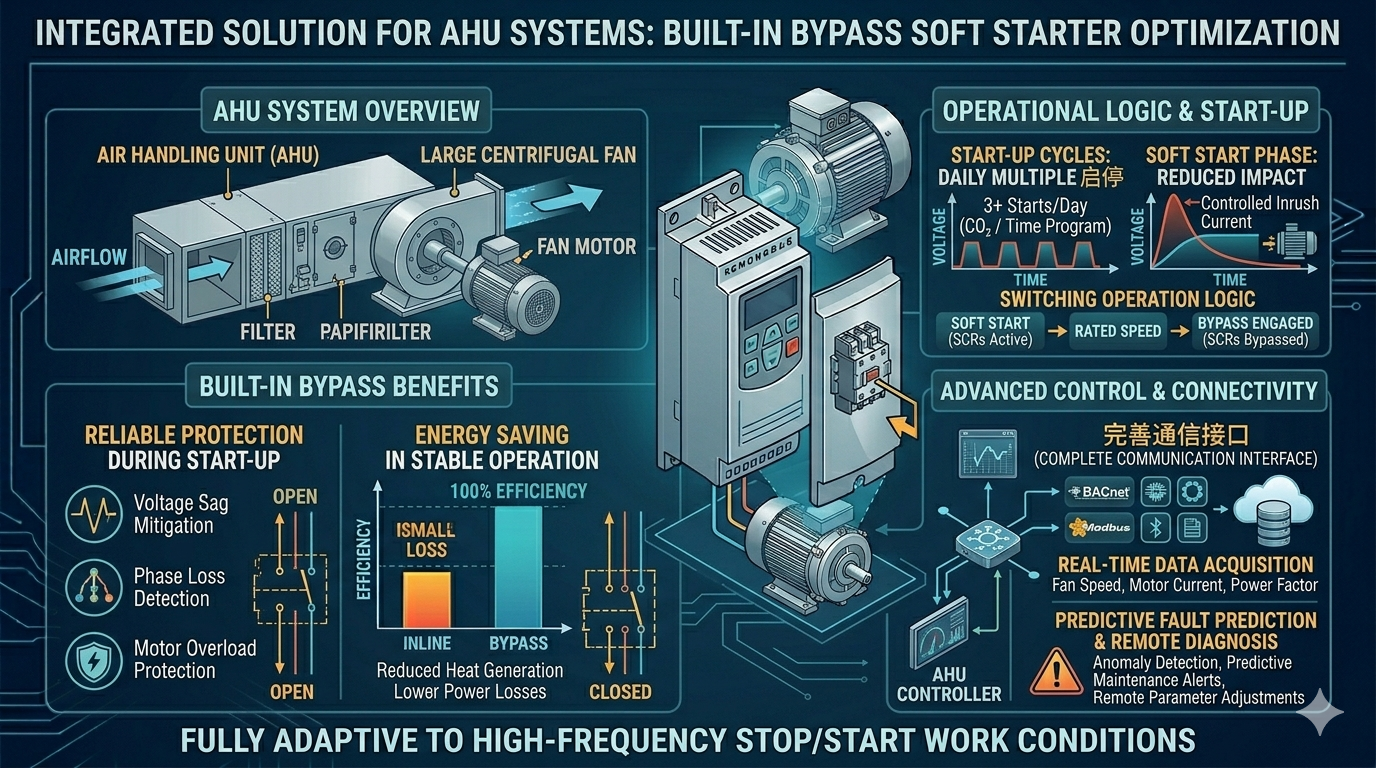
Air handling units are generally equipped with large centrifugal fans that require soft start during every startup and shutdown. In commercial buildings, AHU systems start and stop multiple times daily under automatic control based on CO₂ concentration and timing schedules.
The built-in bypass soft starter delivers reliable protection during each startup and operates energy-efficiently in bypass mode under steady running conditions, perfectly adapting to frequent start-stop working conditions. Meanwhile, its full-featured communication interface enables the AHU controller to acquire real-time fan operating data, supporting fault prediction and remote diagnosis.
6.3 HVAC Systems in Clean Rooms and Medical Buildings
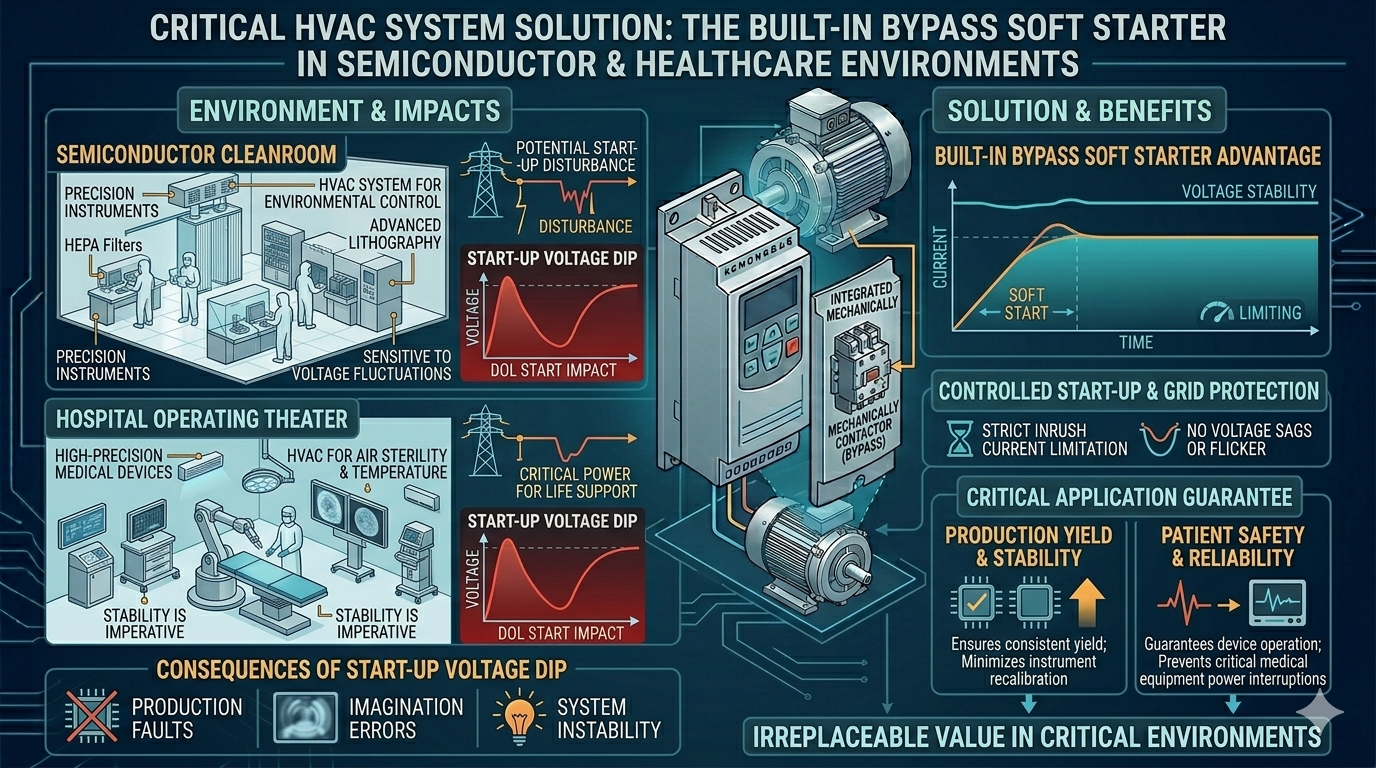
Clean rooms in semiconductor factories and operating rooms in hospitals impose extremely stringent requirements on the stability and reliability of HVAC systems. Any voltage flicker caused by starting shock may interfere with the normal operation of precision instruments and equipment.
The built-in bypass soft starter strictly limits the starting inrush current and effectively avoids the risk of grid voltage drop, delivering a stable power supply environment for high-precision sensitive devices. It boasts irreplaceable application value in such critical facilities.
6.4 Precision Air Conditioning Systems in Data Centers
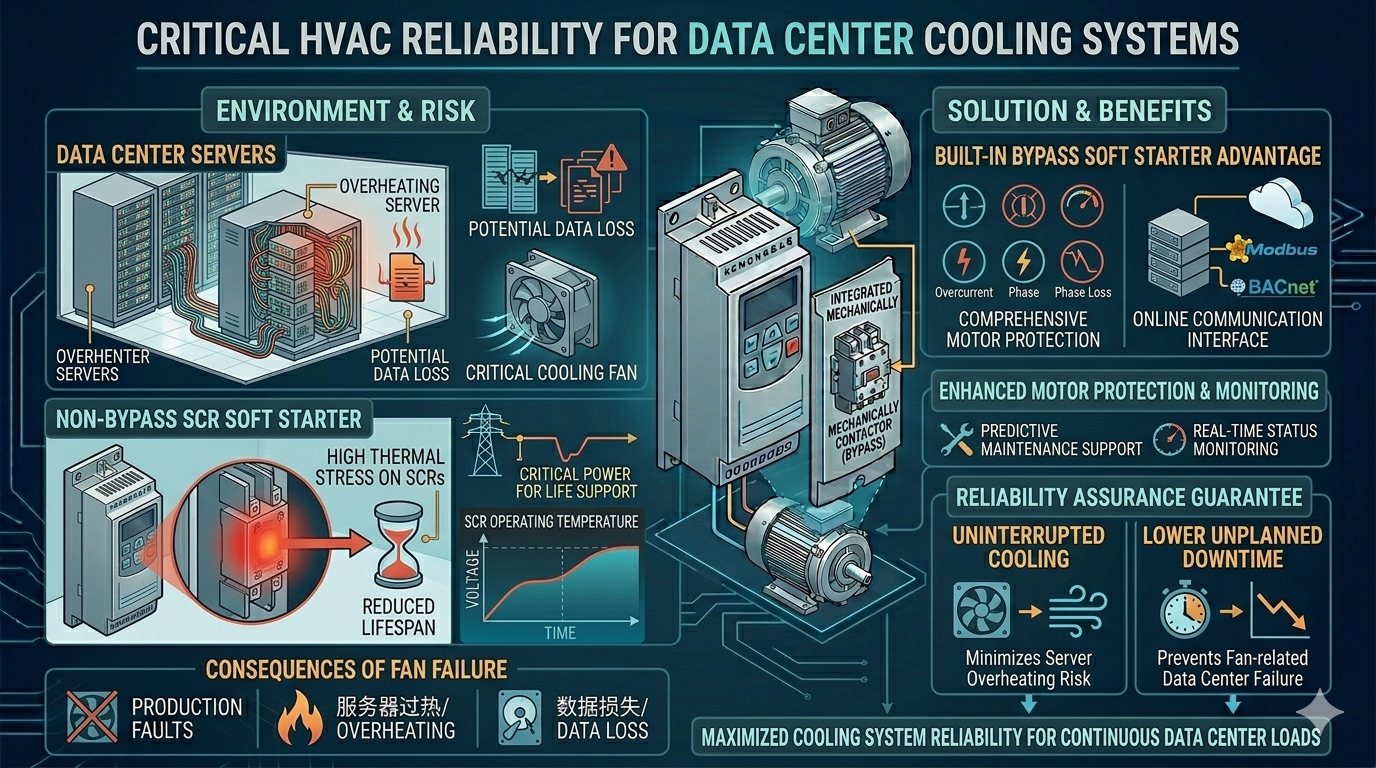
Data centers operate under continuous high-load conditions. Any failure of fan motors in refrigeration systems may lead to server overheating and subsequent data loss.
Featuring lower component operating stress — bypass operation effectively reduces thermal load on thyristors — comprehensive motor protection functions and communication interfaces for online monitoring, the built-in bypass soft starter greatly improves the reliability of data center refrigeration systems and minimizes the risk of unplanned downtime caused by motor faults.
Engineering Selection Guidelines
7.1 Matching of Key Electrical Parameters
The selection of built-in bypass soft starters shall first ensure accurate matching of the following electrical parameters:
- Rated operating current (In): The rated current of the soft starter shall be no less than the rated current of the fan motor, with a reserved margin of 10%~20% recommended.
- Rated operating voltage: It shall match the nominal voltage of the power supply system (e.g. 380 V, 660 V) and its allowable voltage range.
- Starting characteristic parameters: Set initial voltage (40%~60%×UN recommended), ramp-up time (10~20 seconds recommended) and stop ramp time (if soft stop is required) according to fan load characteristics.
- Short-circuit protection coordination: Verify the short-circuit protection coordination between the soft starter and upstream circuit breakers or fuses.
7.2 Installation Environment Requirements
Reliable operation of built-in bypass soft starters has clear requirements for installation surroundings, which shall be fully considered during model selection:
- Ambient temperature: The standard operating temperature range is generally -10℃ ~ +40℃. Derating usage or forced cooling equipment is required for over-temperature environments.
- Altitude: Derating shall be implemented in accordance with manufacturer specifications when the altitude exceeds 1000 meters, normally about 1% power reduction per 100 meters elevation rise.
- Protection grade: Select proper IP protection level based on on-site dust and humidity conditions. IP20 is commonly used inside control cabinets, while IP55 or above is suggested for outdoor installation.
- Installation method: Vertical installation is required to guarantee smooth natural convection heat dissipation, with a minimum clearance of 100 mm reserved above and below the device.
7.3 Technical and Economic Comparison with Variable Frequency Drives
In HVAC applications, users often choose between soft starters and variable frequency drives (VFDs). Their applicable scenarios are summarized as follows:
Built-in bypass soft starters are ideal for fixed-speed fan systems that require no speed regulation but only start shock suppression and energy-saving operation. Its one-time procurement cost accounts for only 30%~50% of VFDs with the same power rating, featuring simpler operation & maintenance and lower harmonic interference.
By contrast, VFDs are suitable for variable-speed working conditions demanding precise speed adjustment such as VAV systems or scenarios with prominent energy-saving demands where load rate is frequently below 75%.
For most fixed-speed fan applications in HVAC systems, built-in bypass soft starters deliver the optimal balance between technical performance and economic benefits.
Product Features of Built-in Bypass Soft Starter Zhejiang NENA Electric Co., Ltd.
Zhejiang NENA Electric Co., Ltd. specializes in R&D and manufacturing of motor soft start control technology. Its built-in bypass soft starter series integrates advanced international technologies and local on-site engineering experience, featuring the core advantages as follows:
Highly Integrated StructureThe main soft start module and bypass contactor are highly integrated into one unit. Its overall size is reduced by over 30% compared with traditional external bypass solutions, perfectly fitting standard control cabinet installation.
Advanced Control AlgorithmEquipped with adaptive phase control algorithm, it automatically optimizes the starting curve according to actual load characteristics, realizing the optimal starting performance for fan-type square torque loads.
Comprehensive Motor ProtectionIt integrates more than 11 types of protection functions for motors and power grids. The built-in fault memory function can record the latest 10 fault events, facilitating quick troubleshooting and routine maintenance.
Standard Communication ConfigurationIt is equipped with built-in RS485 port and supports Modbus RTU protocol for seamless access to all mainstream BAS/BMS systems. Extended communication modules such as PROFIBUS and BACnet are also available as options.
Wide Temperature AdaptabilityIt works stably within the temperature range from -10℃ to +50℃, meeting installation and operation requirements in various climatic regions.
Authoritative Quality CertificationsThe product has obtained CE, CCC and other mainstream global certifications, fully complying with IEC 60947-4-2 standards, ensuring qualified sales and reliable application worldwide.
Conclusion
As an important achievement in the evolution of motor control technology, the built-in bypass soft starter perfectly combines the soft starting protection performance of traditional soft starters and the low-loss operating efficiency of bypass contactors, achieving synergistic benefits beyond simple combination.
For HVAC fan systems, this technical solution delivers comprehensive improvements in practical engineering values as follows:
- It effectively restrains starting inrush current down to 2~5 times rated current, protects electrical infrastructure and optimizes transformer capacity configuration.
- It greatly reduces mechanical starting impact torque, extending the service life of fan bearings, belts and couplings by 30%~50%.
- Bypass operating mode eliminates on-state loss of thyristors, saving around 2% power consumption compared with online soft starters and bringing remarkable long-term energy-saving benefits.
- The all-in-one integrated design simplifies on-site construction, lowers control cabinet complexity and reduces potential fault points.
- Equipped with abundant communication interfaces, it supports in-depth integration with BAS/BMS systems, empowering the development of smart buildings and intelligent manufacturing.
Evaluated from technical performance, energy-saving effect, engineering economy and system reliability, the built-in bypass soft starter stands out as one of the most cost-effective motor control solutions for current HVAC fan systems.
Zhejiang NENA Electric Co., Ltd. will keep increasing investment in product research and development, providing more efficient, intelligent and reliable motor control products and solutions for domestic and overseas clients, and jointly promote the progress of energy-saving technologies across the HVAC industry.
<h2id="news12">References
[1] IEC 60947-4-2: Low-voltage switchgear and controlgear – Part 4-2: Contactors and motor-starters – AC semiconductor motor controllers and starters. International Electrotechnical Commission, 2011.
[2] GB/T 21714-2008, General specification for soft starters. Standardization Administration of China.
[3] ASHRAE Handbook – HVAC Systems and Equipment. American Society of Heating, Refrigerating and Air-Conditioning Engineers, 2020.
[4] Wang Zhao'an, Liu Jinjun. Power Electronics (5th Edition). China Machine Press, 2009.
[5] Zhu Xiaochun. Design and Engineering Practice of Building Automation System. China Architecture & Building Press, 2017.
[6] AutomationDirect. AC Motor Soft Starters – Technical Overview. www.automationdirect.com, 2024.



 English
 中文简体
中文简体 عربى
عربى




 浙公网安备33038202003754号