Abstract
Against the backdrop of global economic integration and the continuous evolution of industrial technology, frequency converters have emerged as indispensable core components in modern electrical engineering. This paper systematically outlines the fundamental operating principles and technical classifications of frequency converters, while delving into their specific application scenarios across seven major sectors: aerospace, marine and offshore engineering, manufacturing, rail transportation, military and defense, scientific research laboratories, and new energy. The aim is to provide a comprehensive reference guide for engineering professionals and procurement decision-makers. Zhejiang NENA Electric Co., Ltd. has dedicated years to the R&D and manufacturing of electrical equipment; its product portfolio extensively covers the aforementioned application scenarios, backed by mature capabilities in providing customized solutions.
Keywords: Frequency Converter, Frequency Conversion, Industrial Applications, 50Hz/60Hz, 400Hz, Power Quality
I.Introduction
In power systems, frequency refers to the number of periodic cycles completed by alternating current (AC) per second, measured in Hertz (Hz). However, global grid standards are not uniform: North America, parts of South America, and certain regions of Japan utilize a 60Hz power supply standard, whereas the vast majority of countries in Europe, Asia, Africa, and Oceania adhere to the 50Hz standard. Furthermore, specialized sectors—such as aerospace and military operations—require a dedicated frequency of 400Hz.
In the context of global trade and the cross-regional deployment of equipment, this disparity in frequency presents a critical engineering challenge: How can electrical equipment, originally designed and manufactured for operation at one specific frequency, function safely and efficiently within a power supply environment of a different frequency? The frequency converter serves as the core device for resolving precisely this issue.
Beyond their fundamental function of frequency conversion, modern frequency converters fulfill a multitude of additional roles—including motor speed control, power quality conditioning, and system energy optimization—expanding their scope of application from their origins in industrial testing to virtually every scenario involving electrical power consumption.
II. Fundamental Principles and Classification of Frequency Converters
2.1 Operating Principles
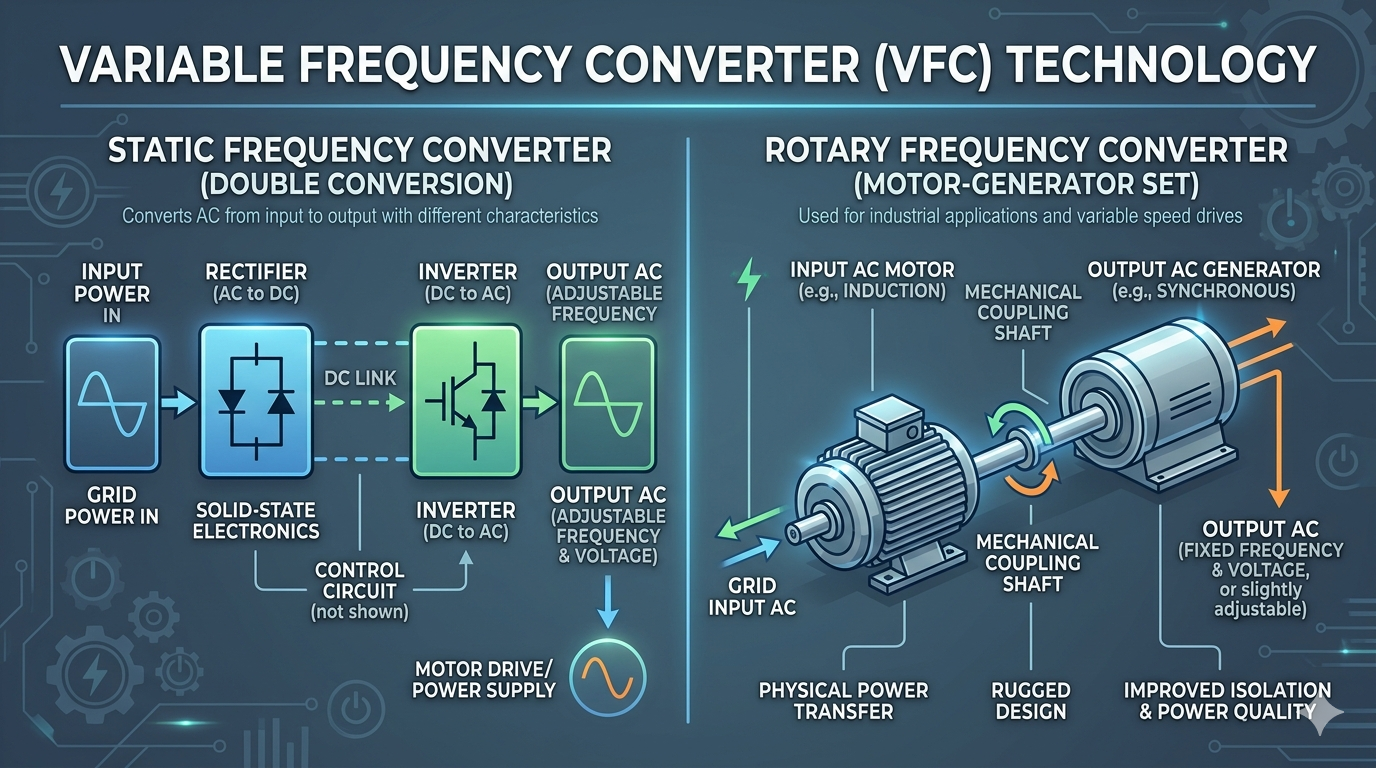
The core operating mechanism of a frequency converter involves converting incoming alternating current (AC) into direct current (DC) via a rectification stage, and subsequently converting that DC back into alternating current—at the required frequency and voltage—through an inversion stage. This "AC → DC → AC" double-conversion process constitutes the fundamental operating mode of a Static Frequency Converter; it is also referred to as "double-conversion" technology.
In contrast, a Rotary Frequency Converter employs a mechanical approach—specifically, a motor-generator set—to achieve frequency conversion. It utilizes a motor, driven by the input frequency, to rotate a synchronous generator that produces power at the required output frequency, thereby achieving a physical transformation of the frequency. Rotary frequency converters offer excellent isolation against grid disturbances and are well-suited for heavy-duty industrial environments where power supply quality requirements are exceptionally stringent.
2.2 Main Types
Based on their operating principles and application scenarios, frequency converters can be broadly categorized into the following types:
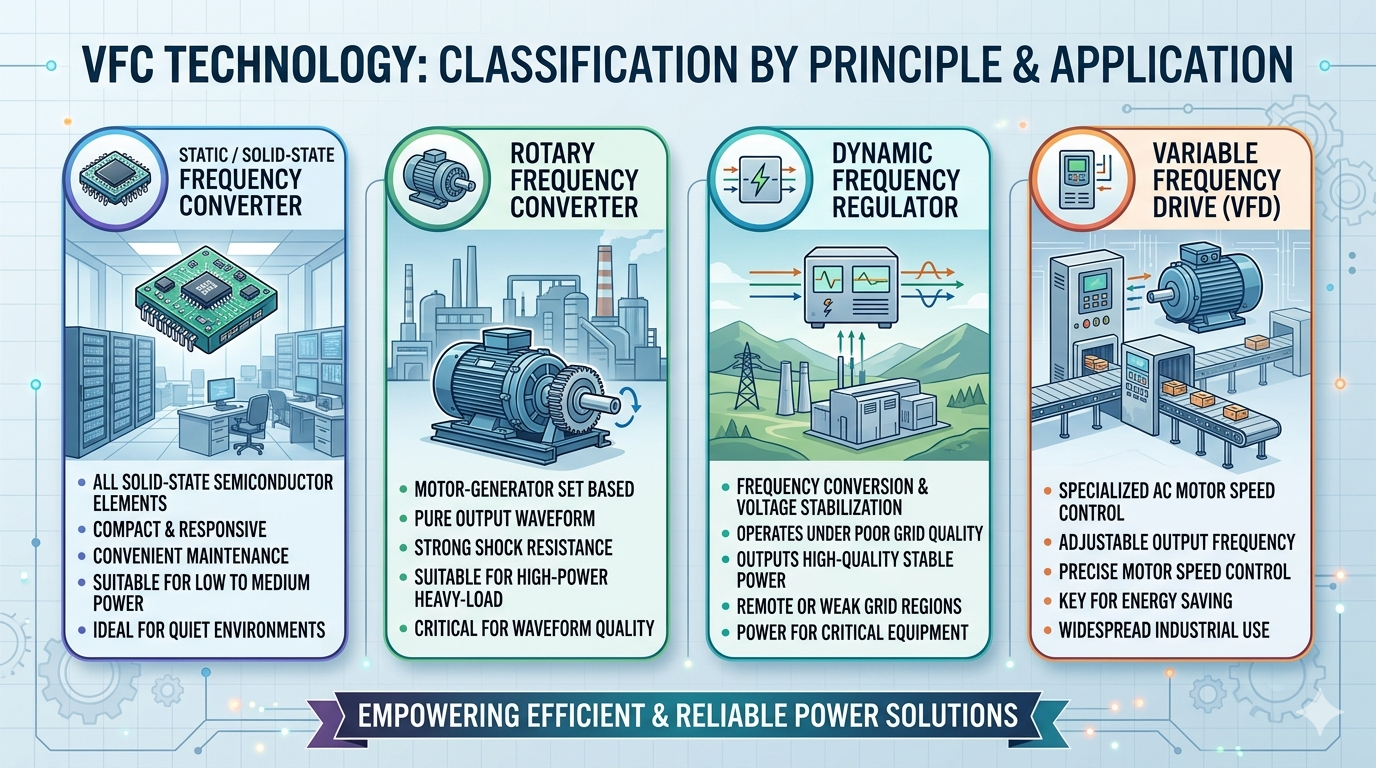
- Static / Solid-State Frequency Converter: Employs exclusively solid-state semiconductor components; characterized by a compact footprint, rapid response times, and ease of maintenance, it is widely utilized in low-to-medium power applications and in environments where noise reduction is a priority.
- Rotary Frequency Converter: Relies on a motor-generator set to deliver a pure output waveform and robust resistance to power surges; it is ideal for high-power, heavy-duty applications and for scenarios with exacting requirements regarding waveform quality.
- Dynamic Frequency Regulator: Combines both frequency conversion and voltage stabilization capabilities, enabling the delivery of a high-quality, stable power supply even under input conditions characterized by extremely poor grid quality; it is suitable for powering critical equipment in remote regions or areas with weak power grids.
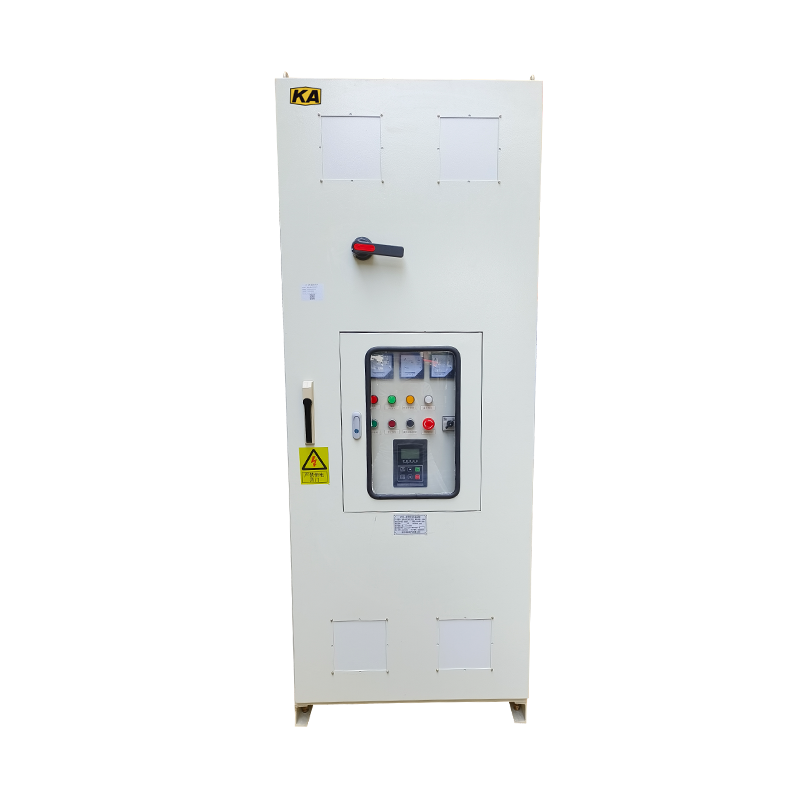
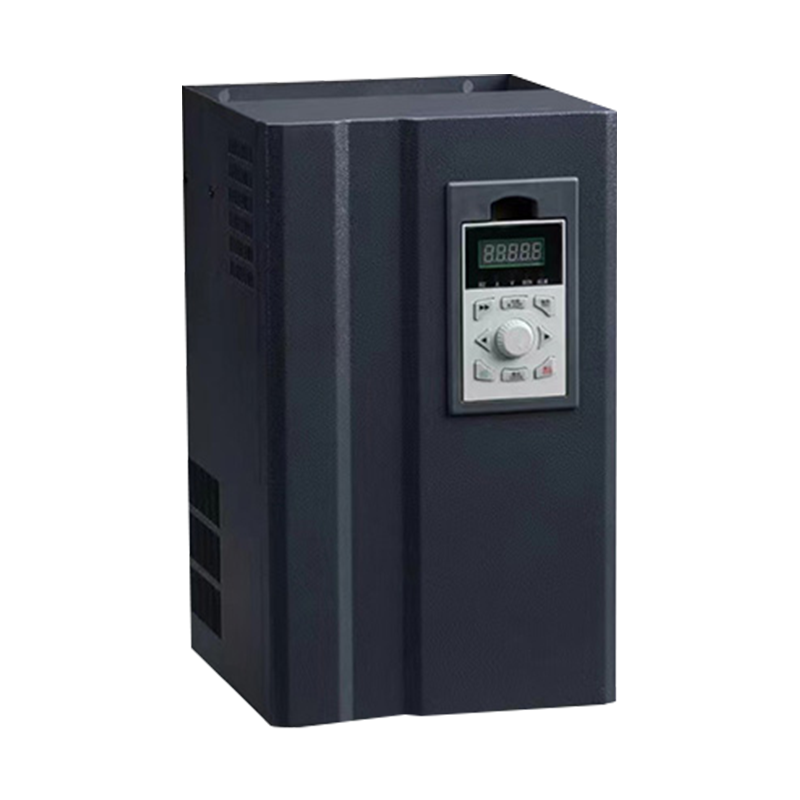
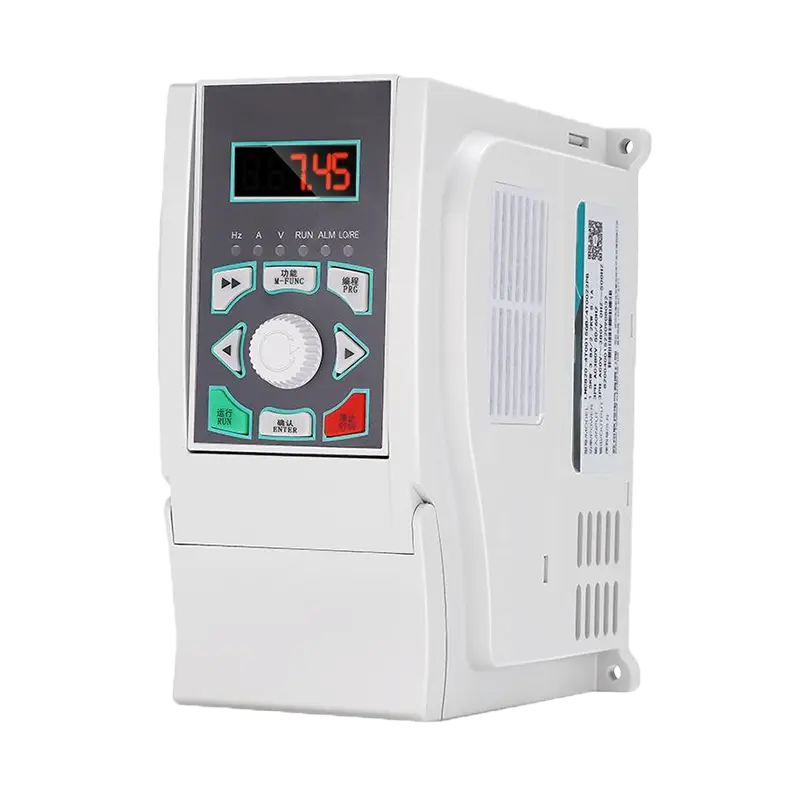
- Variable Frequency Drive (VFD): Specifically designed for the variable-speed control of AC motors; by modulating the output frequency, it enables precise control over motor rotational speed and serves as a vital tool for energy conservation and consumption reduction.
III. Core Application Scenarios for Variable Frequency Drives
3.1 Aerospace and Ground Support
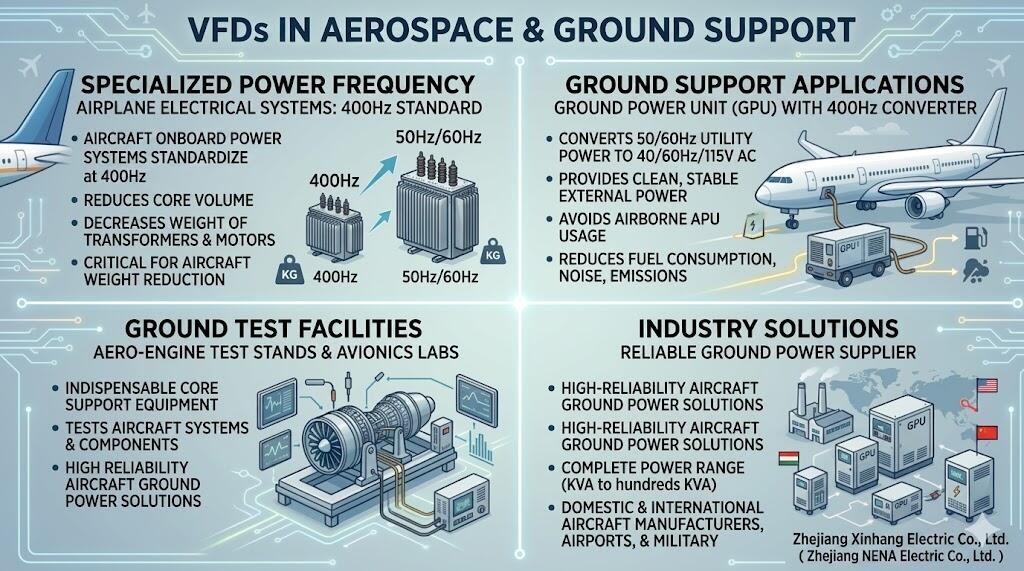
The aerospace sector imposes highly specialized requirements regarding power supply frequency. Onboard electrical systems in aircraft typically utilize a 400 Hz power standard. The rationale behind this choice is that, compared to standard 50 Hz or 60 Hz utility frequencies, a 400 Hz power supply allows for a drastic reduction in the core size of onboard transformers and motors, thereby significantly lowering the overall weight of onboard equipment—a factor of decisive importance for aircraft, where every single gram of weight is meticulously scrutinized. In the realm of ground support operations, when an aircraft is parked on the apron, airport Ground Power Units (GPUs) are typically equipped with 400Hz frequency converters. These converters transform the local utility power (50Hz or 60Hz) into the 400Hz/115V AC three-phase power required by the aircraft. This provides a clean, stable external power supply to the aircraft while it is on the ground, thereby eliminating the fuel consumption, noise, and exhaust emissions associated with running the onboard Auxiliary Power Unit (APU).
In settings such as aircraft engine ground test stands and avionics testing laboratories, 400Hz frequency converters serve as equally indispensable core support equipment. Zhejiang Xinhang Electric has long provided highly reliable aviation ground power solutions to domestic and international aircraft manufacturers, airports, and military units, offering a product range that spans a complete power spectrum from a few kVA up to several hundred kVA.
3.2 Marine Vessels and Shore Power
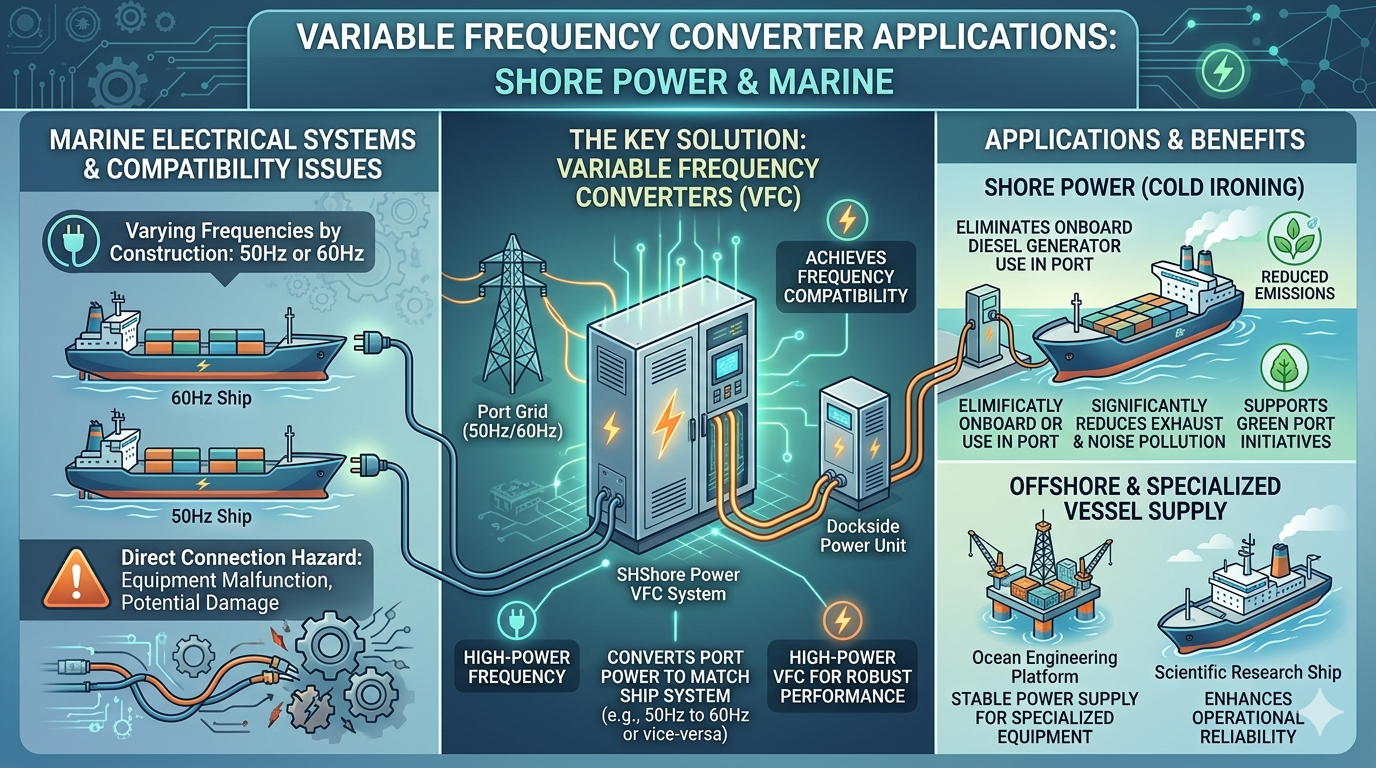
Depending on the country of construction, ship electrical systems typically utilize one of two frequency standards: 50Hz or 60Hz. When a vessel designed for a 60Hz system docks at a port operating on a 50Hz power grid, directly connecting to the shore power supply would result in abnormal operation—or even damage—to the ship's onboard equipment. The frequency converter within the shore power system (also known as "Cold Ironing") is the critical device that resolves this frequency compatibility issue.
By incorporating high-power frequency converters, port shore power systems can supply docked vessels with electricity that precisely matches their specific electrical systems. This eliminates the need for ships to run their onboard diesel generators while in port, thereby significantly reducing exhaust emissions and noise pollution within the port area and fostering the development of "green ports." Furthermore, frequency converters play a vital role in ensuring a stable power supply for specialized equipment on offshore engineering platforms and scientific research vessels.
3.3 Industrial Manufacturing and Cross-Regional Equipment Deployment
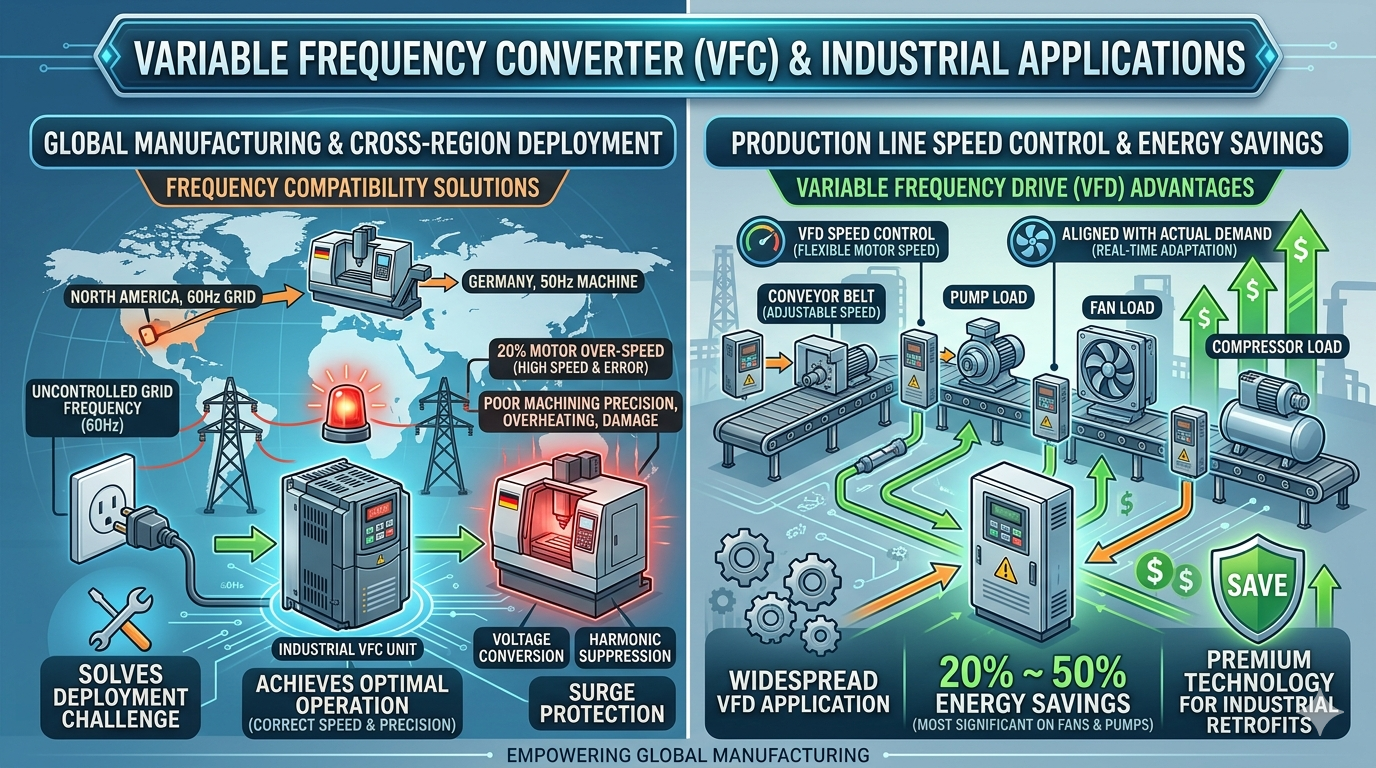
As the global division of labor in manufacturing deepens, it has become extremely common for machinery and equipment to be procured in one country and subsequently deployed for use in another. For instance, if a 50Hz precision CNC machine tool manufactured in Germany were to be directly connected to and operated on the 60Hz North American power grid, the spindle motor speed would increase by 20%. This discrepancy would lead to a decline in machining precision, mechanical overheating, and potentially even irreparable damage to the equipment. Industrial-grade frequency converters serve as the standard solution for addressing the challenges associated with deploying equipment across different regions, while simultaneously providing supplementary functions such as voltage conversion, harmonic suppression, and surge protection.
In the realm of production line speed control, the application of Variable Frequency Drives (VFDs) is extremely widespread. By implementing variable frequency speed control for equipment such as conveyor belt motors, pumps, fans, and compressors, enterprises can flexibly adjust motor speeds to meet actual operational demands; the resulting energy savings typically range from 20% to 50%. This effect is particularly pronounced in applications involving fan and pump loads, making it the preferred technical approach for industrial energy-saving retrofits.
3.4 Railway Transportation and Track Signaling
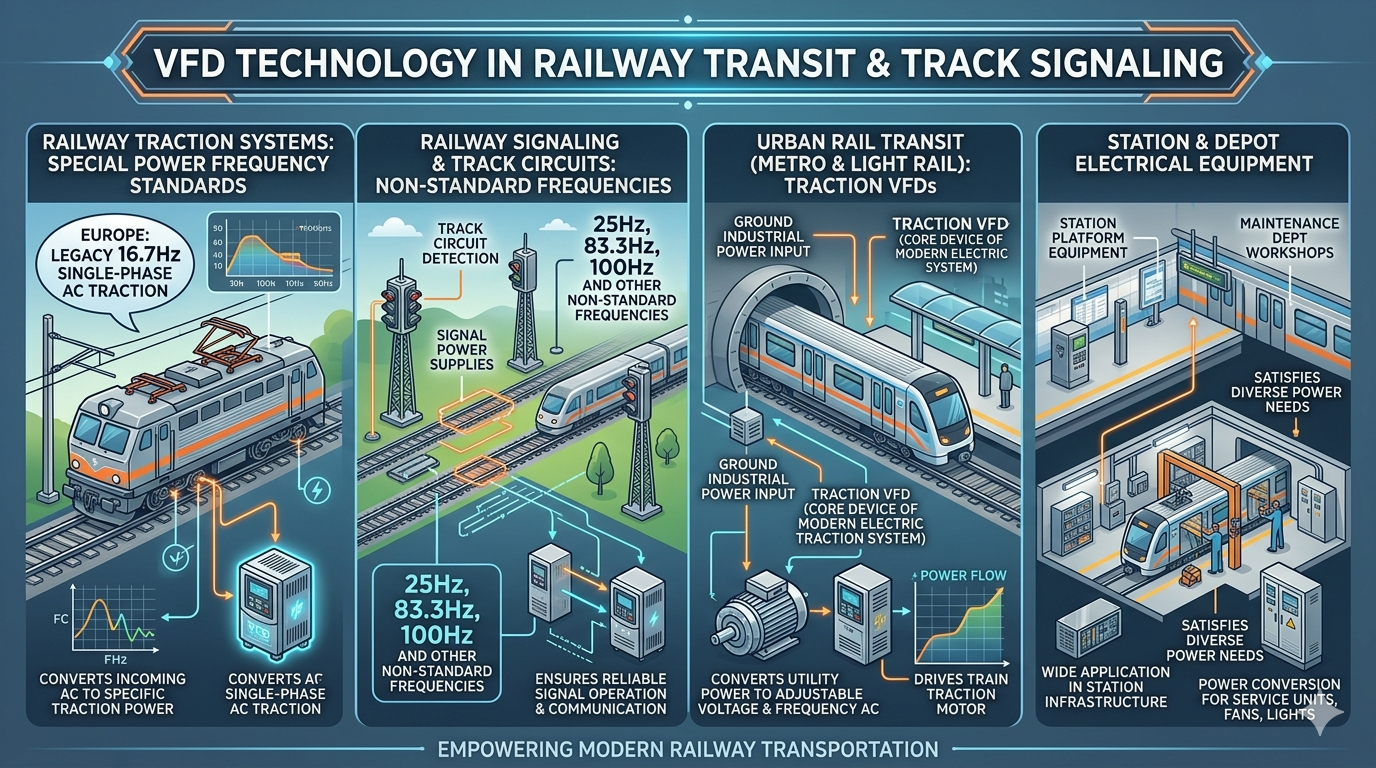
Railway systems constitute another major application domain for frequency converters. Unlike the standard 50 Hz or 60 Hz applications common in the industrial sector, railway traction and signaling systems often utilize more specialized power supply frequency standards. In Europe, for instance, certain railway traction systems have historically employed a 16.7 Hz single-phase AC format; meanwhile, applications such as railway signaling systems and track circuit detection may require power supplies with non-standard frequencies—such as 25 Hz, 83.3 Hz, or even 100 Hz.
Within urban rail transit systems (including subways and light rail), traction converters bear the critical responsibility of converting the standard utility-frequency power supplied from the ground into the variable-frequency, variable-voltage power required to drive the train's traction motors; they serve as the core components of modern electric traction systems. Furthermore, frequency converters are widely deployed in settings such as station electrical facilities and rolling stock maintenance depots to satisfy diverse power supply requirements.
3.5 Military and Defense
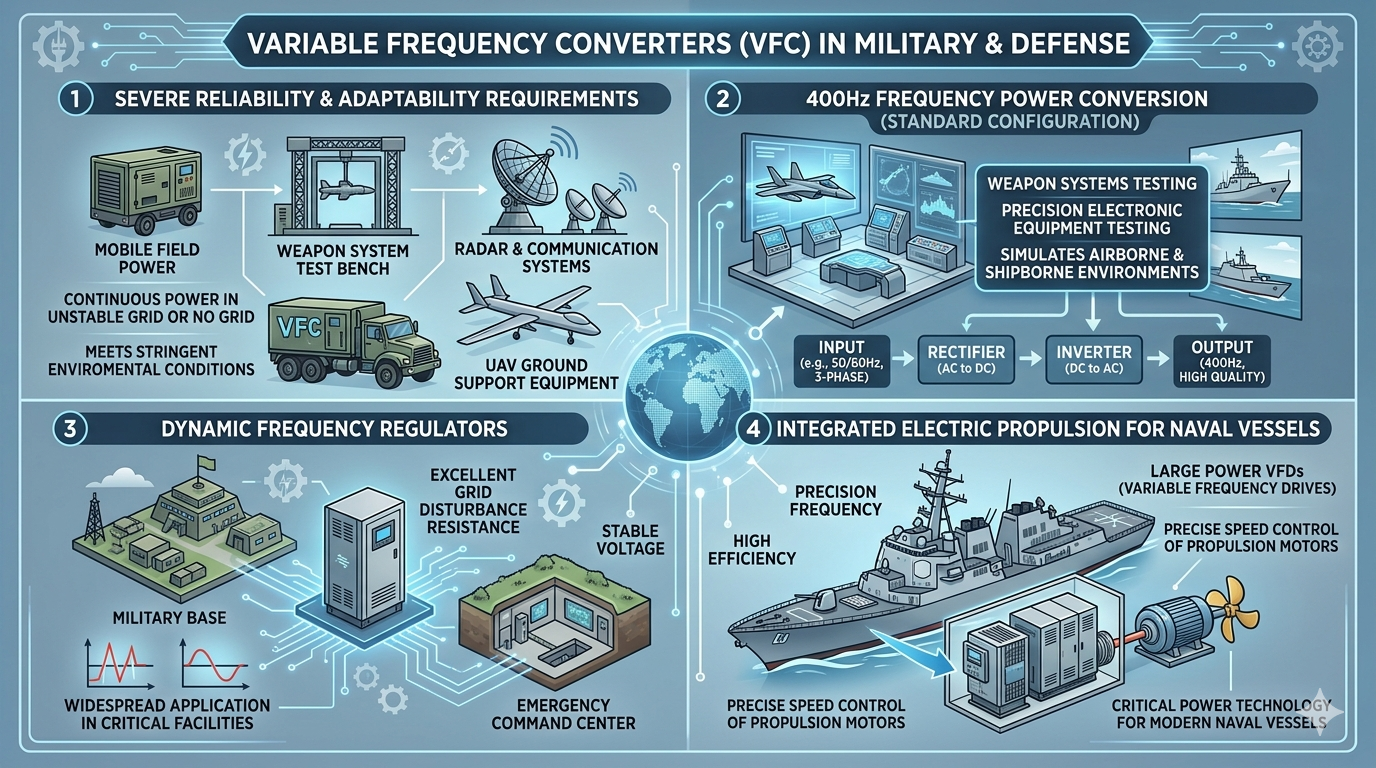
Military equipment and defense installations impose extremely stringent requirements regarding the reliability and adaptability of power supplies. Mobile field power units, weapon system test benches, radar and communication systems, and ground support equipment for unmanned aerial vehicles (UAVs) all require the capability to continuously deliver power of a specific frequency and quality—even when operating within unstable power grids or in environments completely devoid of grid infrastructure. In the testing of weapon systems and precision electronic equipment, 400 Hz frequency converters are the standard configuration, utilized to simulate the actual operating environments of airborne or shipborne systems.
Dynamic frequency regulators, owing to their exceptional resilience against grid disturbances, find extensive application within military bases and emergency command centers. Integrated electric propulsion systems for ships similarly rely on high-power frequency converters to achieve precise speed control of propulsion motors, making this one of the key electrical technologies for modern naval vessels.
3.6 Research Institutions and Testing Laboratories
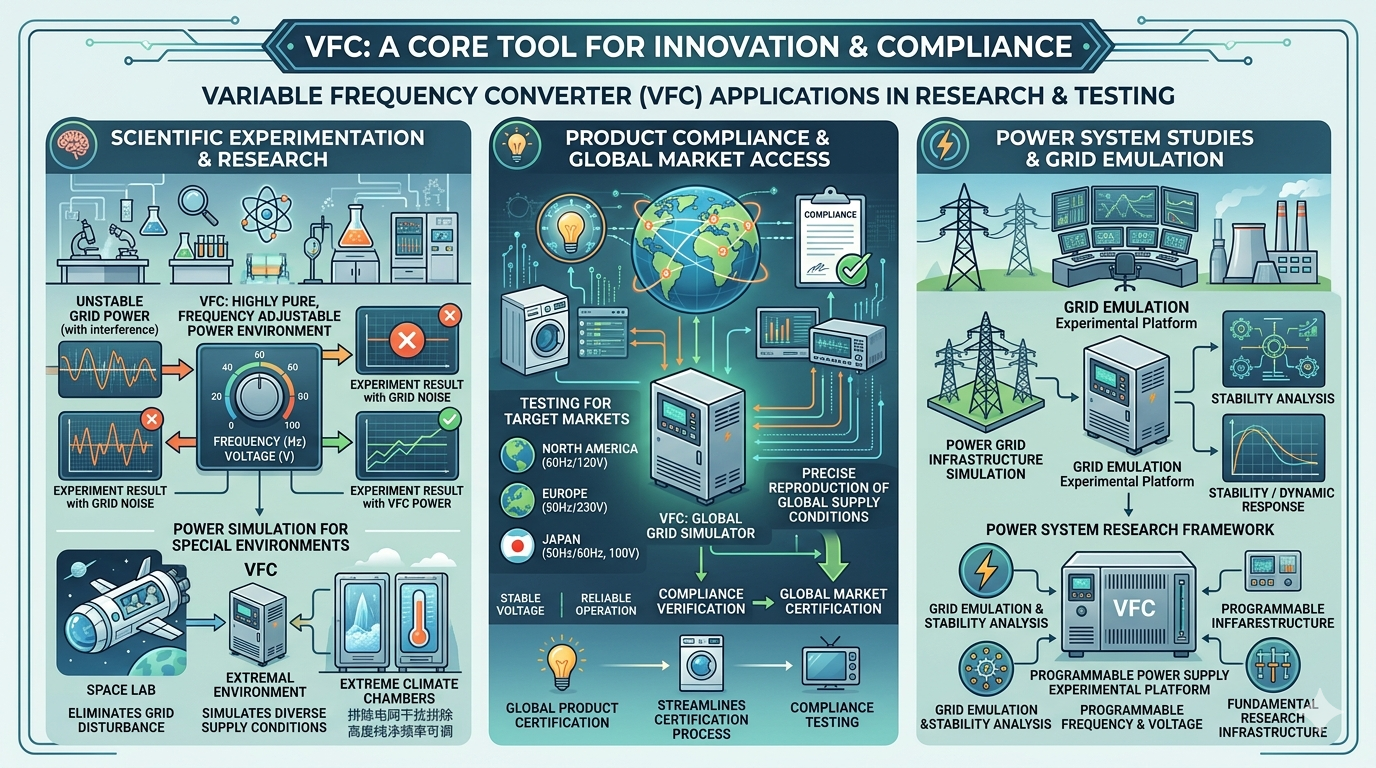
Universities, research institutes, and national-level laboratories constitute a significant user base for frequency converters. Scientific experiments often require a highly pure, frequency-adjustable power supply environment—either to eliminate the influence of grid interference on experimental results or to simulate the power supply conditions of various countries and regions for the comprehensive validation of equipment under test.
Manufacturers of home appliances, electronic products, and industrial equipment must conduct compliance testing on their products—in accordance with the grid standards of target markets—before exporting them. A high-performance variable-frequency power supply can precisely replicate the power supply conditions of any region worldwide within a laboratory setting, thereby significantly streamlining the global product certification process. Similarly, power system research institutions require programmable power supplies—capable of precise frequency and voltage settings—to serve as foundational infrastructure for experimental platforms when conducting grid simulations and stability analyses.
3.7 New Energy and Energy Storage Systems
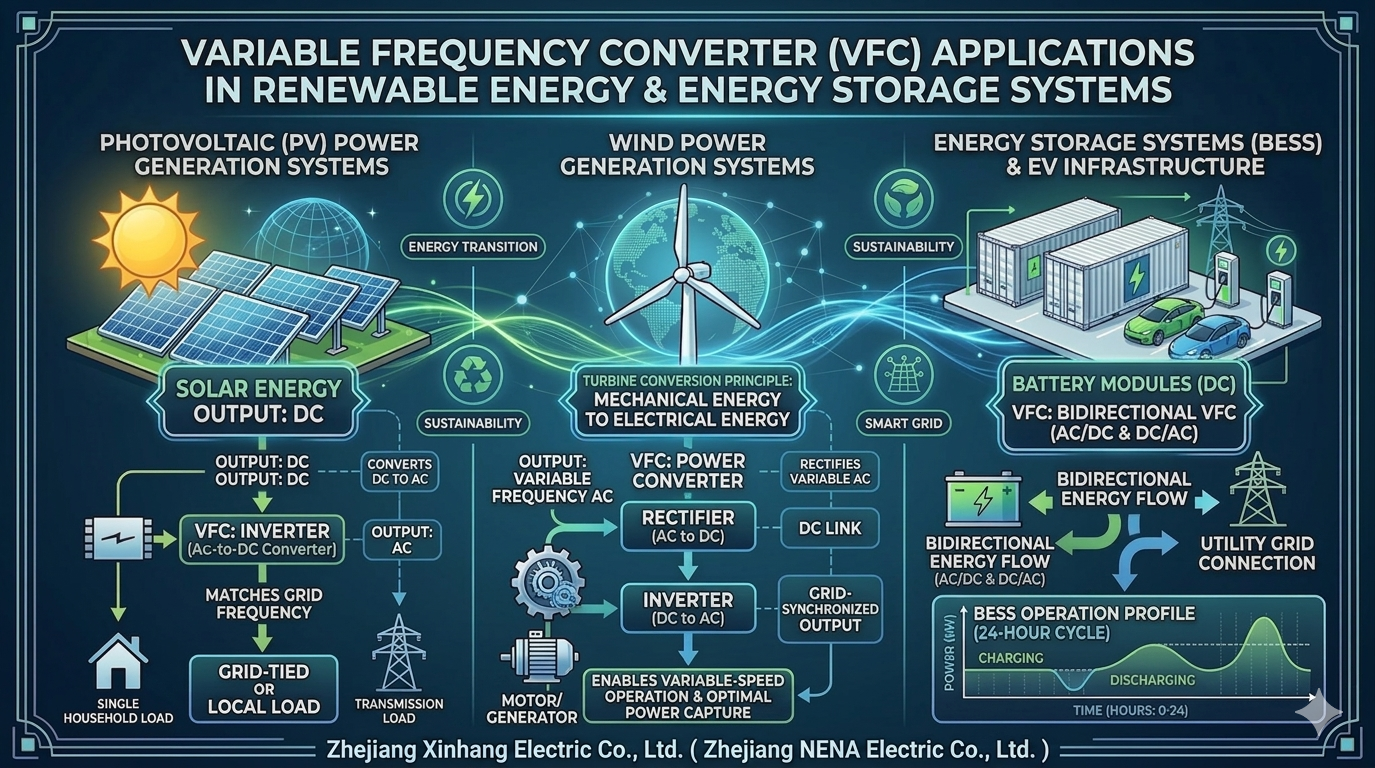
Against the backdrop of the global energy transition, the application of frequency converters in the renewable energy sector is becoming increasingly prominent. In photovoltaic (PV) power generation systems, the inverter functions essentially as a specialized type of frequency conversion device; it converts the direct current (DC) output from solar panels into alternating current (AC) that meets grid frequency requirements, enabling it to be fed into the power grid or utilized by local loads.
In wind power generation systems, full-power frequency converters rectify the variable-frequency electrical energy generated by the wind turbine into DC, and subsequently invert it back into stable, utility-frequency AC for grid connection; these converters serve as the core electrical components in modern direct-drive wind turbines. In the fields of battery energy storage systems (BESS) and electric vehicle charging/discharging infrastructure, bi-directional frequency conversion devices are responsible for coordinating the two-way flow of energy between storage batteries and the power grid, playing an increasingly vital role in peak shaving, frequency regulation, and enhancing overall grid flexibility.
IV. Considerations for Inverter Selection
In practical engineering applications, the selection of a frequency converter requires a comprehensive assessment of the following core parameters:
- Input/Output Frequency Range: Clearly defining the specific input frequency (e.g., 50 Hz, 60 Hz) and output frequency (e.g., 50 Hz, 60 Hz, 400 Hz, or variable) required by the application scenario is the primary prerequisite for proper selection.
- Power Capacity: Based on the load's rated power and the required margin for startup surge currents, the inverter's rated output power should be selected judiciously; typically, a power margin of no less than 20% is recommended.
- Output Waveform Quality: For sensitive loads—such as precision instruments, communication equipment, and avionics—products featuring low Total Harmonic Distortion (THD) and high waveform purity should be selected.
- Efficiency and Heat Dissipation: High-efficiency products not only reduce operating costs but also minimize heat generation, thereby extending equipment service life—a factor of particular importance in applications requiring continuous, round-the-clock operation.
- Redundancy and Reliability Design: For mission-critical environments (e.g., medical facilities, military installations, and data centers), an N+1 redundancy scheme should be implemented to ensure uninterrupted system operation in the event of a single unit failure.
- **Certification Compliance: Depending on the specific region of application and industry requirements, verify that the product holds the necessary safety certifications (e.g., CE, UL, MIL-STD military standards, etc.).
V.Conclusion
As a critical foundational component within modern electrified systems, the importance of frequency converters continues to rise alongside the deepening process of globalization and the increasing levels of electrification across various industries. From airport aprons to deep-sea research vessels, from automated production lines to high-speed railways, and from key national laboratories to offshore wind farms—frequency converters are ubiquitous, silently underpinning the smooth operation of modern industrial civilization.
Leveraging its deep technical expertise and extensive industry experience, Zhejiang NENA Electric Co., Ltd. consistently provides customers with highly reliable frequency converter products and system solutions that cater to all the aforementioned scenarios. We are committed to becoming a trusted partner for our customers' electrical systems through exquisite craftsmanship, rigorous quality control, and responsive technical support.
For further details regarding product specifications or to obtain customized project solutions, please feel free to contact our technical team.



 English
 中文简体
中文简体 عربى
عربى




 浙公网安备33038202003754号