Abstract
Three-phase induction motors are widely utilized in industrial production, and their starting performance directly impacts power grid stability, equipment service life, and production efficiency. Traditional direct-on-line starting methods suffer from issues such as high starting currents (reaching 6 to 8 times the rated current) and severe mechanical shock; however, the Built-in Bypass Soft Starter effectively overcomes these drawbacks through its integrated design, which combines Thyristor (SCR) voltage regulation technology with an embedded bypass contactor. This paper systematically introduces the working principles, core technical features, key performance parameters, and typical application scenarios of the built-in bypass soft starter. It aims to provide comprehensive technical reference for engineering designers and procurement decision-makers, while also showcasing the technical expertise and product advantages of Zhejiang Xinhang Electric Co., Ltd. in this field.
Keywords: Soft Starter; Bypass Contactor; Three-Phase Induction Motor; SCR Voltage Regulation; Reduced Voltage Starting; Motor Protection
Introduction
The three-phase induction motor is the most widely used power device in modern industry, serving a diverse range of loads such as pumps, fans, compressors, conveyor belts, and mixers. However, when started directly at full voltage, these motors generate inrush currents reaching 6 to 8 times their rated current. This not only causes severe interference to the power grid—triggering voltage dips—but also subjects the motor's stator and rotor windings, as well as the mechanical transmission system, to immense shock, thereby accelerating insulation aging and shortening equipment service life.
Traditional reduced-voltage starting schemes—such as Star-Delta (Y-Δ) starting and auto-transformer starting—can mitigate starting currents to some extent; however, they suffer from inherent flaws, including secondary current surges during switching transitions, discontinuous starting processes, and limited protection capabilities. With the advancement of power electronics technology, soft starters—centered around Thyristors (SCRs)—have emerged as a solution. Thanks to their advantages such as smooth starting, adjustable parameters, and comprehensive protection functions, they have gradually become the mainstream solution for the starting control of medium-to-high power motors.
Building upon the foundation of standard soft starters, the built-in bypass soft starter integrates the bypass contactor directly into the same enclosure. This design achieves a higher level of integration, requires less installation space, and simplifies engineering wiring, thereby representing the current state-of-the-art in soft starter technology. Zhejiang NENA Electric Co., Ltd. has dedicated itself to the field of electrical control for many years. Through its series of soft starter products featuring built-in bypass capabilities, the company has accumulated extensive practical engineering experience within the industrial automation sector.
Working Principles
2.1 Thyristor Voltage Regulation Principle
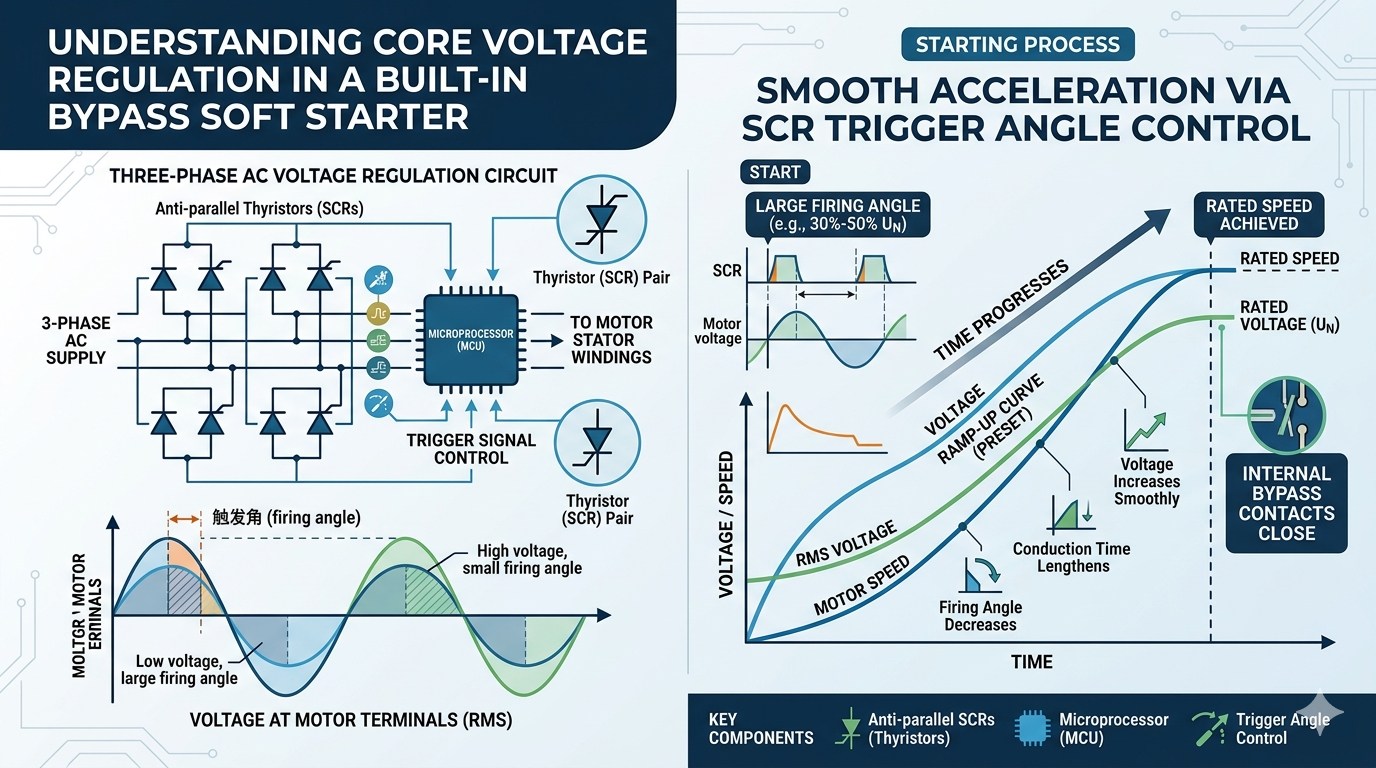
The core voltage-regulating components of the built-in bypass soft starter consist of three sets of anti-parallel thyristors (SCRs). These are connected in series between the three-phase power supply and the motor stator windings, thereby forming a three-phase AC voltage regulation circuit. By utilizing a microprocessor (MCU) to precisely control the thyristors' firing angles, the RMS voltage applied to the motor terminals can be adjusted in real time.
During the initial phase of startup, the firing angle is relatively large, resulting in a short conduction duration for the thyristors and a correspondingly low output voltage (typically 30% to 50% of the rated voltage). As time progresses, the microprocessor gradually reduces the firing angle—following a preset voltage ramp-up curve—thereby extending the thyristors' conduction duration. Consequently, the output voltage increases smoothly, and the motor speed rises steadily until it reaches its rated speed.
2.2 Bypass Contactor Switching Mechanism
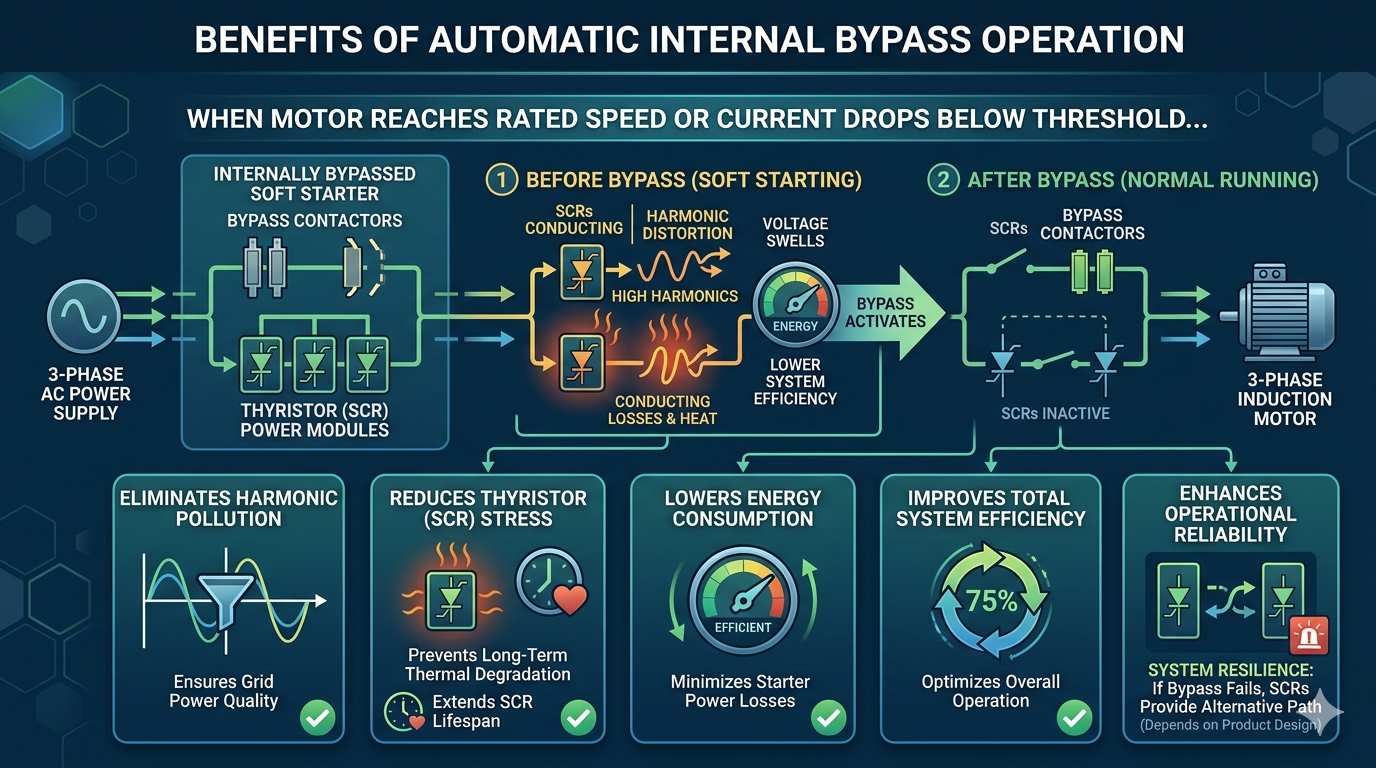
Once the motor speed reaches its rated value (or when the current drops below a preset threshold), the soft starter's internal bypass contactor automatically engages. This action connects the motor directly to the power grid, while simultaneously disengaging the thyristor assembly from active operation. This switching process offers the following significant advantages:
- Eliminates harmonic distortion generated by thyristor conduction, thereby safeguarding the power quality of the electrical grid;
- Prevents conduction losses and heat generation caused by prolonged current flow through the thyristors, thereby significantly extending the service life of the SCR components;
- Reduces the soft starter's own power consumption and enhances the overall operating efficiency of the unit;
- In the event of a bypass contactor failure, the system can still maintain motor operation through the thyristors (subject to specific product design specifications).
2.3 Soft Stop Process
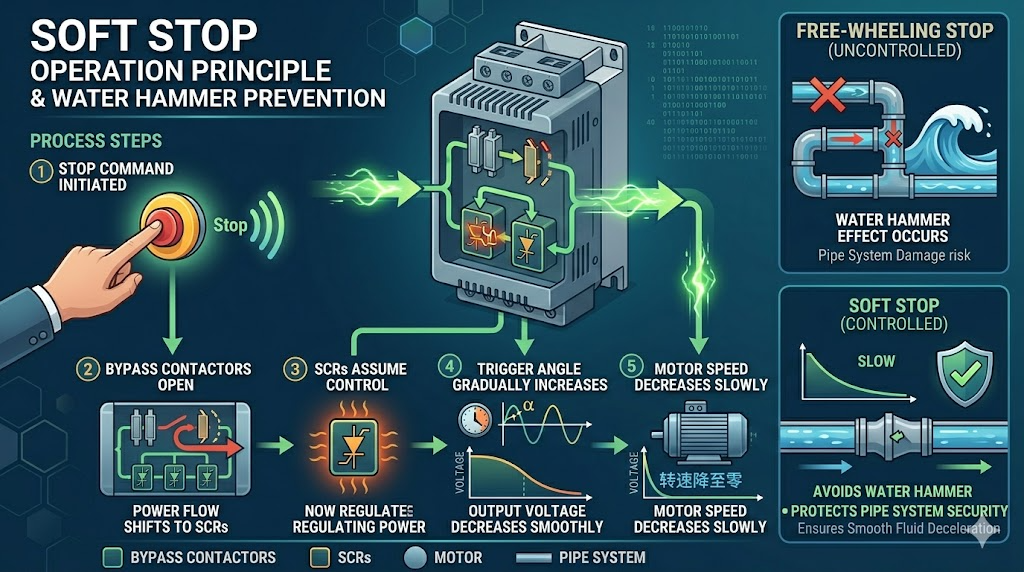
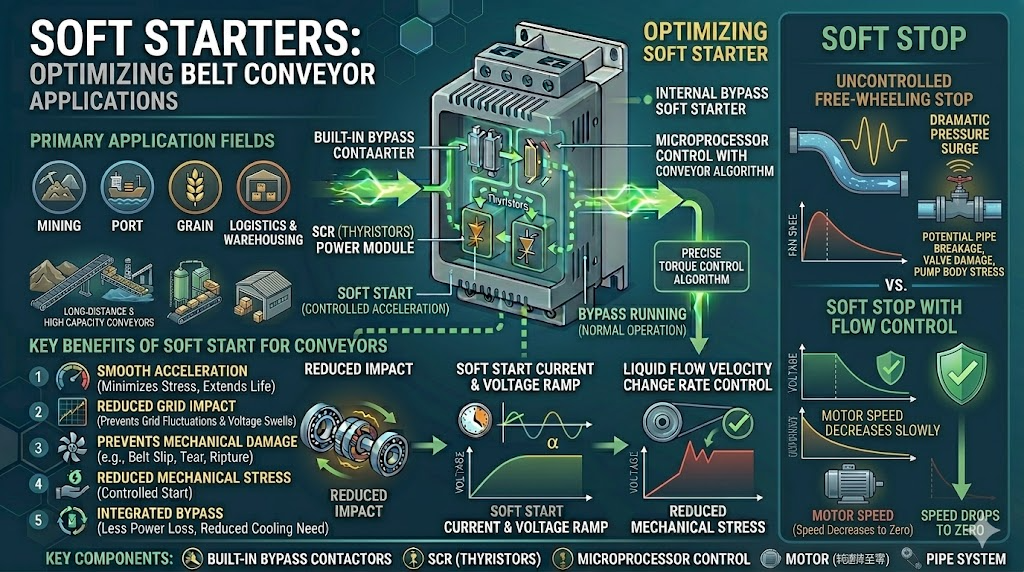
The Soft Stop process operates in reverse to the soft start process. Upon issuance of a stop command, the bypass contactor disengages first, transferring control back to the thyristors. Subsequently, the firing angle is gradually increased, causing the output voltage to decrease smoothly and the motor speed to decelerate slowly until it reaches zero. This method effectively prevents the "water hammer" effect—often triggered by free-stop (inertial stop) operations—within fluid transport systems, thereby safeguarding the integrity of the piping infrastructure.
Comparison of Built-in vs. External Bypass Solutions
The placement of the bypass contactor constitutes the fundamental distinction between built-in and external bypass solutions. The table below provides a systematic comparison of the two approaches across various dimensions:
|
Comparison Dimension
|
Soft Starter with Built-in Bypass
|
Soft Starter with External Bypass
|
|
Installation Footprint
|
Compact; bypass is integrated internally, saving cabinet space
|
Requires installation of an external contactor, resulting in a larger spatial footprint
|
|
Wiring Complexity
|
Simple; internal connections are pre-completed at the factory
|
Requires additional on-site wiring, involving a greater volume of engineering work
|
|
System Reliability
|
Reliable internal connections; reduces the risk of external contact failures
|
Features numerous external wiring points, increasing the number of potential failure points
|
|
Engineering Commissioning
|
Plug-and-play functionality; convenient commissioning
|
Requires coordinating and debugging the interlocking logic with the external contactor
|
|
Cost Structure
|
Integrated procurement; lower overall system cost
|
Lower unit price for individual components, but the total system cost tends to be higher
|
|
Maintenance Convenience
|
Centralized maintenance; integrated structural design
|
Requires separate maintenance for both the soft starter and the bypass contactor
|
Based on the above comparison, soft starters with built-in bypasses demonstrate significant advantages in terms of system integration, engineering convenience, and long-term reliability. They are particularly well-suited for applications where control cabinet space is at a premium.
Core Technical Features and Product Advantages
4.1 Smooth, Shock-Free Starting
Utilizing a precise SCR firing angle control algorithm, the motor starting current is limited to a range of 100% to 500% of the rated current (a parameter freely configurable by the user based on load characteristics). This completely eliminates the current surge shock typically associated with direct-on-line starting. During the start-up sequence, the voltage and current waveforms remain smooth and continuous; consequently, the mechanical shock torque exerted on the transmission system is drastically reduced, effectively extending the service life of couplings, gearboxes, belts, and the driven equipment itself.
4.2 Multiple Starting Modes
Modern soft starters with built-in bypass typically offer a variety of selectable starting modes to accommodate different load characteristics:
- Voltage Ramp: The voltage rises smoothly according to a linear or S-curve profile, suitable for light-load starting applications such as fans and pumps.
- Current Limit: Limits the starting current to a value below a preset threshold, suitable for applications with strict requirements regarding grid impact.
- Torque Control: Maintains a constant starting torque, suitable for loads requiring high starting torque, such as belt conveyors and mixers.
- Jog Control: Used for applications requiring brief, low-speed operation, such as equipment commissioning and positioning.
4.3 Comprehensive Motor Protection Functions
Zhejiang Xinhang Electric’s soft starters with built-in bypass integrate multiple motor protection functions, establishing a comprehensive safety protection system for the equipment:
- Overload Protection: Based on thermal model calculations, prevents the motor from operating under sustained overload conditions.
- Phase Loss / Phase Sequence Protection: Prevents the motor from operating under conditions of phase loss or incorrect phase sequence.
- Under/Over Voltage Protection: Ensures that the power supply voltage remains within a safe operating range.
- Over-Temperature Protection: Features a built-in NTC thermistor to monitor heatsink temperature and prevent damage caused by overheating.
- Stall Protection: Detects motor stall faults and provides timely protection for the equipment.
- Ground Fault Protection: Prevents safety accidents resulting from insulation breakdown.
4.4 Highly Integrated, All-in-One Structure
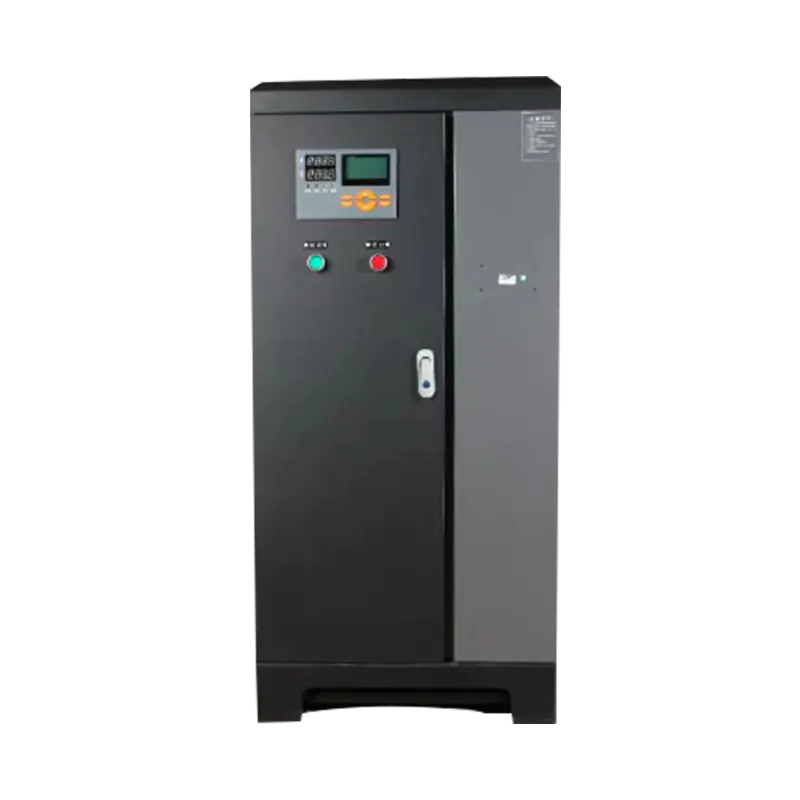
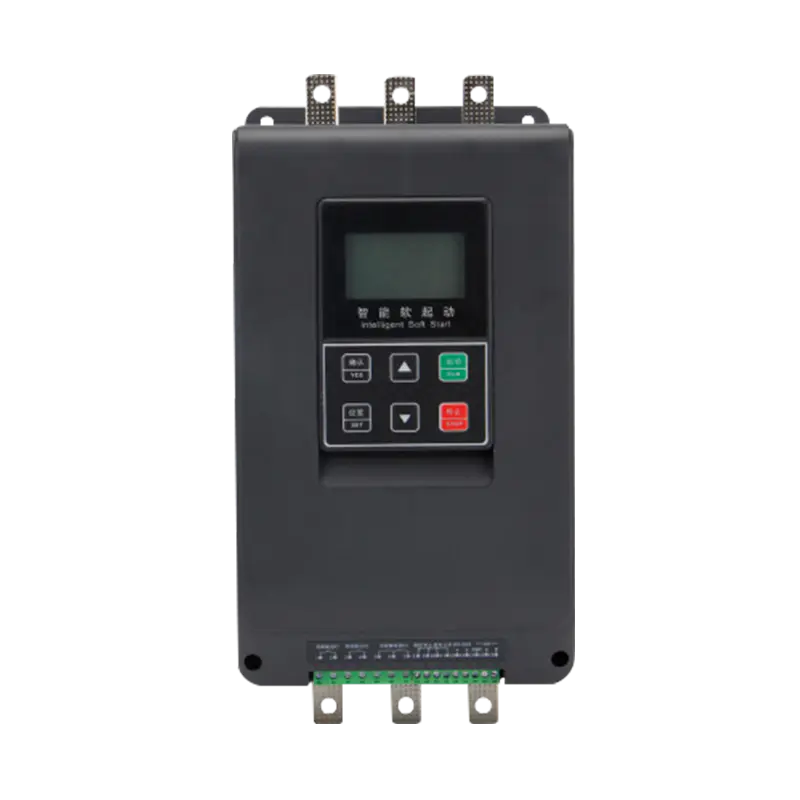
The bypass contactor and the soft starter control unit share a single enclosure. Internal electrical connections and control logic coordination are fully completed at the factory, eliminating the need for users to perform additional wiring or logic programming for the bypass circuit on-site. This design not only simplifies engineering implementation and reduces the risk of faults caused by wiring errors, but also results in a more compact and organized overall layout for the control cabinet.
4.5 Intelligent Digital Control and Communication
The product utilizes a high-performance 32-bit microprocessor as its core control unit, working in conjunction with high-precision Current Transformers (CTs) to enable real-time monitoring of the motor's operating status. Users can flexibly configure startup parameters via the LED/LCD panel or a remote communication interface (RS-485/Modbus RTU), and monitor real-time motor operating data (current, voltage, power factor, etc.). This facilitates seamless integration into host SCADA systems or industrial Ethernet control architectures.
Key Technical Specifications
The table below lists the key technical specifications for Zhejiang Xinhang Electric’s series of soft starters with built-in bypass. Specific parameters are subject to the actual selected model:
|
Power Rating
|
Overall Dimensions (mm)
|
|
H1 (Length)
|
W1 (Width)
|
D
|
|
0.75〜22kW(Stainless Steel Enclosure)
|
430
|
260
|
260
|
|
30〜37kW
|
760
|
320
|
300
|
|
45〜75kW
|
760
|
320
|
300
|
|
90〜115kW
|
1000
|
400
|
350
|
- Performance Comparison with Traditional Starting Methods
The table below provides a comprehensive comparison—across several key dimensions—between the soft starter with built-in bypass and common traditional starting methods, enabling engineers to conduct an objective evaluation for solution selection:
|
Comparison Item
|
Direct-On-Line (DOL)
|
Star-Delta
|
Star-Delta
|
Star-Delta
|
|
Starting Current
|
6–8x Rated
|
2–3x Rated
|
2–3x Rated
|
2–3x Rated
|
|
Starting Torque
|
Maximum
|
Lower
|
Lower
|
Lower
|
|
Mechanical Shock
|
Severe
|
Present
|
Present
|
Present
|
|
Impact on Power Grid
|
Severe
|
Moderate
|
Moderate
|
Moderate
|
|
Protection Functions
|
Basic
|
None
|
None
|
None
|
|
Integration Level
|
Low
|
Low
|
Low
|
Low
|
|
Installation Space
|
Small
|
Moderate
|
Moderate
|
Moderate
|
|
Service Life
|
Moderate
|
Moderate
|
Moderate
|
Moderate
|
|
Maintenance Cost
|
Low
|
Moderate
|
Moderate
|
Moderate
|
Note: The data in the table above represents reference values under typical operating conditions; actual performance may vary depending on the specific product model, motor parameters, and load characteristics.
Typical Application Scenarios
7.1 Pumping Systems
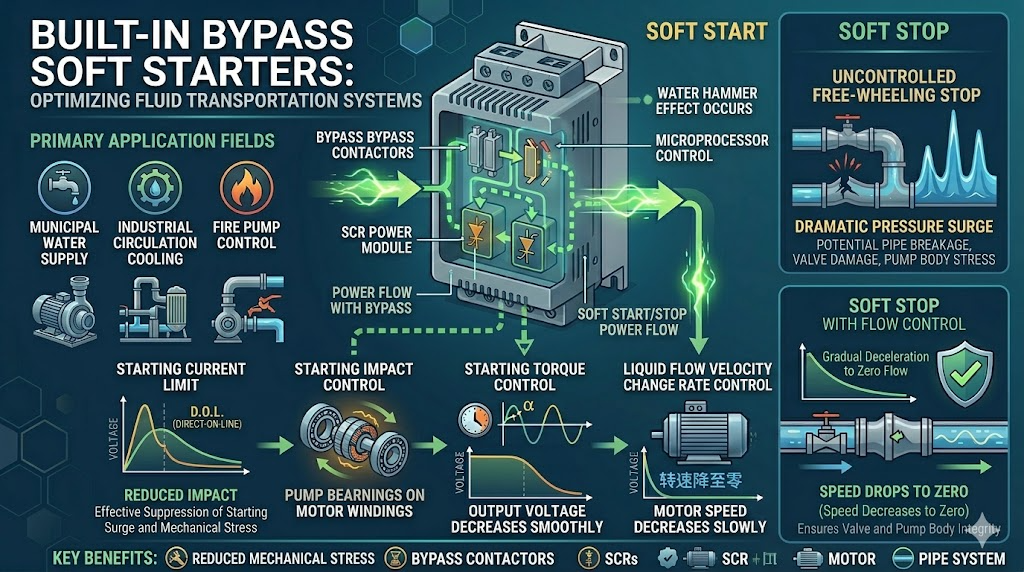
Fluid-handling equipment—such as water pumps, oil pumps, and sewage pumps—constitutes one of the primary application fields for soft starters. Soft starters with built-in bypasses effectively suppress starting shocks by precisely controlling the starting current and torque. More importantly, their "soft stop" function regulates the rate of change in fluid velocity to remain within the pipeline system's tolerance limits, thereby completely eliminating the "water hammer" effect and protecting the piping, valves, and pump bodies. Consequently, they are widely adopted in sectors such as municipal water supply, industrial circulating cooling water systems, and fire pump control.
7.2 Fans and Blowers
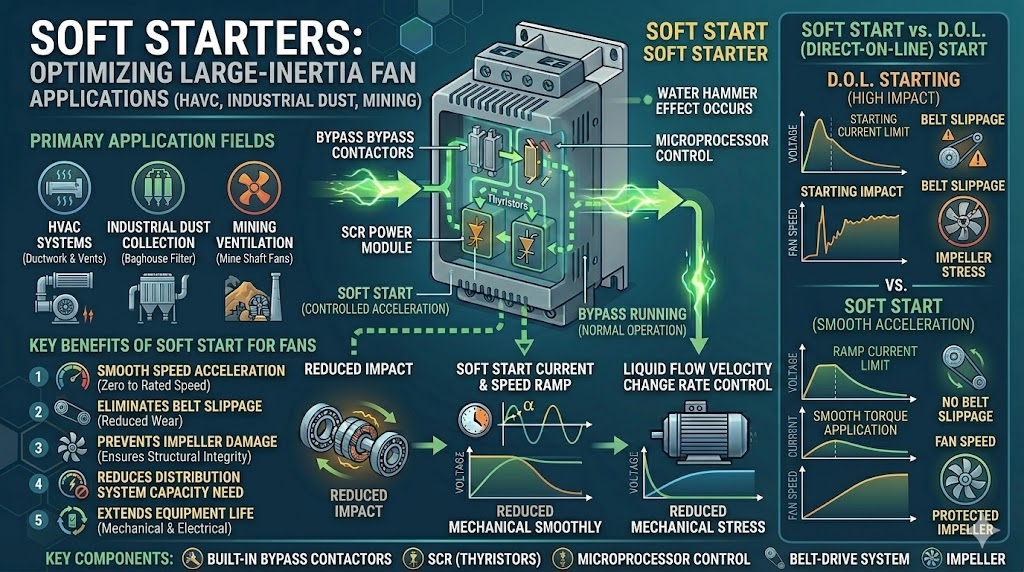
Equipment such as centrifugal fans and axial fans possesses high rotational inertia; direct-on-line starting would generate severe mechanical and electrical shocks. Soft starters enable fans to accelerate smoothly from zero speed to their rated speed, preventing belt slippage and impeller damage while significantly reducing the capacity demands placed on the power distribution system. They hold significant application value in HVAC (Heating, Ventilation, and Air Conditioning), industrial dust removal, and mine ventilation systems.
7.3 Compressors
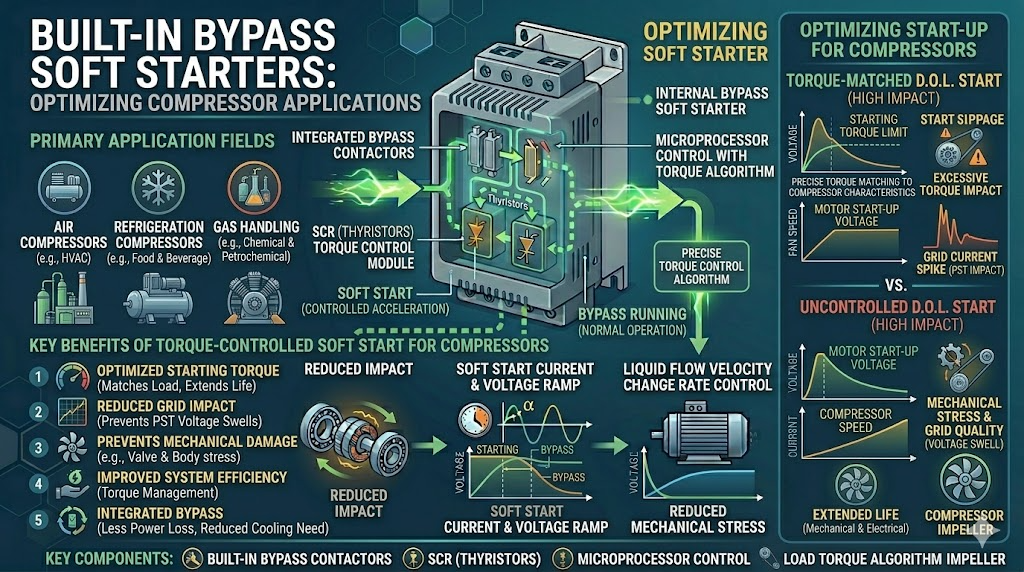
Equipment such as air compressors and refrigeration compressors has specific requirements regarding starting torque, and their impact on the power grid must be strictly controlled. The torque control mode of soft starters allows for precise matching with the compressor's load characteristics, facilitating an optimized starting process. This technology is widely utilized across the chemical, refrigeration, and gas processing industries.
7.4 Conveyor Belts and Systems
When belt conveyors are started under full or heavy load conditions, traditional direct-on-line starting methods can lead to belt slippage, tearing, or even breakage. By configuring an appropriate starting torque curve, soft starters ensure that the belt accelerates smoothly under controlled tension, thereby vastly improving equipment operational reliability. There are numerous successful application cases in the mining, port operations, grain handling, and logistics/warehousing sectors.
7.5 Mixers and Crushers
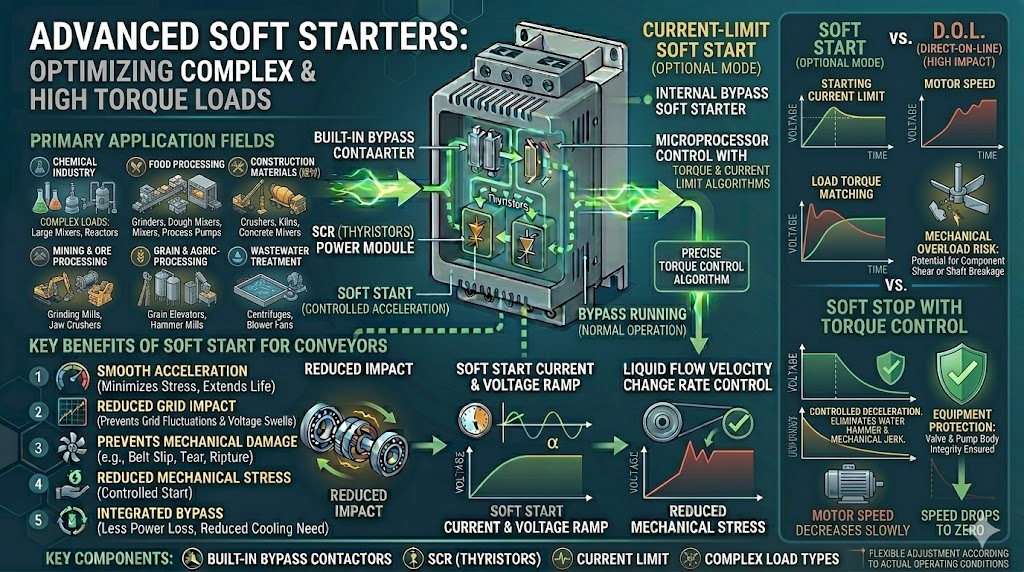
Equipment of this type is characterized by complex load profiles and high starting torque requirements. The current-limiting start and torque control modes of soft starters can be flexibly adjusted to suit actual operating conditions, making them a mature and proven solution in industries such as chemical manufacturing, food processing, and building materials.
Product Selection Guide
Proper product selection is a critical factor in ensuring the reliable operation of a soft starter. When selecting products, engineering designers are advised to adhere to the following principles:
- Rated Current Matching: The rated operating current of the soft starter must not be lower than the rated current of the driven motor. For heavy-load applications or scenarios involving frequent starts, it is recommended to select a model rated one or two capacity levels higher.
- Voltage Level Matching: Verify that the power supply voltage falls within the rated input voltage range of the soft starter; in China, 3-phase 380V is the most common operating voltage.
- Starting Frequency Considerations: In applications requiring frequent starts (e.g., numerous starts per hour), verify the product's rated starting frequency limit; if necessary, select a model featuring an enhanced heat dissipation design.
- Load Type Adaptation: Select the appropriate starting control mode based on the specific characteristics of the load (e.g., pumps, fans, compressors).
- Protection Class Requirements: Select an IP20, IP54, or higher protection class based on the installation environment (e.g., indoor/outdoor, presence of dust, humidity).
- Communication and Integration Needs: If integration with a DCS or SCADA system is required, select a model equipped with an RS-485/Modbus RTU communication interface.
The technical team at Zhejiang Xinhang Electric offers professional product selection consulting services to clients, providing optimal solutions tailored to specific motor parameters and process requirements.
Installation, Commissioning, and Routine Maintenance
9.1 Installation Precautions
The soft starter should be installed in a clean, dry, and well-ventilated environment, avoiding exposure to direct sunlight, rain, corrosive gases, or conductive dust. The installation orientation must be vertical (with heat dissipation fins aligned in the same direction) to ensure effective natural convection cooling. Control wiring and main power circuit wiring should be routed separately to prevent strong power signals from interfering with control signals.
9.2 Parameter Setting and Commissioning
Prior to initial operation, configure the starting parameters—including Initial Voltage, Ramp Time, Current Limit, and Soft Stop Time—via the control panel or upper-level software. These settings should be based on the motor's nameplate data (rated power, rated current, rated voltage) and specific process requirements. It is recommended to perform the initial commissioning under no-load conditions; proceed to a load test run only after confirming that the device is functioning correctly.
9.3 Routine Maintenance
The routine maintenance requirements for a soft starter are minimal. It is recommended to perform the following inspections periodically (quarterly or semi-annually): clean dust accumulation from the heat sink, check the tightness of the main circuit terminal screws, verify that the parameter settings align with process requirements, and review historical fault records to assess the operational health of the equipment. As the thyristor itself is a fully solid-state device, it is free from mechanical wear and tear, offering a service life far exceeding that of traditional mechanical starting devices.
Conclusion
Thanks to its advanced SCR voltage regulation technology and integrated bypass design, the three-phase motor soft starter with a built-in bypass demonstrates comprehensive advantages in terms of improving motor starting performance, safeguarding power grid quality, extending equipment lifespan, and simplifying engineering implementation. Consequently, it has emerged as one of the mainstream technical solutions within the field of industrial motor control.
Compared with traditional Star-Delta starting, auto...Compared to traditional autotransformer reduced-voltage starting methods, soft starters with built-in bypass capabilities not only demonstrate comprehensive superiority in starting performance metrics but also significantly simplify engineering implementation through their integrated design. Furthermore, their robust system of protection functions provides a powerful safeguard for the reliable operation of production equipment.
Zhejiang NENA Electric Co., Ltd. has long been dedicated to the R&D and manufacturing of electrical control and motor drive products, maintaining a comprehensive quality management system and holding various international certifications (CE, IEC, UL). The company's series of soft starters with built-in bypass covers a wide power range—from 1.5 kW to 800 kW—and supports adaptation to multiple voltage levels. Additionally, we offer OEM customization and development services tailored to specific customer application requirements, making us your reliable partner in the field of industrial motor starting control.
Reference Standards and Specifications
- IEC 60947-4-2: Low-voltage switchgear and controlgear — AC semiconductor motor controllers and starters
- GB/T 21714-2008: General technical conditions for soft starters
- IEC 60034-1: Rotating electrical machines — Rating and performance
- UL 508: Standard for Industrial Control Equipment
- Modbus Application Protocol Specification V1.1b3
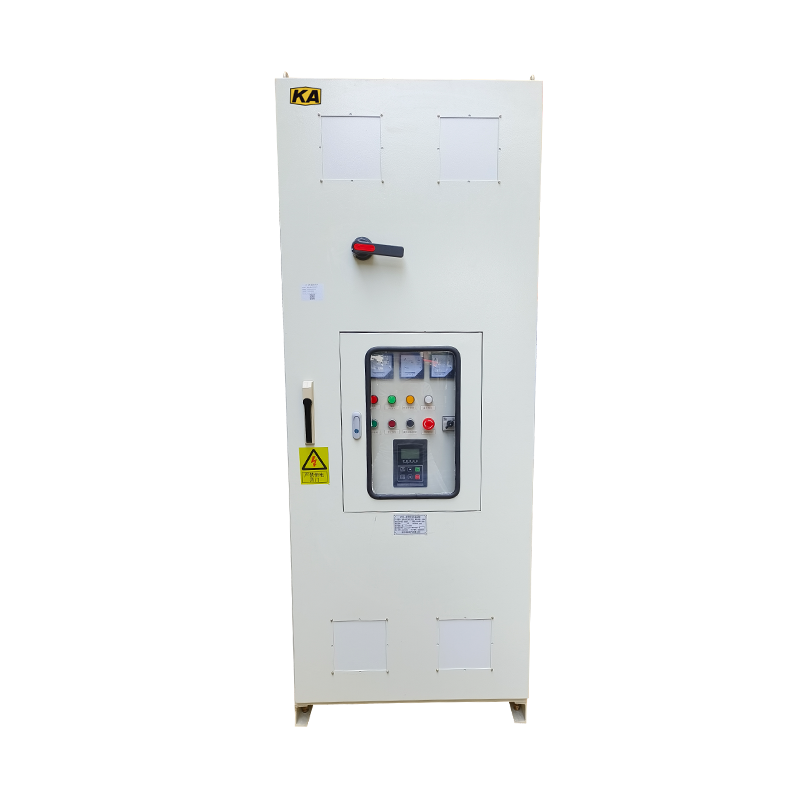
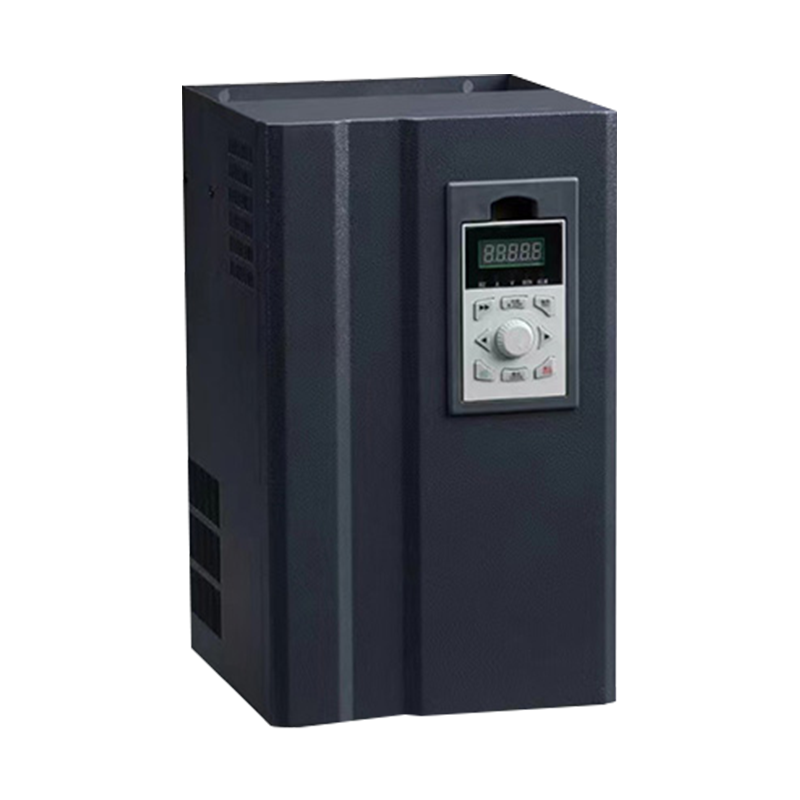
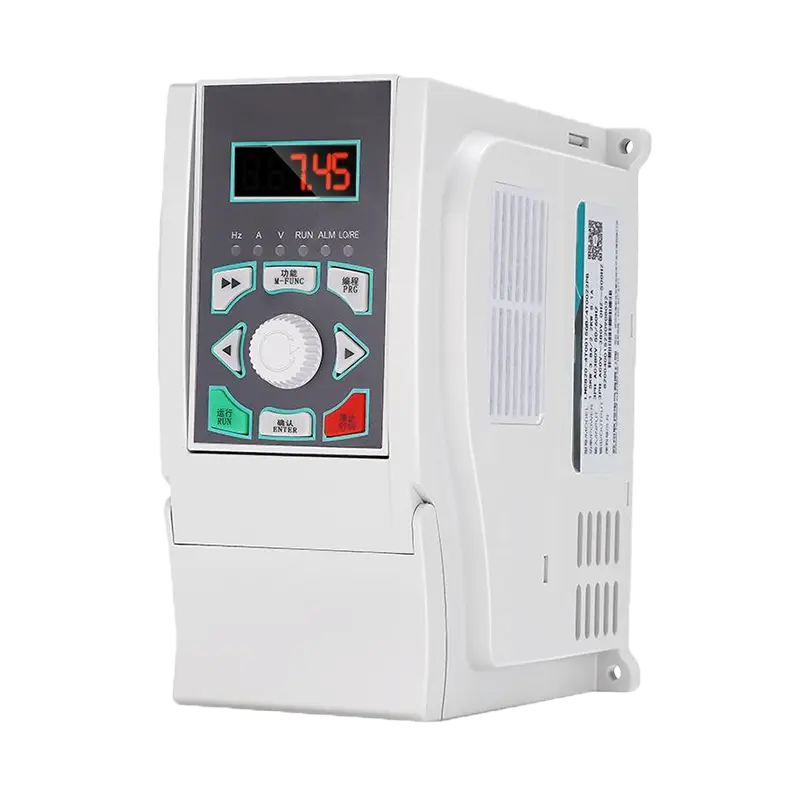
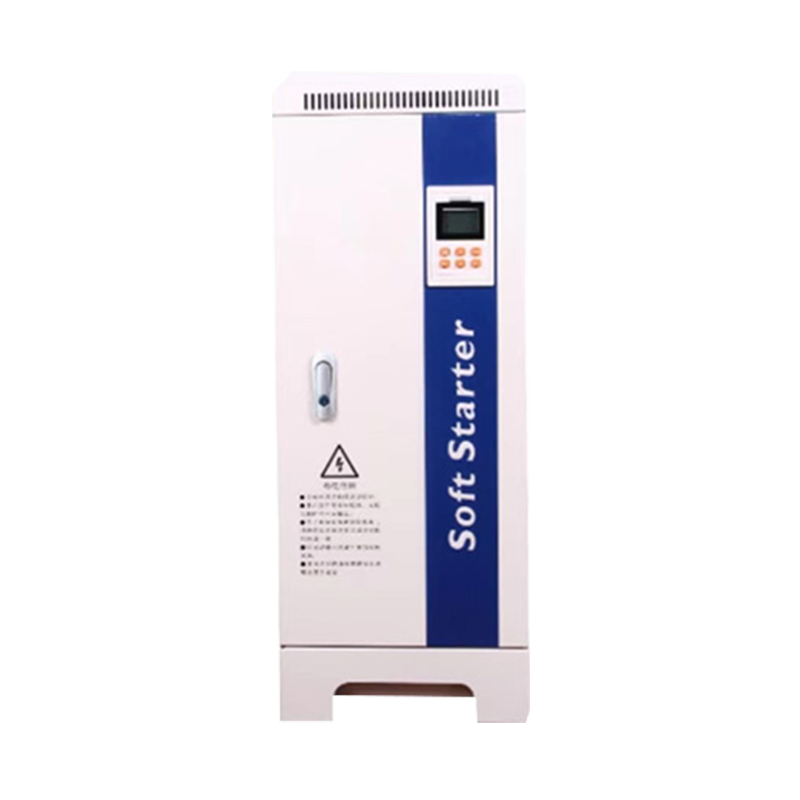
Zhejiang NENA Electric Co., Ltd. specializes in a product portfolio that includes high- and low-voltage switchgear assemblies, intelligent soft starter series, variable frequency drives (VFDs), autotransformer reduced-voltage starting cabinets, star-delta starting cabinets, as well as QZB transformers and AC contactors. Renowned for their exceptional performance, consistent quality, and professional after-sales service, the company's products have garnered unanimous acclaim from a vast clientele both domestically and internationally. Consequently, the company enjoys a high reputation within the market and significant recognition among industry peers.



 English
 中文简体
中文简体 عربى
عربى




 浙公网安备33038202003754号