Zhejiang NENA Electric Co., Ltd.
Abstract
Against the strategic backdrop of global energy transition and the "dual carbon" goals (carbon peak and carbon neutrality), frequency converters (variable frequency drives, VFDs), as core speed-regulating devices in industrial electric drive systems, are playing an increasingly critical role. Starting from the working principle of frequency converters, this paper systematically reviews their multi-dimensional value in energy saving and consumption reduction, carbon emission reduction, equipment life extension, and system control optimization, and conducts in-depth analyses of typical industrial applications such as pumps, fans, compressors, and conveyor belts. Research shows that the proper application of frequency converters can reduce the energy consumption of relevant motor systems by 30% to 60%, yielding significant economic and environmental benefits. This paper also looks ahead to technological development trends, policy orientations, and practical enterprise paths in the frequency converter industry, aiming to provide a systematic reference for the green transformation of industrial enterprises.
Keywords: frequency converter; energy saving; green manufacturing; motor drive; carbon emission reduction; industrial automation
Introduction
Currently, global climate change and energy shortages have become two core challenges constraining sustainable development. According to data from the International Energy Agency (IEA), the electricity consumption of industrial motor systems accounts for approximately 45% of total global electricity usage, with a large number of motors operating under constant power frequency and constant speed conditions, resulting in serious energy waste. In China, the annual electricity consumption of industrial motor systems exceeds 3 trillion kilowatt-hours, accounting for more than 60% of total societal electricity consumption, indicating considerable energy-saving potential.
Frequency converters precisely regulate motor speed so that the motor always operates at the optimal operating condition matching the actual load, thereby fundamentally eliminating the energy waste of "a large horse pulling a small cart." This technology is not only an effective means of industrial energy conservation but also an important tool for promoting the green transformation of manufacturing and achieving the goals of "carbon peak and carbon neutrality."
Zhejiang NENA Electric Co., Ltd. has been deeply engaged in the electric drive field for many years, committed to providing high-performance, high-reliability frequency converter products and system solutions to users across various industries. Based on industry practice and academic research, this paper systematically explains the core value of frequency converters in the fields of energy saving and green environmental protection, aiming to provide professional references for industrial users’ decision-making on energy-saving upgrades.
Working Principle and Technical Composition of Frequency Converters
2.1 Basic Working Principle
A frequency converter (Variable Frequency Drive, VFD; also known as Frequency Converter) is a power electronic device that precisely controls the speed and torque of an AC motor by varying the frequency and voltage supplied to the motor. Its core working process is divided into three stages:
(1) Rectification stage (AC → DC): The power-frequency AC power (50Hz/60Hz) from the grid is converted into DC power via a rectifier bridge and stabilized through filtering capacitors.
(2) Intermediate DC link: The DC voltage is stored and stabilized, providing a stable DC bus voltage for the inverter stage.
(3) Inversion stage (DC → AC): Using power semiconductor devices such as IGBTs (Insulated Gate Bipolar Transistors), the DC power is inverted into AC power with adjustable frequency and amplitude, which is then output to the motor.
According to the speed formula of an AC motor, changing the output frequency linearly adjusts the motor speed, achieving precise matching with the load:
n = 60f / p
where: n is motor speed (rpm); f is power supply frequency (Hz); p is the number of motor pole pairs.
2.2 Main Technical Types
- General-purpose frequency converters: suitable for most industrial applications such as pumps, fans, and conveyors; the most widely used type.
- High-performance vector control frequency converters: use field-oriented control (FOC) algorithms to achieve low-speed high torque output, suitable for precision applications such as hoists and CNC machine tools.
- Direct torque control (DTC) frequency converters: extremely fast dynamic response, suitable for applications with very high torque response requirements.
- Multilevel frequency converters: suitable for high-voltage, high-power applications, with low harmonic content and good power quality.
2.3 Core Performance Indicators
Key indicators for evaluating frequency converter performance include: rated power range, output frequency accuracy, speed regulation range, overall efficiency (modern frequency converters typically achieve over 95%), harmonic suppression capability (THD), and protection rating (IP level). These indicators directly determine the energy-saving effect and reliability of the frequency converter in specific application scenarios.
Energy-Saving Mechanism of Frequency Converters
3.1 Load Matching Principle – Eliminating Throttling Losses
In traditional constant-frequency drive systems, equipment such as pumps and fans typically run at rated speed under full load, and then flow or air volume is restricted by mechanical means such as regulating valve openings or damper positions. Although this method achieves flow regulation, it dissipates a large amount of energy as throttling pressure differential across the valve, causing significant waste.
Frequency converter drive fundamentally changes this logic: by reducing the motor speed to directly reduce flow output, the system supply precisely matches the actual demand. For centrifugal pumps and fans, the relationship between power consumption and speed follows the Affinity Laws for fluid machinery:
Flow Q ∝ speed n Head/Pressure H ∝ speed n² Power P ∝ speed n³
This means that if the motor speed is reduced to 80% of the rated value, the theoretical power consumption drops to 51.2% of the rated value (0.8³ ≈ 0.512), achieving a remarkably significant energy-saving effect. Research data show that in pump and fan applications, the comprehensive power-saving rate after adopting variable frequency speed regulation is typically between 30% and 60%.
3.2 Soft-Start Characteristics – Reducing Starting Energy Consumption and Impact
During direct-on-line starting at power frequency, the motor starting current can reach 5 to 8 times the rated current, resulting in extremely high momentary power consumption, while also causing severe impact on the power grid, leading to voltage dips and affecting the normal operation of other equipment on the same network. Frequency converters achieve smooth soft-starting of the motor by gradually increasing the output frequency and voltage, limiting the starting current to within 1 to 1.5 times the rated current, greatly reducing starting energy consumption and minimizing disturbance to the power grid.
3.3 Power Factor Improvement
When traditional induction motors operate under light load or no-load conditions, the power factor (cos φ) drops significantly, and the proportion of reactive power increases, resulting in higher apparent power demand on transformers and lines and increased distribution losses. Modern frequency converters generally incorporate active power factor correction (PFC) circuits, which can raise the input-side power factor to above 0.95, effectively reducing system reactive losses and improving power quality.
3.4 Process Optimization and Precision Control
Frequency converters can be seamlessly integrated with sensors, PLCs, DCS, and other automation control systems to build closed-loop control systems. They automatically adjust motor speed based on real-time changes in process parameters (such as pressure, flow, temperature, etc.), achieving dynamic precision control. This not only improves the stability of the production process and product quality but also avoids energy waste caused by improper manual operation.
Analysis of Typical Industrial Application Scenarios
Frequency converters are widely used across various industries. The following table summarizes six typical application scenarios and their energy-saving performance:
| System Type |
Application Scenarios & Benefits |
| Pump Systems |
Water supply & drainage, chemical processing, HVAC, etc. Power saving rate: 30-42% Typical payback period: ~18 months
|
| Fan Systems |
Industrial ventilation, flue gas treatment, etc. Power saving rate: 30-60% Typical payback period: 1-3 years
|
| Compressor Systems |
Air compressors, eliminating unloading losses Power saving rate: 25-35%
|
| Conveyor Systems |
Mining, ports, logistics On-demand speed regulation to reduce idling losses
|
| Elevator & Hoisting Systems |
Smooth speed control + regenerative braking Energy saving rate: 30-50%
|
| Textile & Paper Industry |
Synchronous multi-speed control to ensure process consistency and product quality |
4.1 Pump Systems
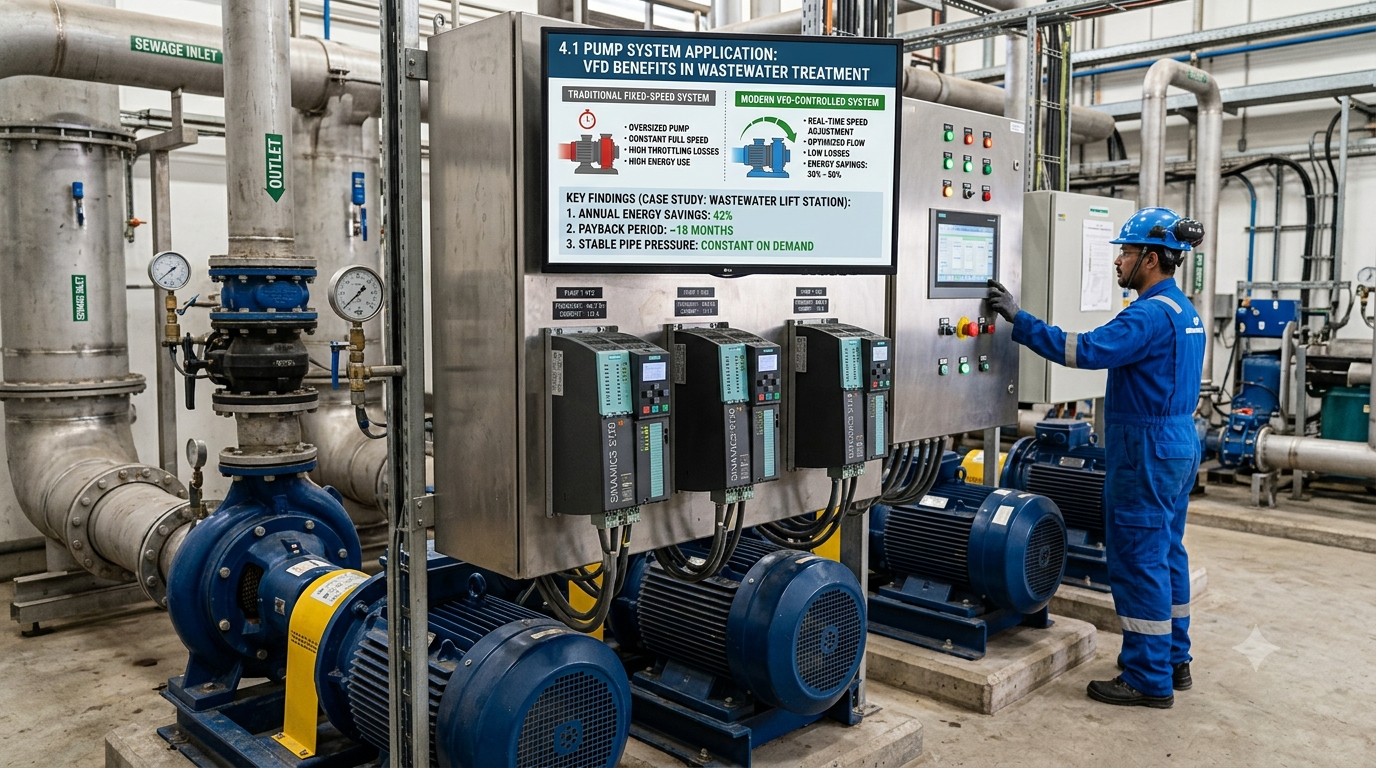
Pumps are one of the largest single load types in industrial electricity consumption, widely used in water supply and drainage, chemical, metallurgical, HVAC, and other fields. In water supply systems, traditional constant-frequency pumps are sized for maximum demand and operate for long periods with high flow and high throttling. In contrast, variable-frequency pumps can adjust their speed in real time according to water demand, maintaining the pipe network pressure consistently at the setpoint, achieving precise supply-demand matching.
Taking a municipal wastewater treatment plant as an example: after implementing frequency conversion retrofitting on the main lift pumps, the annual comprehensive power saving rate reached 42%, with a payback period of approximately 18 months. For chilled water pumps and cooling water pumps in large central air conditioning systems, adopting variable frequency control typically achieves annual electricity savings of more than 30%.
4.2 Fan Systems
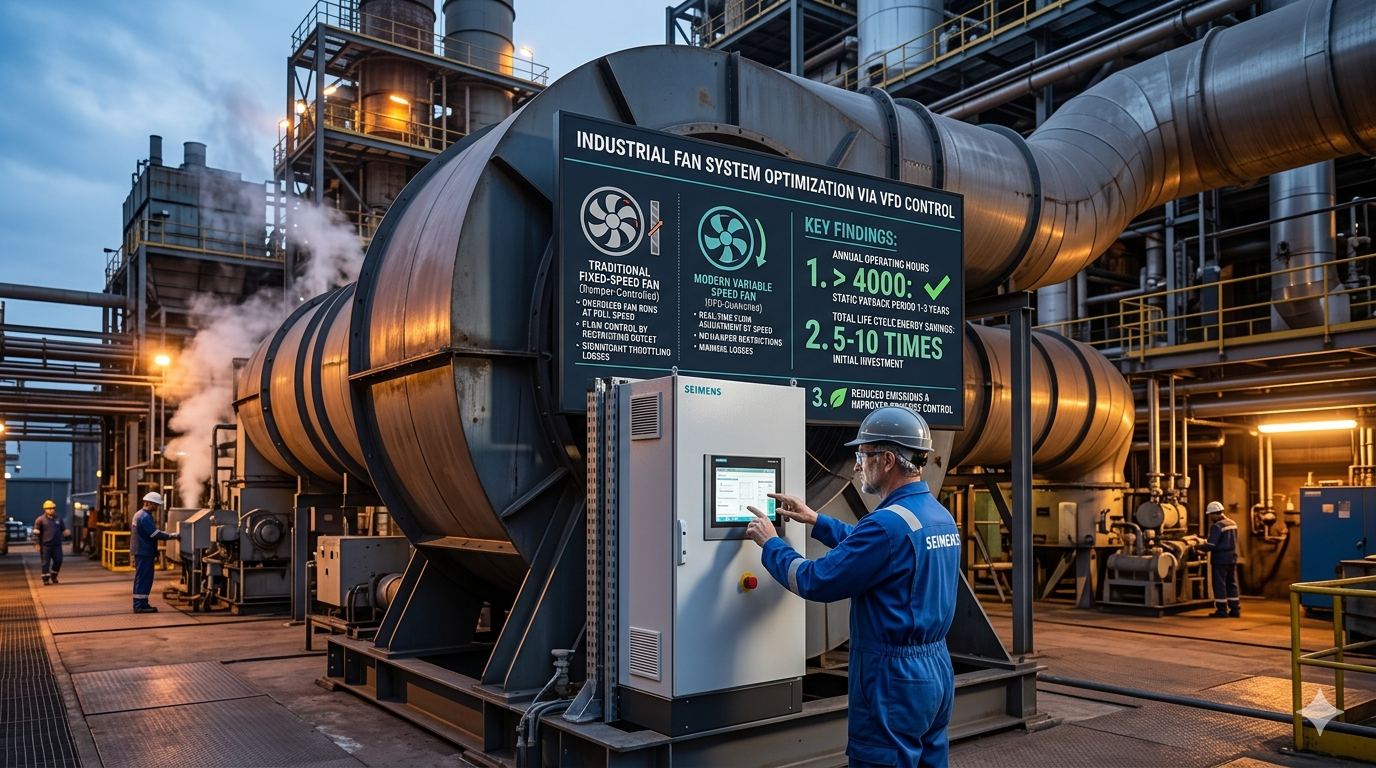
Industrial fans (including centrifugal fans and axial fans) are widely used in ventilation, process cooling, flue gas treatment, and other applications. The cubic relationship between fan power consumption and speed determines that variable frequency speed regulation is highly sensitive for energy saving in fans. In high-energy-consumption industries such as coal-fired power plants, cement plants, and smelters, frequency conversion retrofitting of large induced draft fans and forced draft fans has become a standard solution for energy saving and emission reduction. Studies show that for large industrial fans operating more than 4,000 hours per year, the static payback period of frequency conversion retrofitting is typically between 1 and 3 years, and the life-cycle energy-saving benefits can reach 5 to 10 times the initial investment.
4.3 Compressor Systems
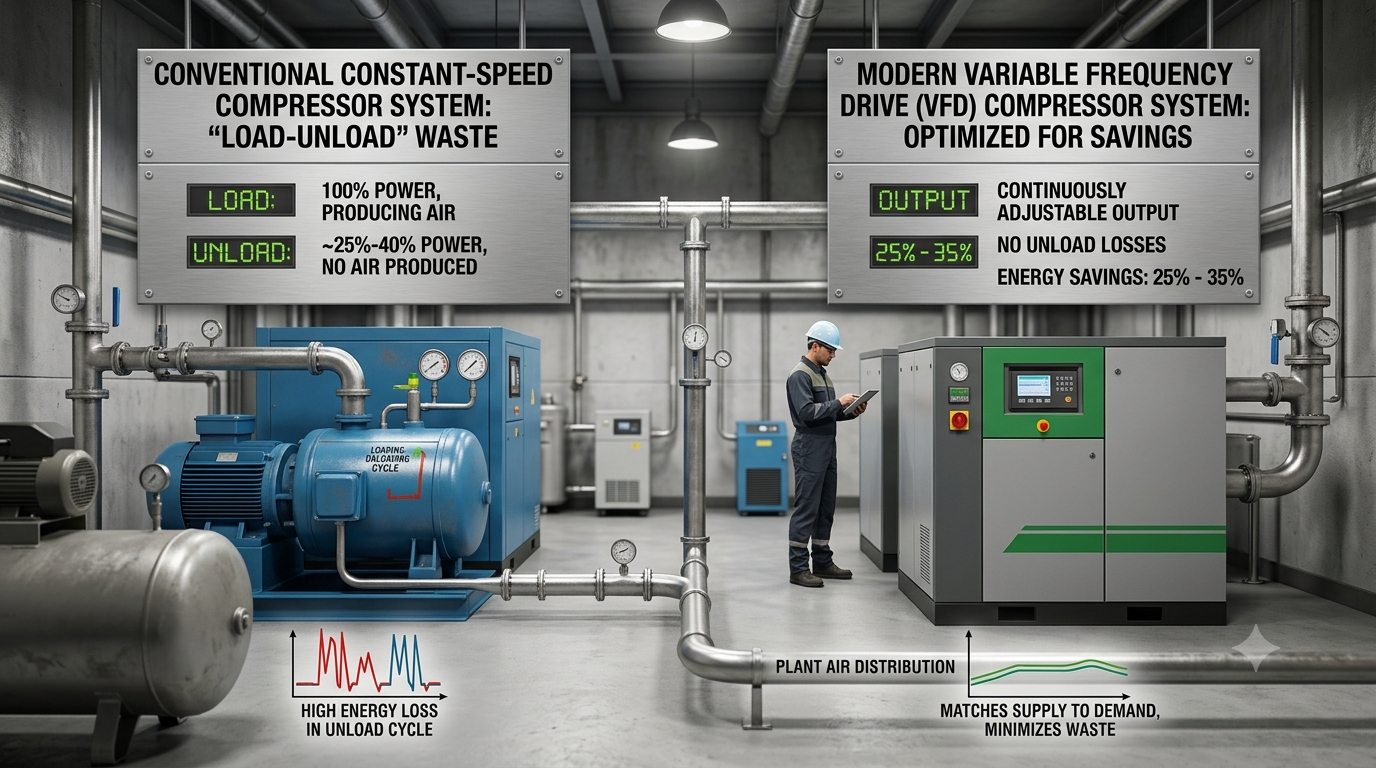
Air compressors are among the highest energy-consuming auxiliary equipment in manufacturing, typically accounting for 20% to 40% of a factory's total electricity consumption. Traditional fixed-speed screw compressors operate in a "load-unload" cycle mode, still consuming about 25% to 40% of rated power without producing effective compressed air during the unloading phase, resulting in severe waste. Variable-frequency compressors achieve continuous air volume adjustment by regulating speed, eliminating unloading losses, and saving 25% to 35% of electricity under the same air output condition.
4.4 Conveyor Belt and Material Handling Systems
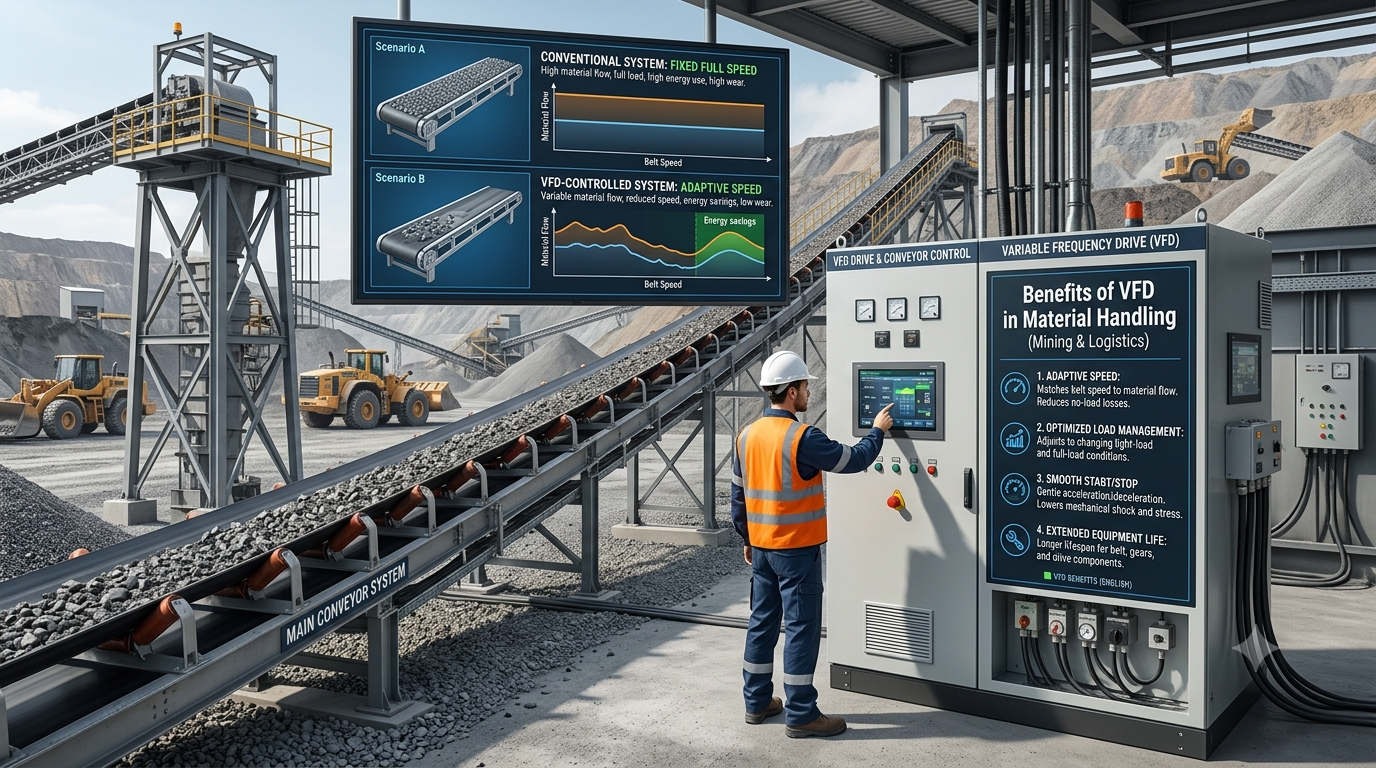
In industries such as mining, ports, food, and logistics, the load on conveyor belt systems varies significantly with time and operating conditions. Variable frequency control can adjust belt speed according to actual material flow, automatically reducing speed during light or no-load conditions to avoid idle running losses. It also enables smooth start/stop control, reducing mechanical shock and extending the service life of transmission components.
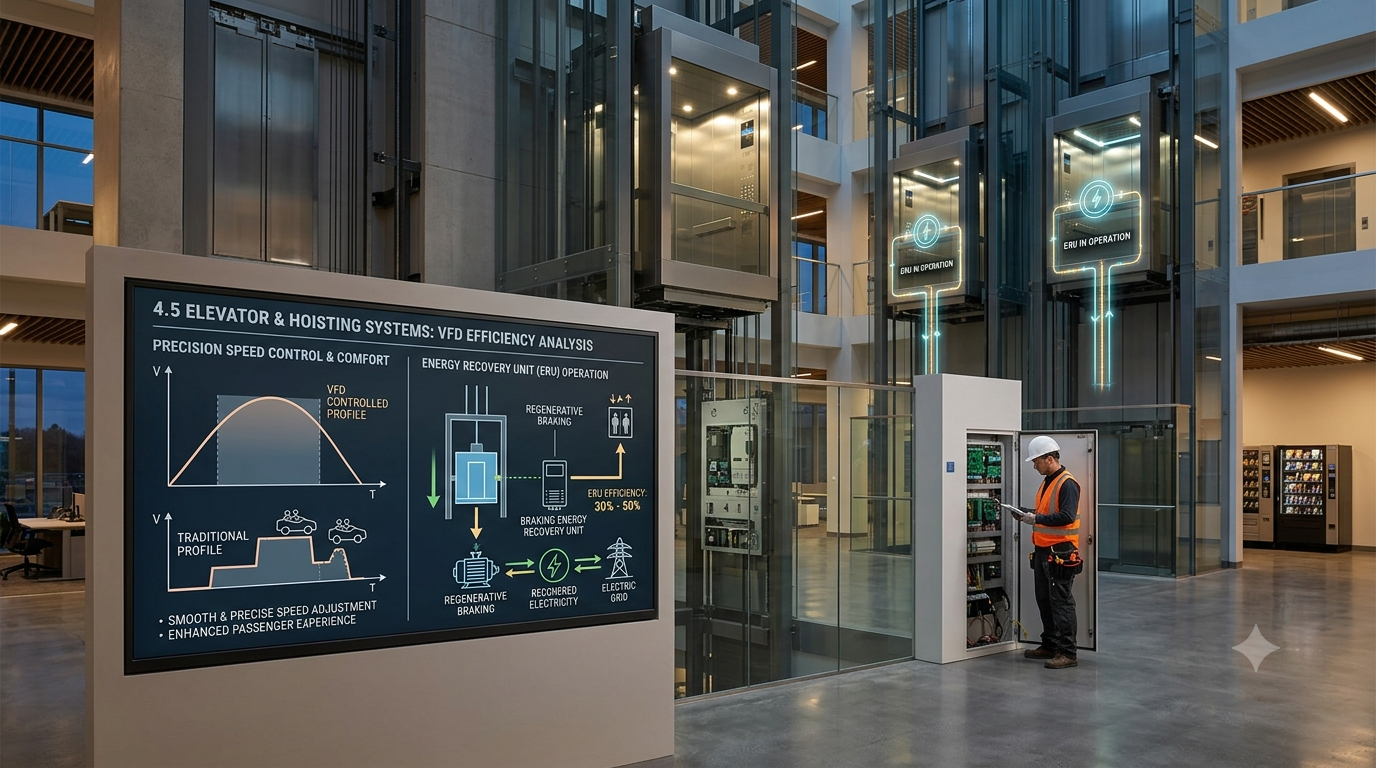
4.5 Elevators and Hoisting Equipment
Elevator drive systems demand extremely high smoothness and precision of speed regulation. Variable-frequency elevators achieve a comfortable and smooth riding experience through precise speed curve control. At the same time, equipped with an energy recovery unit, they convert kinetic energy during braking into electrical energy fed back to the grid, further reducing overall system energy consumption, achieving energy saving rates of 30% to 50%.
Environmental Benefit Assessment of Frequency Converters
5.1 Direct Carbon Emission Reduction Benefits
The reduction in electrical energy consumption directly corresponds to reduced fossil fuel consumption and CO₂ emissions at the power generation side. Taking China's average grid carbon emission factor (approximately 0.5703 kg CO₂/kWh, source: Ministry of Ecology and Environment, 2023 baseline emission factor) as a benchmark, for a system driving a 200kW motor operating 8,000 hours per year, achieving a 35% power saving rate through frequency conversion retrofitting:
Annual electricity saved = 200kW × 8,000h × 35% = 560,000 kWh
Annual CO₂ emission reduction = 560,000 × 0.5703 ≈ 319.4 metric tons
The above data show that the frequency conversion retrofitting of a single medium-sized motor can achieve significant carbon reduction benefits. For industrial enterprises with large numbers of motor equipment, the cumulative effect of systematic promotion is even more substantial.
5.2 Harmonic Pollution Reduction
Modern frequency converters are commonly equipped with Active Front End (AFE) technology or passive harmonic filters, controlling the total harmonic distortion (THD) of input current to below 5%, effectively protecting grid quality, reducing additional losses in transformers and lines, and avoiding interference with precision instruments caused by harmonics.
5.3 Noise Pollution Reduction
Fans and pumps operating at constant frequency often run at high speed under full load for long periods, generating high noise levels. After frequency conversion speed regulation, equipment operates at low speeds under low loads, greatly reducing both mechanical noise and aerodynamic noise, improving the working environment and reducing noise pollution, consistent with the requirements of green factory construction.
5.4 Extending Equipment Life and Reducing Resource Consumption
The soft-start characteristic of frequency converters eliminates the current surges and mechanical shocks that motor and mechanical transmission components experience during each start-up. Studies show that after adopting variable frequency starting, the insulation life of motor stators can be extended by 2 to 5 times, and the maintenance intervals for mechanical components such as bearings and couplings are extended by 30% to 50%. Extended equipment life means less spare parts consumption and less disposal of obsolete equipment. From a life-cycle perspective, both resource consumption and environmental burden are significantly reduced.
Frequency Converters Supporting the "Dual Carbon" Goals
6.1 Policy-Driven Background
The Chinese government has clearly put forward the strategic goals of "achieving carbon peak by 2030 and carbon neutrality by 2060," identifying industrial energy conservation as one of the core paths to realize these goals. Policy documents such as the "14th Five-Year Plan for Energy Conservation and Emission Reduction" and the "Action Plan for Industrial Energy Efficiency Improvement" explicitly call for accelerating the frequency conversion retrofitting of motor systems and promoting high-efficiency motors and variable frequency drive technologies.
The upgraded national energy efficiency standard (GB 18613-2020 "Minimum allowable values of energy efficiency and energy efficiency grades for motors") has also promoted the coordinated application of IE3 and IE4 high-efficiency motors with frequency converters, further improving overall system efficiency.
6.2 Alignment of Economic and Environmental Benefits
The promotion of frequency converter technology is not only an environmental protection action but also an investment decision with sound economic returns. According to comprehensive calculations by the International Copper Association (ICA) and other institutions, the average static payback period for frequency conversion retrofitting of industrial motors is between 1 and 3 years, and the life-cycle comprehensive energy-saving benefits far exceed the retrofitting cost. This high alignment of economic and environmental benefits makes the frequency converter one of the most valuable energy-saving technologies for industrial green transformation.
6.3 Synergistic Development with Renewable Energy
As the grid-connection proportion of renewable energy such as wind power and photovoltaics continues to increase, the fluctuation of grid frequency also increases. Industrial loads driven by frequency converters can interact intelligently with the grid, increasing electricity consumption during periods of power surplus and reducing consumption during peak hours, thereby participating in demand-side response (DSR) and serving as an important flexible resource for promoting renewable energy absorption. This marks that the value of frequency converters in the future energy system extends beyond pure energy saving to become an important component of building a new power system.
Technology Development Trends and Outlook
7.1 Application of Wide Bandgap Semiconductor Technology
Wide bandgap semiconductor devices represented by silicon carbide (SiC) and gallium nitride (GaN) offer higher switching frequencies, lower conduction losses, and superior high-temperature performance. As the cost of wide bandgap power devices continues to decline, their application in frequency converters will further increase overall unit efficiency to above 98% and significantly reduce product size and weight, ushering in a new era for frequency converter technology.
7.2 Digitization and Intelligent Upgrades
Modern frequency converters are rapidly evolving toward digitization, networking, and intelligence. Smart frequency converters with integrated edge computing capabilities can perform local data processing and predictive maintenance, analyzing motor operating data such as current, vibration, and temperature to provide early warnings of potential faults, achieving "zero unplanned downtime." Deep integration with the Industrial Internet of Things (IIoT) enables energy management systems (EMS) to centrally monitor and optimally dispatch all frequency converters in a plant, achieving system-level energy savings.
7.3 High Integration and Modular Design
Market demand continues to grow for miniaturized, modular, and standardized frequency converters. The "Integrated Motor Drive" design, which integrates the motor and frequency converter into one unit, can greatly simplify installation and wiring, reduce system losses, and improve overall reliability, representing an important future product direction.
7.4 Improvement of Global Standards and Certification Systems
As international requirements for energy efficiency and safety continue to rise, systems such as the IEC 61800 series standards (international standards for frequency converters) and the EU Ecodesign Directive (ErP Directive) are becoming increasingly stringent. Meeting higher energy efficiency class certifications (such as IE2 power drive system certification) will become a necessary condition for high-end frequency converters to enter global markets, driving the entire industry toward continuously higher energy efficiency levels.
Conclusion
As one of the most mature and efficient energy-saving technologies in the industrial electric drive field, frequency converters have demonstrated their comprehensive value in reducing energy consumption, lowering carbon emissions, improving equipment reliability, and enhancing process control accuracy through decades of engineering practice worldwide.
Facing the historic opportunity presented by the "dual carbon" strategic goals, the promotion and application of frequency converters is not only a practical requirement for industrial enterprises to reduce costs and increase efficiency but also an important mission for the green transformation of manufacturing. From the theoretical energy-saving potential revealed by the Affinity Laws, to the 30% to 60% power saving rates verified in pumps, fans, compressors, and other scenarios, and then to the quantifiable carbon emission reduction and enhanced life-cycle value of equipment, frequency converters demonstrate irreplaceable strategic value in both energy and environmental dimensions.
Zhejiang NENA Electric Co., Ltd. will continue to focus on the R&D innovation and quality improvement of high-performance frequency converter products, empowering industrial energy conservation through technological progress, practicing green development concepts through precision manufacturing, and together with industrial users, moving toward a more sustainable energy future.
Appendix: Performance Comparison Between Static Frequency Converters and Rotary Frequency Converters
| Performance Indicator |
Static Frequency Converter |
Rotary Frequency Converter |
| Efficiency |
Above 95% |
75%–85% |
| Maintenance Requirement |
Very low (no moving parts) |
High (bearings, brushes, cooling) |
| Response Speed |
Instantaneous |
Slow (limited by mechanical inertia) |
| Noise Level |
Nearly silent |
Noticeable mechanical noise |
| Installation Footprint |
Compact, small size |
Large, heavy weight |
| Output Accuracy |
Within ±0.5% |
Within ±2%–5% |
| Start-up Time |
Instantaneous start |
Preheating time required |
| Service Life |
15–25 years |
10–15 years |
References
[1] International Energy Agency (IEA). Energy Efficiency 2023. IEA Publications, 2023.
[2] Ministry of Industry and Information Technology of the People's Republic of China. "Action Plan for Industrial Energy Efficiency Improvement". 2022.
[3] GB 18613-2020. "Minimum allowable values of energy efficiency and energy efficiency grades for motors". State Administration for Market Regulation, 2020.
[4] Fitzgerald, A.E., Kingsley, C., & Umans, S.D. Electric Machinery (7th ed.). McGraw-Hill, 2014.
[5] International Copper Association (ICA). Motor Systems Efficiency. ICA Technical Report, 2021.
[6] Danfoss Drives. Variable Frequency Drives: Energy Savings and Applications. Danfoss Technical Documentation, 2023.
[7] Nordic Drives Group. Why Variable Frequency Drives are Key to Energy-Efficient and Flexible Operation. nordicdrivesgroup.com, 2025.
[8] Department of Climate Change, Ministry of Ecology and Environment. "National Average Grid Carbon Dioxide Emission Factor for 2021". 2023.
[9] IEC 61800-9-2:2017. Adjustable Speed Electrical Power Drive Systems. International Electrotechnical Commission, 2017.
[10] Mohan, N., Undeland, T.M., & Robbins, W.P. Power Electronics: Converters, Applications, and Design (3rd ed.). Wiley, 2007.



 English
 中文简体
中文简体 عربى
عربى




 浙公网安备33038202003754号