Abstract
As a core device in modern industrial automation, frequency converters (VFDs) enable precise motor speed control and are widely used in manufacturing, energy, municipal engineering, transportation, HVAC, and many other sectors. This document outlines the main application scenarios of VFDs, analyzes their value in energy saving, process improvement, and system reliability, and discusses future development trends.
Introduction: Technical Principles and Strategic Value
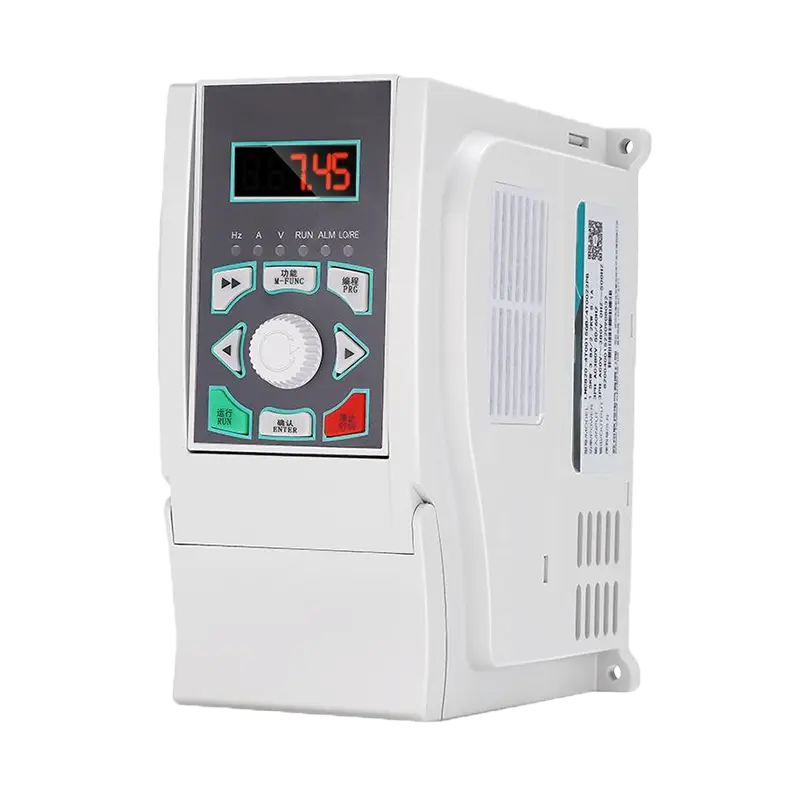
A frequency converter is a power electronic device that converts fixed-frequency AC power into variable-frequency, variable-voltage AC output. Through AC-DC-AC conversion, it enables smooth and continuous motor speed control.
Main advantages:
- Significant energy savings
- Precise process control
- Extended equipment life through soft-start functions
- Comprehensive protection features
- Intelligent integration with industrial communication protocols
Industrial Manufacturing
2.1 Machine Tools and Precision Processing
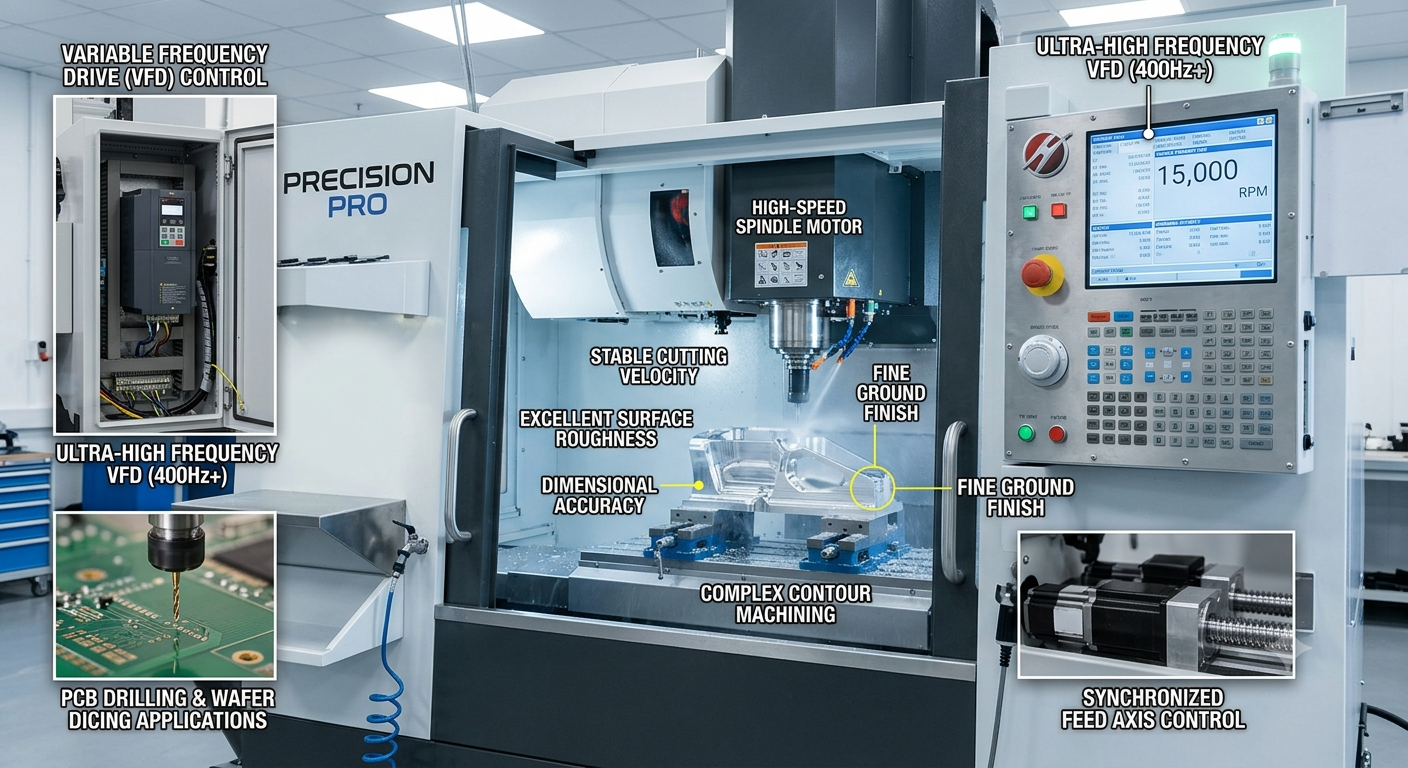
VFDs are widely used in CNC machines, machining centers, and grinding equipment to provide stepless speed regulation and maintain cutting accuracy.
2.2 Textile and Dyeing Industry
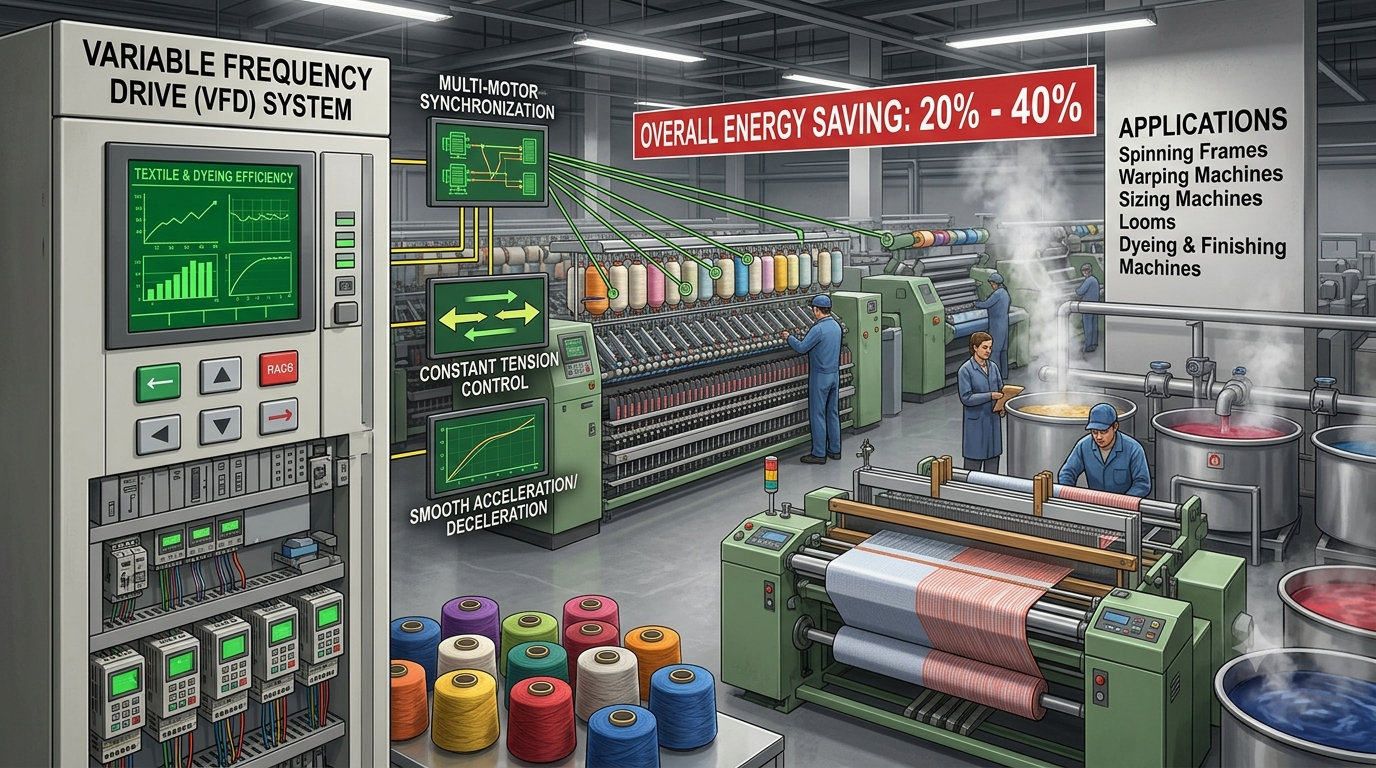
Textile processes—including spinning, weaving, and dyeing—involve lengthy workflows and complex procedures, placing extremely high demands on speed synchronization and tension control across every stage. Variable Frequency Drives (VFDs) are widely deployed in equipment such as spinning machines, warping machines, sizing machines, looms, and dyeing machines to facilitate the following functions:
- Multi-motor Synchronous Control: Ensures speed coordination across all stages—from spinning through weaving—thereby preventing yarn breakage and uneven tension.
- Constant Tension Winding Control: Automatically adjusts motor speed during the winding process in response to changes in roll diameter, maintaining constant tension and enhancing product quality.
- Smooth Acceleration and Deceleration: Minimizes damage to textile materials during start-up and shut-down phases, thereby reducing the scrap rate.
In terms of energy conservation, textile enterprises are typically major consumers of electricity; the widespread adoption of variable frequency speed control technology can reduce overall power consumption by 20% to 40%, yielding significant economic benefits.
2.3 Packaging and Logistics Transport
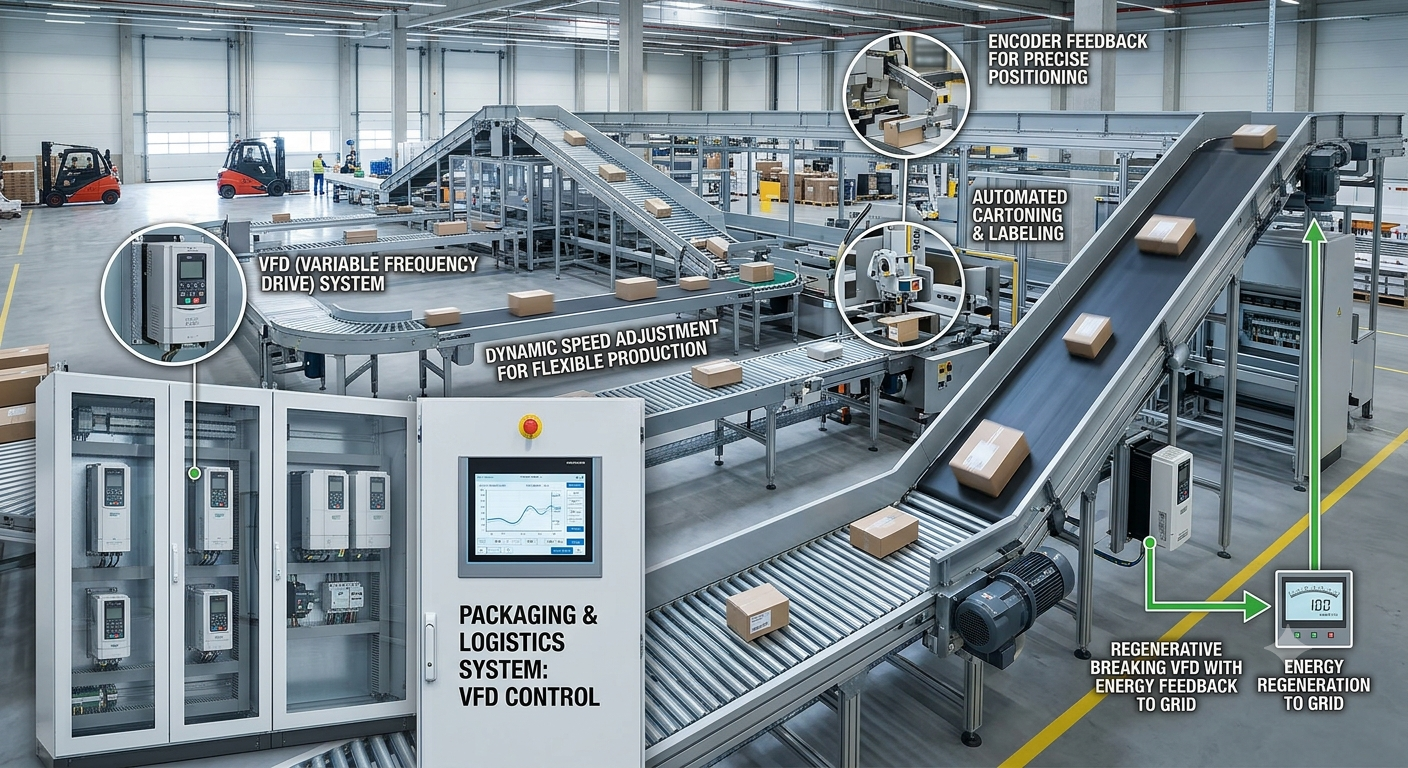
In packaging production lines and logistics warehousing systems, variable frequency drives (VFDs) power belt conveyors, roller conveyors, and sorting systems; by dynamically adjusting conveying speeds based on the output capacity of upstream processes, they enable flexible manufacturing. Furthermore, utilizing encoder feedback, these drives precisely control the start and stop positions of materials, thereby meeting the requirements of automated processes such as carton packing and labeling. During downhill conveying or braking operations, VFDs equipped with energy feedback capabilities can also return regenerative electrical energy to the power grid, thereby further reducing operating costs.
Energy and Utilities
3.1 Wind Power Generation
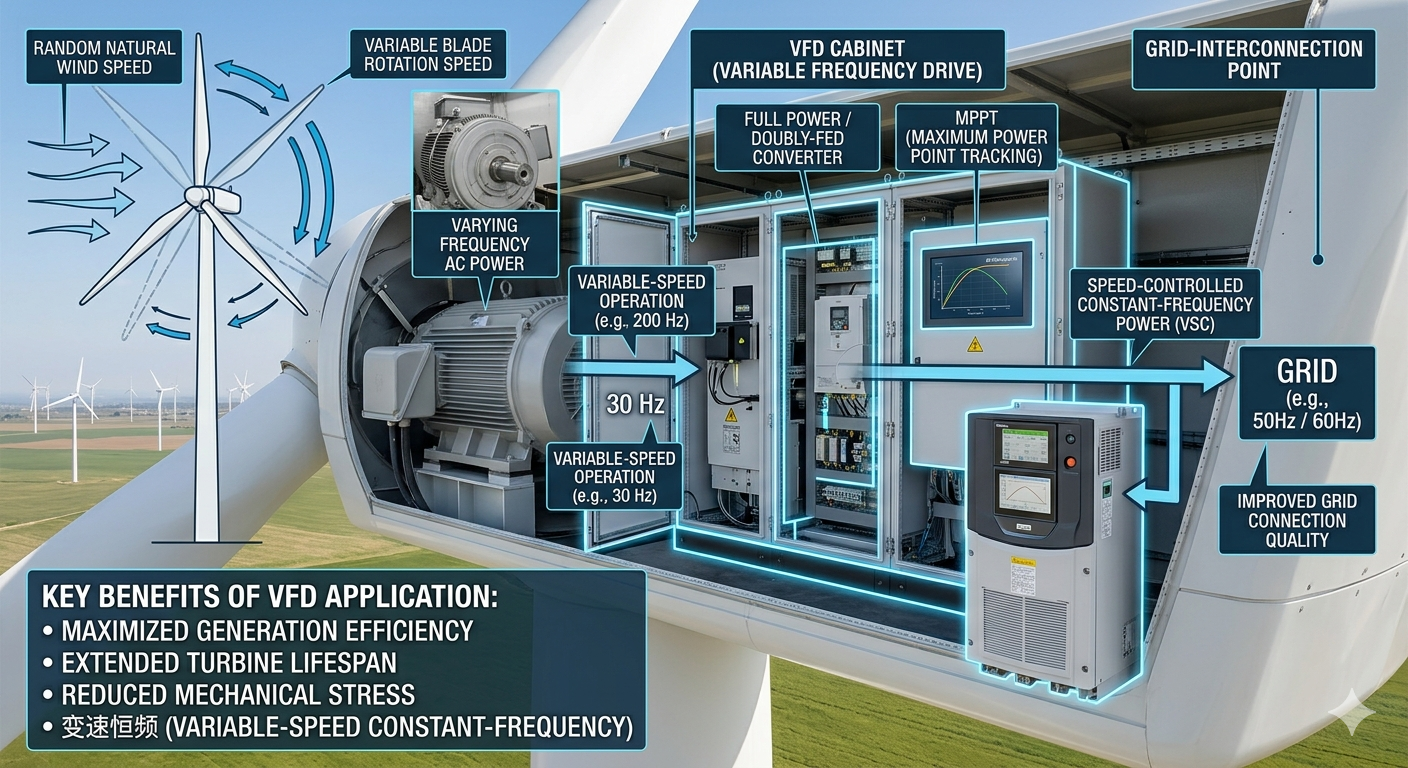
Wind power generation represents one of the most quintessential application scenarios for variable frequency drives (VFDs). Due to the stochastic nature of natural wind speeds, the rotational speed of wind turbine blades cannot remain constant; consequently, VFDs—typically full-power converters or doubly fed converters—are indispensable for converting the variable frequency of the generator output into utility-frequency power that complies with grid standards. This process enables "Maximum Power Point Tracking" (MPPT), thereby maximizing power generation efficiency across the entire range of wind speeds. The integration of VFDs has enabled modern wind turbines to achieve "variable-speed, constant-frequency" operation; this not only enhances wind energy utilization efficiency but also effectively improves the quality of grid integration, mitigates mechanical shock loads on the transmission system, and extends the overall service life of the wind turbine.
3.2 PV and Energy Storage Systems
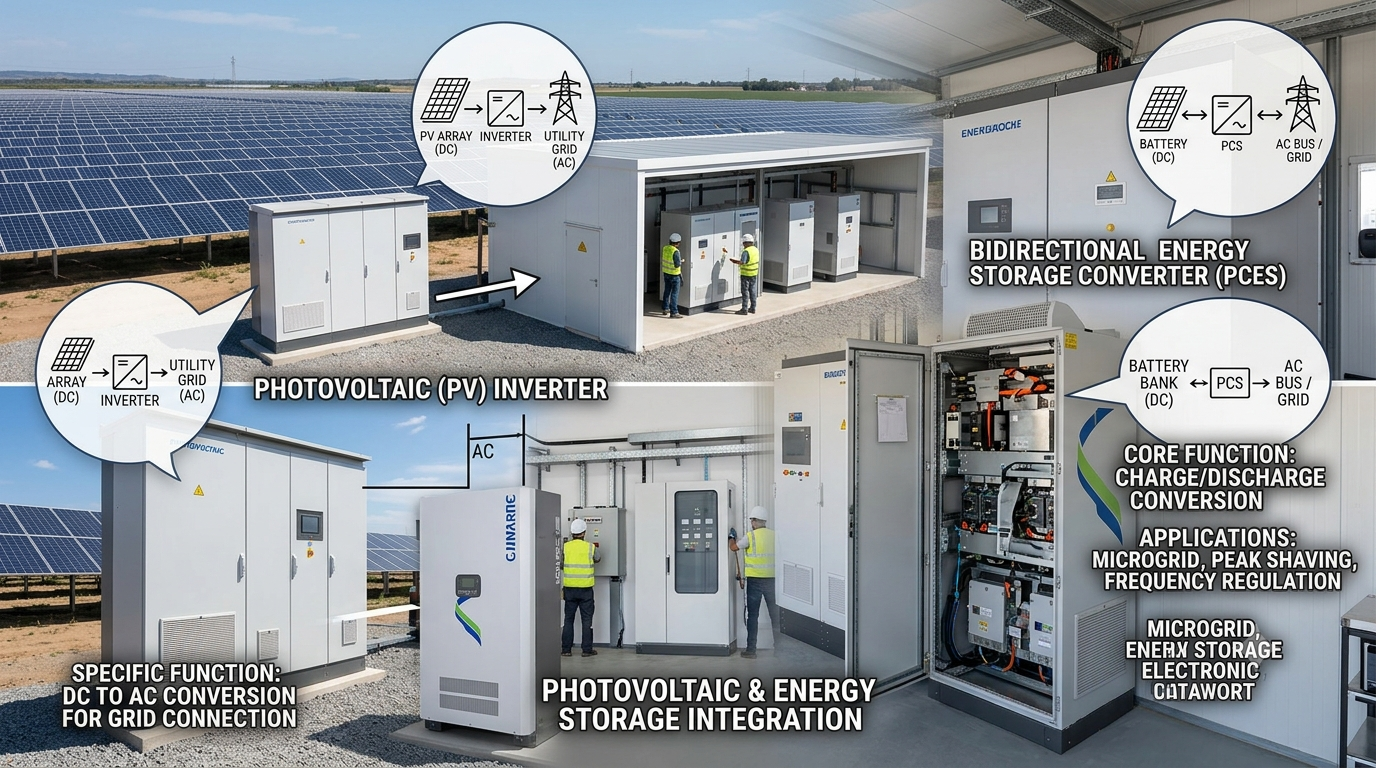
In grid-tied photovoltaic power generation systems, an inverter (a type of frequency conversion device with specific functions) converts the direct current (DC) generated by PV panels into alternating current (AC) for integration into the power grid. In energy storage applications, a bi-directional inverter—also known as a Power Conversion System (PCS) or energy storage converter—performs the dual-function task of both charging and discharging; it serves as a critical component in the construction of microgrids and systems for peak shaving and frequency regulation.
3.3 Oil and Gas Extraction and Transportation
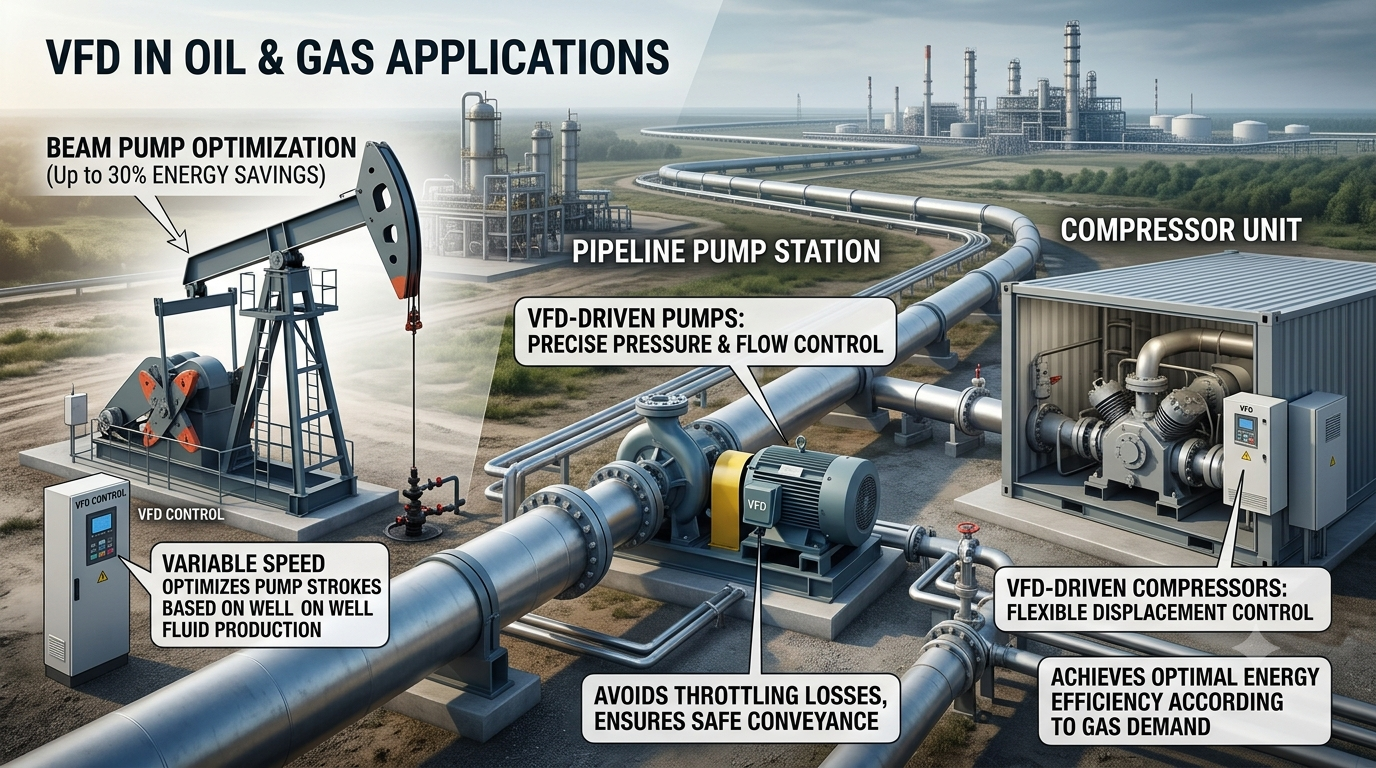
In the petrochemical industry, variable frequency drives (VFDs) are primarily utilized in core applications such as energy-saving retrofits for oil pumping units, as well as the driving of booster pumps and compressors in long-distance pipelines. Traditional beam pumping units suffer from low efficiency; however, by adopting VFD technology, the pumping stroke rate can be automatically optimized based on actual fluid production volume, resulting in an overall electricity savings rate exceeding 30%. For pipeline pumps, VFD control enables precise regulation of transmission pressure and flow rate, thereby ensuring operational safety while simultaneously eliminating throttling losses. Furthermore, VFDs for compressors allow for flexible adjustment of displacement capacity in response to gas demand, thereby achieving optimal energy-efficient operation.
Water Treatment and Municipal Engineering
4.1 Urban Water Supply Systems
Secondary booster pump stations within urban waterworks serve as a quintessential example of the application of variable frequency drive (VFD) technology. Traditional constant-speed pumps regulate water pressure by throttling flow via valves, resulting in the wasteful dissipation of substantial electrical energy in the form of throttling losses. By adopting a variable-frequency constant-pressure water supply scheme—in which VFDs adjust pump speeds in real-time based on signals from pressure sensors at the extremities of the pipe network—systems can maintain stable water pressure while typically achieving actual energy savings ranging from 20% to 50%. Furthermore, this approach effectively mitigates the water hammer effect, thereby safeguarding the integrity of the piping infrastructure.
4.2 Wastewater Treatment
In wastewater treatment plants, aeration blowers and sludge pumps represent major energy consumers. VFDs dynamically regulate aeration rates based on water quality parameters (such as dissolved oxygen concentration and influent flow volume); this not only satisfies the specific requirements of biochemical treatment processes but also prevents the wasteful consumption of electricity caused by excessive aeration. Estimates indicate that following the implementation of VFD retrofits in wastewater treatment plant aeration systems, electricity savings can reach between 30% and 45%. Based on current electricity tariffs, the typical payback period for such investments is generally no more than two years.
4.3 Irrigation and Agricultural Water Use
In modern agricultural irrigation systems, variable-frequency constant-pressure water supply units can automatically adjust the number of operating pumps and their rotational speeds based on the specific irrigation area and the water requirements of the crops. This enables precise, on-demand water delivery, effectively reducing energy consumption in agricultural irrigation and contributing to the sustainable development of the agricultural sector.
HVAC Applications
In central air conditioning systems, the combined electricity consumption of chillers, cooling water pumps, chilled water pumps, and cooling tower fans accounts for 40% to 60% of a building's total power usage. The application of variable frequency drives (VFDs) within HVAC systems has yielded revolutionary energy-saving results:
- Chiller Compressors with VFDs: By steplessly modulating cooling capacity in response to real-time fluctuations in indoor cooling loads, these units completely resolve the energy inefficiency issue—often described as "using a sledgehammer to crack a nut"—inherent in traditional fixed-frequency systems. Energy efficiency regulations, such as the EU's ErP Directive, now mandate the adoption of variable frequency technology for products achieving high energy efficiency ratings.
- VFD-Controlled Pumps: When chilled water pumps and cooling water pumps are equipped with VFD controls, the secondary side of the system can deliver cooling on an "as-needed" basis, resulting in a substantial reduction in pumping energy consumption.
- VFD-Controlled Fans (VAV Systems): Variable Air Volume (VAV) air conditioning systems utilize VFD-controlled fans to regulate airflow. By precisely distributing cooling capacity according to the actual load requirements of different zones, these systems simultaneously enhance occupant comfort and achieve significant energy savings.
Extensive practical engineering experience demonstrates that when HVAC systems undergo a comprehensive VFD retrofit, the overall energy savings can range from 20% to 60%; for large-scale commercial buildings and industrial facilities, the resulting annual electricity savings are truly substantial.
Transportation
6.1 Urban Rail Transit
The core technology underlying the traction drive systems of subways, light rail, and trams is variable-frequency speed control. Variable frequency drives (VFDs) convert power from the DC traction network—typically 750V or 1500V DC—into the variable-frequency AC power required to drive AC traction motors, thereby enabling smooth acceleration, constant-speed operation, and regenerative braking of the train. During regenerative braking, the train's kinetic energy is converted into electrical energy and fed back into the traction network for use by nearby accelerating trains; this process can yield overall energy savings of 15% to 30% within urban rail transit systems.
6.2 Marine Electric Propulsion
Modern large vessels—such as cruise ships, LNG carriers, and research vessels—are increasingly adopting all-electric propulsion systems. Marine VFDs convert the AC power generated by the ship's generator sets into variable-frequency electricity to drive both the propulsion motors and various auxiliary machinery. This not only enhances propulsion efficiency and maneuverability but also effectively reduces fuel consumption and emissions.
6.3 Port Hoisting Machinery
When port hoisting equipment—such as container bridge cranes and quay cranes—is equipped with variable-frequency drives, it enables precise control over speed and position, thereby significantly boosting loading and unloading efficiency. More importantly, the potential energy generated when heavy loads are lowered can be converted into electrical energy via VFDs equipped with energy feedback capabilities. It is estimated that this feedback rate can reach 20% to 30% of the machine's total power consumption, resulting in a substantial reduction in port operating costs.
Aerospace and Special Industries
7.1 Aviation Ground Support Equipment (400Hz Power Supply)
The civil aviation sector imposes specific requirements regarding power supply frequency: aircraft onboard systems predominantly utilize 400Hz AC power, whereas the utility grid operates at standard industrial frequencies of 50Hz or 60Hz. Aviation Ground Power Units (GPUs) employ specialized frequency converters to transform standard grid power into the 400Hz aviation-standard power supply. By providing ground-based electricity to aircraft docked at jet bridges or parked on the apron—thereby eliminating the need to run the aircraft's onboard APU (Auxiliary Power Unit)—these systems can significantly reduce airport carbon emissions and operational costs.
7.2 Laboratories and Research Facilities
Universities, research institutes, and defense industry laboratories frequently require stable power supplies of varying frequencies (50Hz or 60Hz) and voltage levels. Such supplies are essential for testing export equipment destined for diverse international markets or for conducting power adaptability experiments. Programmable frequency converters, capable of generating AC power with precisely adjustable frequency, voltage, and waveform parameters, serve as indispensable tools for global product certification testing.
7.3 Semiconductor and Precision Electronics Manufacturing
Equipment used in semiconductor wafer fabrication, lithography systems, and precision metrology instruments demands exceptionally high standards regarding power supply frequency accuracy and voltage waveform purity. By integrating frequency conversion technology with active filtering, these systems deliver a clean, stable power supply to such ultra-precision equipment. This effectively isolates the machinery from grid harmonics and voltage fluctuations, thereby ensuring the stability of manufacturing processes and optimizing product yield rates.
Construction and Engineering Machinery
Elevators and escalators represent the most quintessential applications of variable frequency drives (VFDs) within buildings. VFDs enable elevators to achieve smooth acceleration and deceleration, as well as precise floor leveling—thereby significantly enhancing passenger comfort—while simultaneously utilizing energy feedback technology to recover regenerative electricity during fully loaded descents or empty ascents; this results in overall energy savings exceeding 30%. In the field of construction machinery, large-scale equipment such as tower cranes, tunnel boring machines, and concrete mixing plants are also increasingly adopting VFD technology to ensure precise control and energy-efficient operation under complex working conditions.
Key Considerations for VFD Selection
In the face of diverse application requirements across various industries, proper selection is a prerequisite for ensuring the reliable operation of a variable frequency drive system. The key selection parameters are presented in the table below.
| Selection Dimension |
Key Selection Considerations |
| Power Matching |
The rated power of the inverter shall match the motor power with an extra 10%~20% power margin reserved; a larger margin is required for impulse loads |
| Load Type |
Fan & pump load (square torque), constant-torque load (conveyor), constant-power load (winder) feature different overload capacity requirements |
| Control Precision |
Open-loop V/f control, closed-loop vector control and Direct Torque Control (DTC) apply to scenarios with varying precision requirements respectively |
| Ambient Conditions |
Ingress Protection (IP) rating, operating temperature range, altitude (derated operation for high-altitude application), and explosion-proof grade |
| Harmonic Mitigation |
Multi-pulse rectification, Active Front End (AFE) or external harmonic filter to comply with harmonic standards such as IEEE 519 |
| Communication Interfaces |
Supports industrial communication protocols including Modbus RTU/TCP, PROFIBUS-DP, CANopen and EtherNet/IP |
| Energy Regeneration |
Whether regenerative braking energy needs to be fed back to grid determines the adoption of four-quadrant inverter or braking resistor solution |
Future Trends and NENA Electric's Commitment
As the national strategies for "Peaking Carbon Emissions and Achieving Carbon Neutrality" advance, and as the Industrial Internet and intelligent manufacturing sectors experience vigorous growth, market demand for variable frequency drives (VFDs) is poised for continued rapid expansion, accompanied by an accelerated pace of technological iteration. Looking ahead, VFDs are expected to exhibit the following key development trends:
Enhanced Efficiency: The commercialization of wide-bandgap semiconductor devices—such as Silicon Carbide (SiC) and Gallium Nitride (GaN)—will further boost VFD efficiency, reduce thermal management requirements, and enable more compact device footprints.
Intelligent Connectivity: VFDs will feature deep integration of edge computing and cloud connectivity capabilities, enabling remote monitoring, predictive maintenance, and big data analytics, thereby seamlessly integrating into Industrial Internet platforms.
High Power Density:Advancements in modular design and sophisticated thermal management technologies will drive the evolution of VFDs toward higher power density.
Multi-Domain Convergence:The highly integrated fusion of motors, VFDs, and sensors will give rise to a new generation of compact, intelligent drive units.
Zhejiang NENA Electric Co., Ltd. has dedicated itself to the field of electric drives and controls for many years. Through reliable product quality, comprehensive technical support, and continuous investment in independent R&D, we provide customers with holistic VFD solutions that cater to application scenarios across a wide spectrum of industries. We remain steadfast in our commitment to translating cutting-edge power electronics technologies into tangible energy-saving benefits and operational value for our customers, working hand in hand with them to usher in a new era of green and intelligent industry.
Keywords: Variable Frequency Drive (VFD), Variable Speed Control, Energy Efficiency, Industrial Automation, HVAC, Wind Power, Water Treatment, Rail Transit, Frequency Converter, NENA Electric
For detailed technical specifications regarding our VFD products, or to obtain customized industry-specific solutions, please feel free to contact the technical team at Zhejiang Xinhang Electric Co., Ltd.



 English
 中文简体
中文简体 عربى
عربى




 浙公网安备33038202003754号