Abstract
The frequency converter (also known as a variable frequency drive or VFD) is currently undergoing a profound technological paradigm shift. As a core device in industrial automation, energy management, and power electronics, the frequency converter is no longer merely a "speed regulation tool" but is gradually evolving into an intelligent energy management terminal that integrates innovations in power semiconductor materials, digital control algorithms, the Industrial Internet of Things (IIoT), artificial intelligence, and grid-friendly grid-connection technologies. Based on the latest research and industry data from the global frequency converter market, this paper systematically reviews the internal logic and technical pathways of integrating emerging technologies—such as wide-bandgap semiconductors (SiC/GaN), AI-driven predictive maintenance, the Internet of Things and edge computing, and grid-friendly converter control (Grid-Forming/Grid-Following)—with traditional frequency converter technology. Drawing on over thirty years of electrical manufacturing practice at Zhejiang NENA Electric Co., Ltd., this paper also explores the industrial positioning and development opportunities for Chinese electrical manufacturing enterprises amid this wave of convergence. Research indicates that technological integration has not only significantly improved the energy efficiency and reliability of frequency converters but is also reshaping the competitive landscape and value-creation mechanisms of the entire power electronics industry.
Keywords: Frequency converter; convergence of emerging technologies; wide-bandgap semiconductors; Industrial Internet of Things; grid-friendly converters; smart manufacturing
Introduction: The Paradigm Evolution from "Speed Regulation Device" to "Intelligent Energy Node"
The basic operating principle of a frequency converter is not complex—through the three stages of rectification, filtering, and inversion, it converts utility-frequency AC power into AC power with adjustable frequency and voltage, thereby enabling precise control over the speed, torque, and starting characteristics of asynchronous motors. This principle has undergone decades of iteration since its inception, yet its core value has remained unchanged: using electronic means to replace mechanical speed regulation, significantly reducing energy consumption, minimizing equipment wear, and improving process precision.
However, as the digital economy and the "dual-carbon" goals advance in parallel, the technological environment and application scenarios in which frequency converters operate are undergoing structural changes. On the one hand, global industry has placed increasing emphasis on energy efficiency and carbon emissions, and industrial motor systems—as the single largest end-user of global electricity consumption—are facing dual drivers from both policy and market forces for speed regulation and energy-saving retrofits. On the other hand, emerging technologies represented by wide-bandgap semiconductors, the Industrial Internet of Things, artificial intelligence, and new power grid architectures are penetrating power electronic equipment at an unprecedented pace. Multiple industry studies point out that the next growth curve of the frequency converter market will be primarily driven by the deep integration of these emerging technologies with traditional frequency conversion technology, rather than by simple capacity expansion.
From a market size perspective, the global frequency converter industry (including static and rotary types) continues to maintain steady expansion. Although estimates from various market research institutions differ, the trend judgments are highly consistent: the global frequency converter market is generally in the range of USD 25–28 billion during the 2024–2025 period, and is expected to grow to approximately USD 44–50 billion by around 2033, with a compound annual growth rate (CAGR) roughly in the range of 5%–9% during this period. The industrial VFD (variable frequency drive) market segment in particular is projected to grow from approximately USD 24–30 billion in 2025 to USD 32–50 billion by 2030–2034. This growth comes not only from replacement and upgrading in traditional manufacturing, HVAC, water treatment, and other existing markets but also from incremental demand in emerging application scenarios such as data centers, renewable energy, electric transportation, and smart factories. Against this industrial backdrop, this paper systematically examines the specific pathways and strategic implications of the convergence between frequency converters and emerging technologies.
The Four Major Technological Pathways of Emerging Technology Convergence
Based on comprehensive observations from power electronics academic research, patent analyses, and industry research reports, the technological integration in the frequency converter field mainly proceeds along the following four interwoven pathways: wide-bandgap semiconductor material innovation, AI-driven intelligent control and predictive maintenance, Industrial Internet of Things and edge computing integration, and grid-friendly converter technology oriented toward new power systems.
2.1 Wide-Bandgap Semiconductors: Redefining the Physical Limits of Power Devices
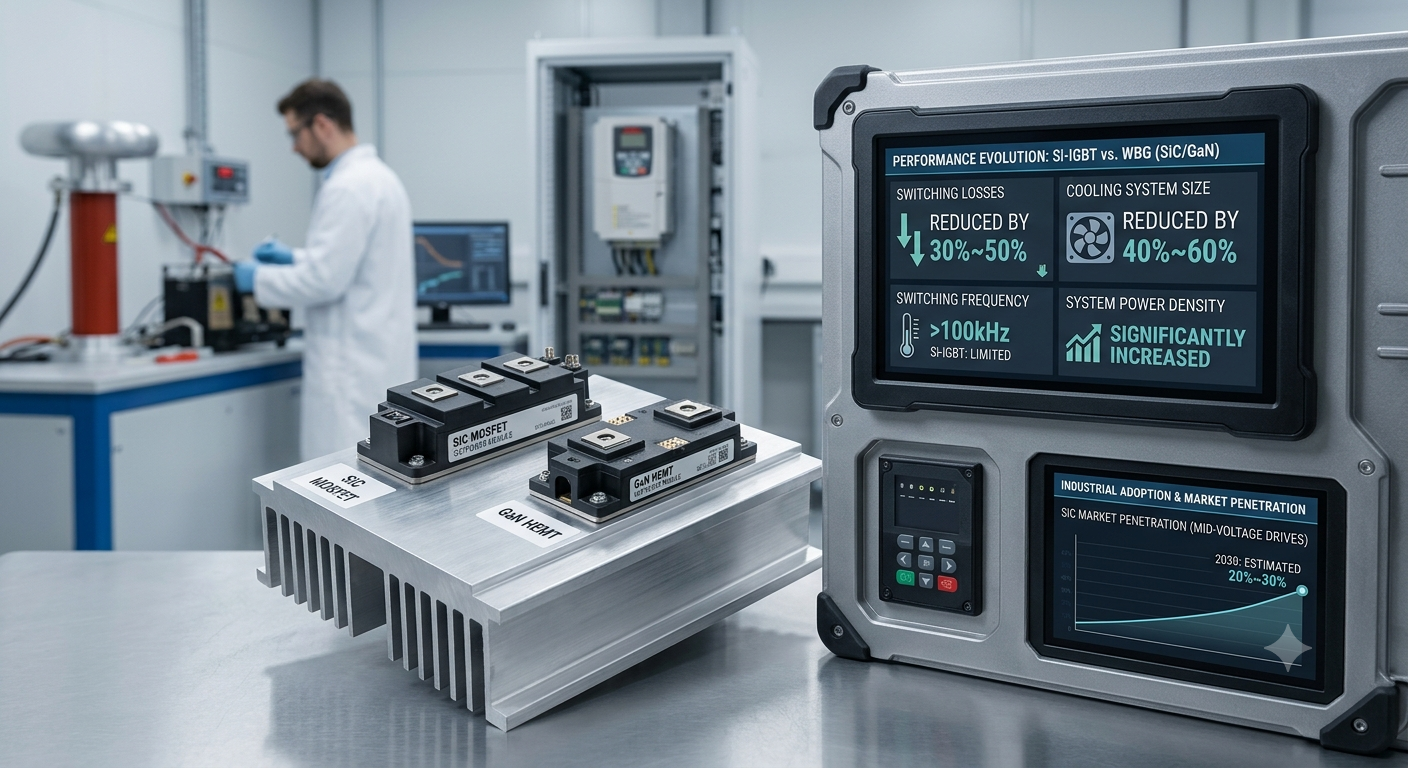
Traditional frequency converters commonly use silicon-based insulated-gate bipolar transistors (Si-IGBTs) as power switching devices, with an upper operating temperature limit typically around 150°C and switching frequencies constrained by the material's inherent physical characteristics. In recent years, wide-bandgap semiconductor materials represented by silicon carbide (SiC) and gallium nitride (GaN) have been rapidly replacing traditional silicon-based devices, becoming the core technological pathway for upgrading frequency converter power modules. Relevant patent and technical analyses show that compared with traditional silicon-based IGBTs, SiC/GaN devices can reduce switching losses by approximately 30%–50%, reduce heat dissipation system requirements by 40%–60%, raise the upper operating temperature limit to around 200°C, and achieve switching frequencies exceeding 100 kHz, thereby creating conditions for the miniaturization of passive components and the enhancement of system power density.
The industrialization process of wide-bandgap semiconductors also exhibits clear phased characteristics: although the cost of SiC devices in medium- and low-voltage frequency conversion applications remains relatively high at present, industry analyses generally expect that by around 2030, the market penetration rate of SiC devices in medium-voltage VFD applications is likely to reach 20%–30%. For frequency converter manufacturers, this means that the selection of power modules and thermal design will enter a new round of technological iteration. The enterprise that can first achieve the engineering application and cost-controllable utilization of wide-bandgap devices will be able to establish differentiated advantages in key indicators such as efficiency, size, and reliability.
2.2 Artificial Intelligence and Predictive Maintenance: Making Frequency Converters "Capable of Thinking"
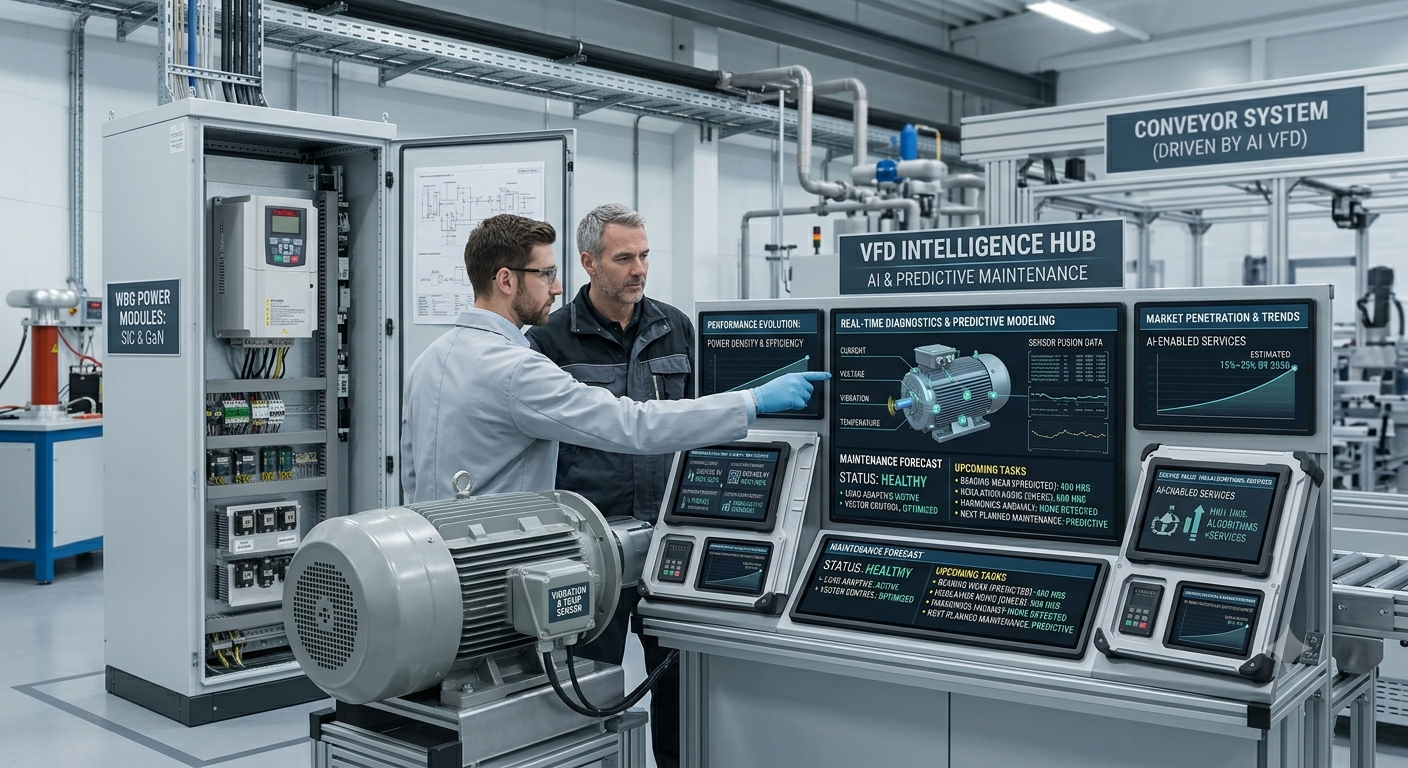
If wide-bandgap semiconductors address the "hardware limits," then the introduction of artificial intelligence technology is redefining the "software capabilities" of frequency converters. A new generation of frequency converters generally integrates digital signal processor (DSP) chips and intelligent algorithm modules, enabling them to perform vector control, load-adaptive identification, and fault self-diagnosis. Building on this foundation, artificial intelligence further elevates the frequency converter from a "passive instruction-executing" role to a "proactive decision-making" unit with predictive capabilities. Through real-time collection and machine learning modeling of multidimensional operational data—including current, voltage, vibration, and temperature—the system can identify potential fault characteristics such as bearing wear, insulation aging, and harmonic anomalies in advance, thereby transforming the traditional "periodic maintenance" model into a "condition-based maintenance" and "predictive maintenance" model.
Industry studies commonly list AI-driven predictive maintenance and adaptive control algorithms as one of the core technological directions reshaping the competitive landscape of VFDs. For plant operators, this transformation directly translates into reduced downtime and lower maintenance costs. For frequency converter manufacturers, it also means that product value is extending from one-time hardware sales toward integrated "hardware + algorithms + services" solution models.
2.3 Industrial Internet of Things and Edge Computing: The "Networking" Process of Frequency Converters
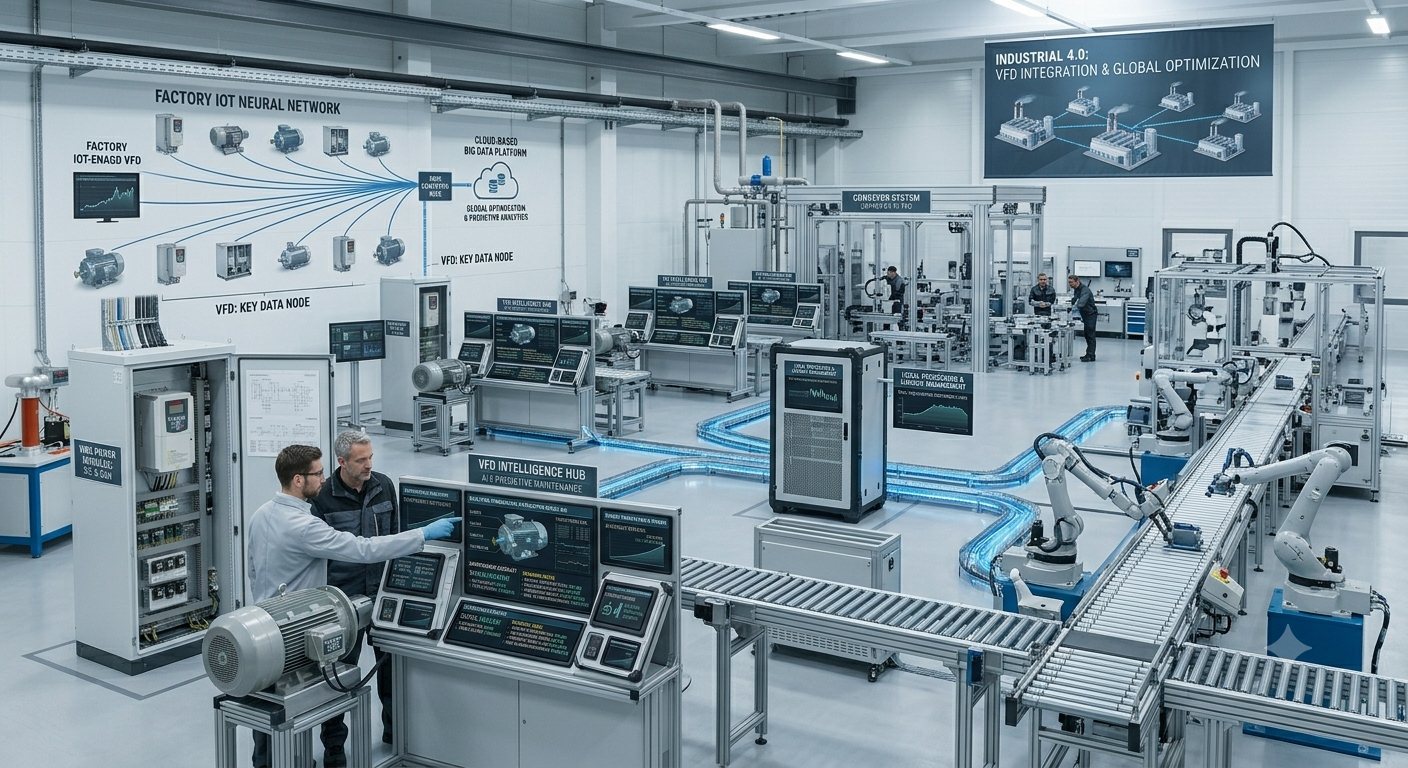
If a single frequency converter is regarded as the "nerve ending" of a motor system, then IoT technology is connecting these nerve endings into a "neural network" that covers an entire plant—and even spans across geographical locations. IoT-enabled frequency converters can upload operational parameters in real time to the cloud or edge computing nodes. Combined with big data analytics platforms, this enables collaborative optimization across multiple devices, multiple production lines, and even multiple factories. Industry studies indicate that IoT integration, cloud-based monitoring platforms, and predictive analytics are becoming key enablers for frequency converter manufacturers to tap into new growth markets, with related applications extending from traditional manufacturing to data centers, medical facilities, and commercial buildings, where power quality and continuity are highly critical.
At the same time, the introduction of edge computing is alleviating the latency and bandwidth pressures associated with centralized cloud processing: certain critical control decisions can be executed locally on the frequency converter or at the edge of the production line in real time, while only aggregated data and anomaly alerts are uploaded to the cloud. This balances real-time responsiveness with system scalability. This architecture is also highly aligned with the overall technical roadmap of smart factories and Industry 4.0, making the frequency converter a true key data node within smart manufacturing systems, rather than merely an isolated actuating component.
2.4 Grid-Friendly Converter Technology: From "Motor Control" to "Grid Support"
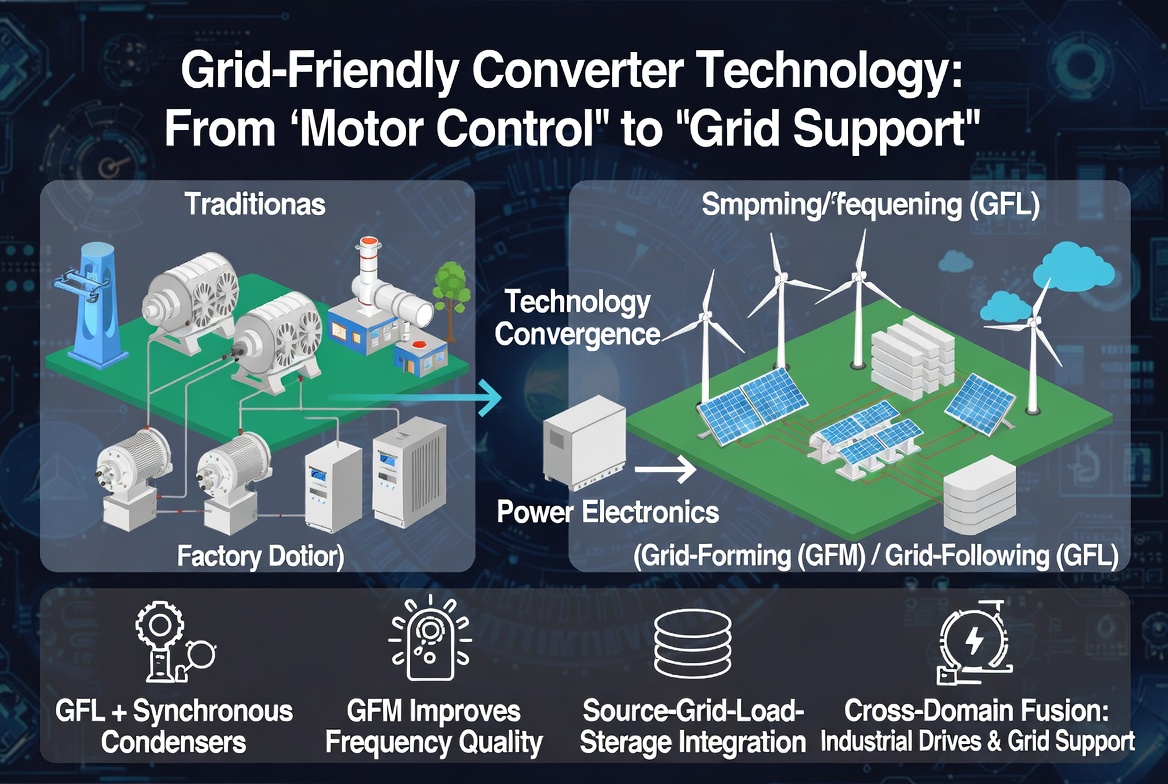
As the share of wind power, photovoltaics, and other new energy generation continues to rise, the traditional power system dominated by synchronous generators is transitioning toward a new power system dominated by power electronic converters. The latest research in the power system field indicates that two types of converter control strategies—Grid-Following (GFL) and Grid-Forming (GFM)—have significantly different impacts on system frequency quality. Research results show that Grid-Forming converters can generally and significantly improve the system's frequency quality, while the coordinated operation of Grid-Following converters (such as those used in wind power and energy storage) with synchronous condensers and other equipment can also meet comparable frequency quality standards to a certain extent.
Although this research direction appears to focus on converter control strategies at the large power system level, its underlying technical logic—namely, how converters maintain frequency and voltage stability under dynamic disturbances—shares deep commonalities with the stability control of industrial frequency converters in motor drive scenarios. It is foreseeable that as the coordinated dispatch requirements among distributed energy resources, energy storage systems, and industrial loads continue to grow, the converter control technologies in the industrial and grid application scenarios will exhibit further cross-convergence. This also provides a strategic window for frequency converter enterprises to proactively lay out integrated "source-grid-load-storage" technical capabilities.
Global Frequency Converter Market Development Trends: A Data Perspective
To more intuitively present the market evolution trends against the backdrop of technological convergence, the table below summarizes recent estimates from multiple authoritative market research institutions regarding the global frequency converter market (including the industrial VFD sub-segment) in terms of size and growth rates. It should be noted that due to differences in statistical scopes among institutions (such as whether rotary frequency converters are included, and coverage of different voltage levels and application areas), the specific figures exhibit a certain range. However, the growth trends and the identification of driving factors are highly consistent.
| Data Source & Caliber |
Base Year Market Size |
Forecast Target Year |
Forecasted Size |
Compound Annual Growth Rate (CAGR) |
| Compound Annual Growth Rate (CAGR) |
approx. USD 28 billion in 2025 |
2033 |
Sustained growth calculated by CAGR |
9.41% |
| Global Frequency Converter Market (Alternative Caliber) |
approx. USD 25.8 billion in 2024 |
2033 |
approx. USD 44.4 billion |
5.89% |
| Global Frequency Converter Market (Including Rotary Type) |
approx. USD 22.7 billion in 2023 |
2032 |
approx. USD 49.9 billion |
9.15% |
| Industrial Variable Frequency Drive (VFD) Market |
approx. USD 30.1 billion in 2025 |
2034 |
approx. USD 50.4 billion |
5.9% |
| Industrial Variable Frequency Drive (VFD) Market (Alternative Caliber) |
approx. USD 24.7 billion in 2025 |
2030 |
approx. USD 32 billion |
5.3% |
| Static Frequency Converter (SFC) Segment Market |
approx. USD 1.5 billion in 2024 |
2033 |
approx. USD 2.9 billion |
8.5% |
Table 1: Summary of Global Frequency Converter and Sub-segment Market Sizes and Growth Forecasts (Data compiled from publicly available market research reports, published 2025–2026)*
From a regional perspective, the Asia-Pacific region—driven by ongoing industrial automation and manufacturing upgrades in countries such as China and India—has become the region with the highest global market share for frequency converters and is expected to continue maintaining its leading position. The European market, particularly Germany and the United Kingdom, is expected to lead growth among developed markets from 2026 to 2033, benefiting from the dual drivers of stringent energy efficiency regulations and smart manufacturing strategies. The North American market is also maintaining steady growth, driven by data center construction, grid modernization, and electrification transitions. Notably, frequency converter applications in specialized fields such as marine, aerospace, and defense are becoming one of the faster-growing segments, driven by the rising demand for offshore wind power, shore power system construction, and the electrification retrofitting of aging vessels.
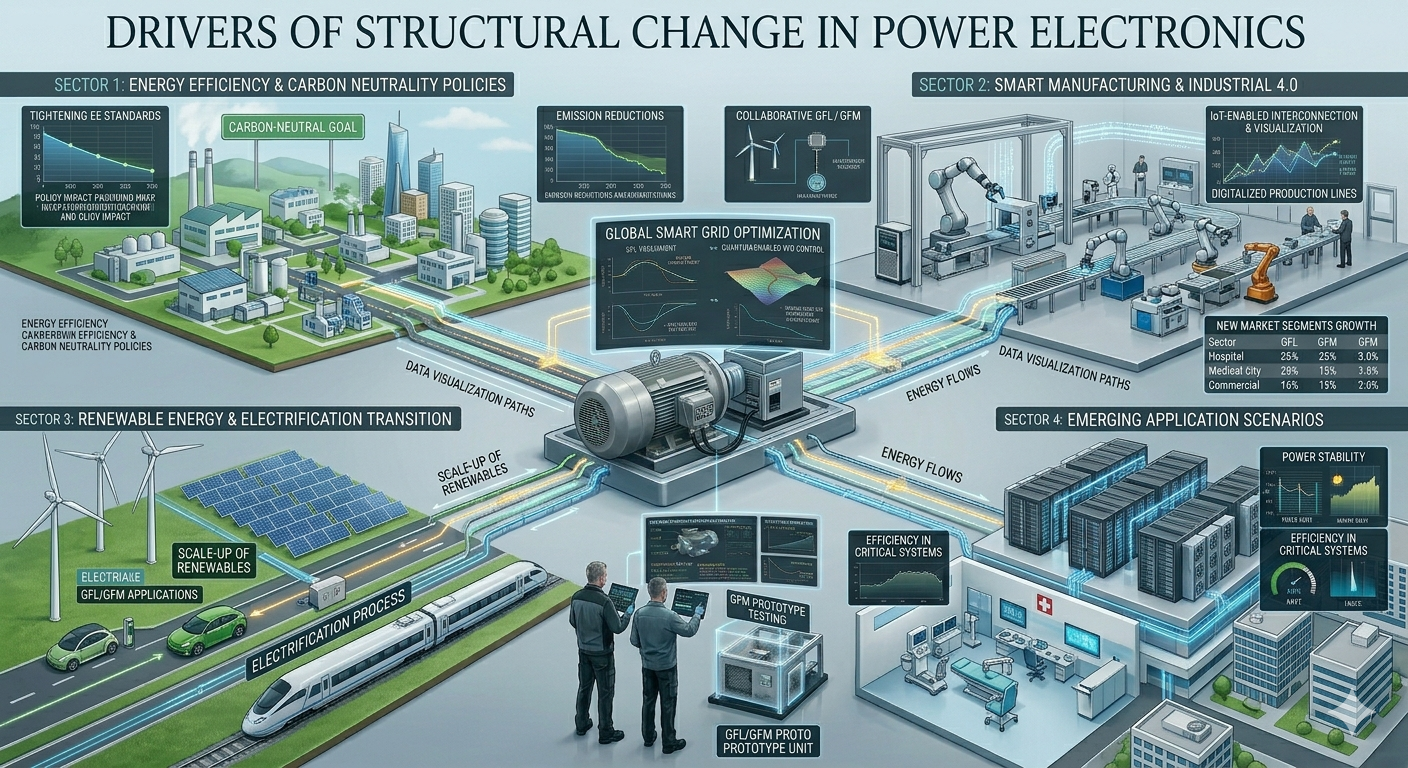
3.1 Structural Changes in Driving Factors
Synthesizing the consensus across various industry studies, the factors currently driving growth in the frequency converter market have expanded from the earlier, singular focus on "energy conservation and consumption reduction" to a more complex and diverse set of drivers:
Energy Efficiency and "Dual-Carbon" Policy Drivers: Continuously tightening government standards for industrial motor system energy efficiency, combined with industrial upgrading pressures driven by carbon neutrality goals, constitute the most fundamental and enduring source of demand for the frequency converter market.
Deepening of Smart Manufacturing and Industry 4.0: The requirements of smart factory construction—such as equipment interconnectivity, data visualization, and automated coordination—have made IoT- and digitally-enabled frequency converters a "standard" rather than an "optional" component of production line upgrades.
New Energy and Electrification Transitions: The large-scale grid integration of renewable energy sources such as wind power and photovoltaics, along with the electrification process in transportation and industrial sectors, have created incremental space for frequency converters in new scenarios such as renewable energy generation converters and electric transportation supporting facilities.
Expansion of Emerging Application Scenarios: The increasing requirements for power supply stability and efficiency in data centers, medical facilities, and commercial buildings are making these rapidly growing new segments within the application landscape of frequency converters.
The Reshaping of the Industrial Value Chain by Technological Convergence
The convergence of emerging technologies with frequency converters is not only reflected in improved product technical parameters but also, at a deeper level, is reshaping the entire industry's value-creation logic and competitive rules.
4.1 Value Migration from "Hardware Manufacturing" to "Hardware-Software Integration"
Traditionally, the core competitiveness of frequency converter manufacturers was primarily reflected in hardware dimensions such as power device selection, thermal design, and mechanical reliability. However, after the deep involvement of artificial intelligence and the Internet of Things, the intelligence level of control algorithms, the usability of data platforms, and the predictive maintenance and energy efficiency optimization services provided around the entire equipment lifecycle are becoming new value growth points. This means that the R&D investment structure of frequency converter enterprises needs to gradually expand from being dominated by hardware engineers to a multidisciplinary R&D system that encompasses embedded software, data science, and cloud platform architecture.
4.2 Role Transformation from "Standalone Product" to "System Solution"
Whether it is the support role of grid-friendly converter technology for "source-grid-load-storage" coordination or the empowerment of industrial IoT for multi-device collaborative optimization across an entire plant, both point to the same trend: the frequency converter is evolving from a relatively independent "standalone product" into a key node within a larger system architecture. For frequency converter manufacturers, this requires not only an understanding of the technical details of motor control itself but also a system-level perspective that enables them to design products and services from the standpoint of customer process flows, energy management, and even grid interaction.
4.3 Evolution from "Regional Competition" to "Global Standards Collaboration"
Leading international enterprises such as ABB, Siemens, Danfoss, Schneider Electric, and Rockwell Automation continue to occupy significant shares of the high-end frequency converter market, leveraging their first-mover advantages in wide-bandgap semiconductor applications, AI algorithms, and global service networks. At the same time, manufacturing bases represented by China's "Electrical Capital"—the Yueqing industrial cluster in Zhejiang Province and its surrounding areas—are accelerating their catch-up in the mid-to-high-end market, thanks to their complete industrial chain supporting facilities, cost-control capabilities, and increasingly robust technological R&D levels. The evolution of this competitive landscape is essentially the result of the interplay between the diffusion speed of emerging technologies and the efficiency of industrial chain collaboration, and it provides a significant window of opportunity for Chinese electrical manufacturing enterprises with sustained R&D investment capabilities.
Industry Practice: Zhejiang NENA Electric's Technology Convergence Pathway
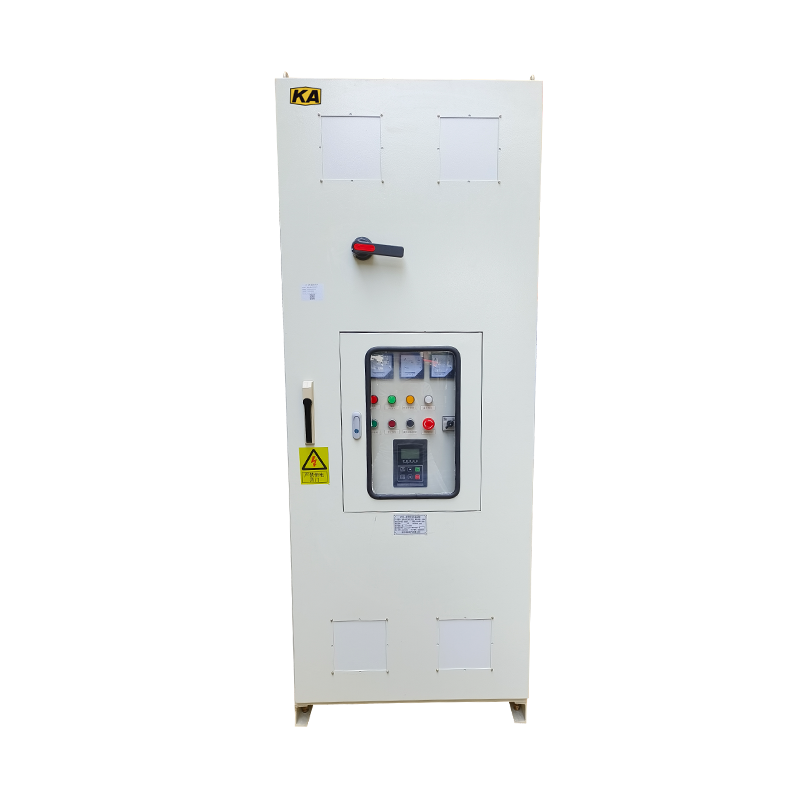
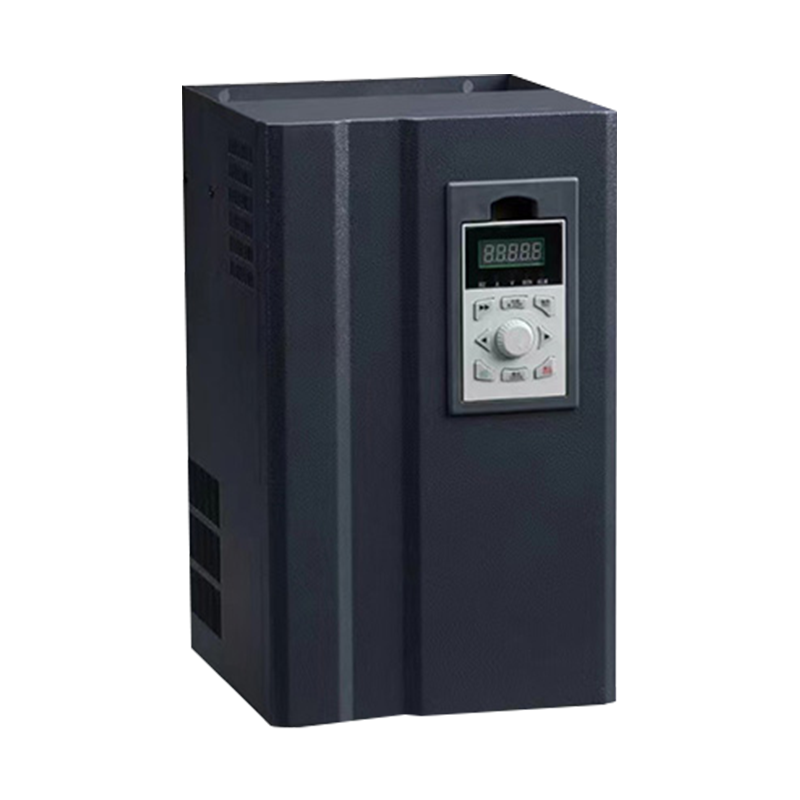
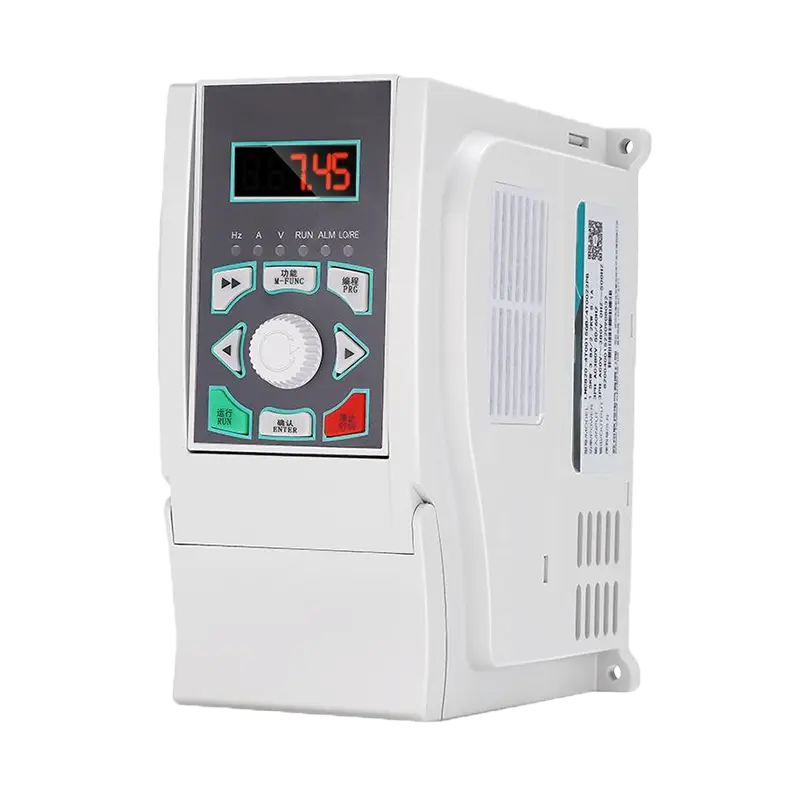
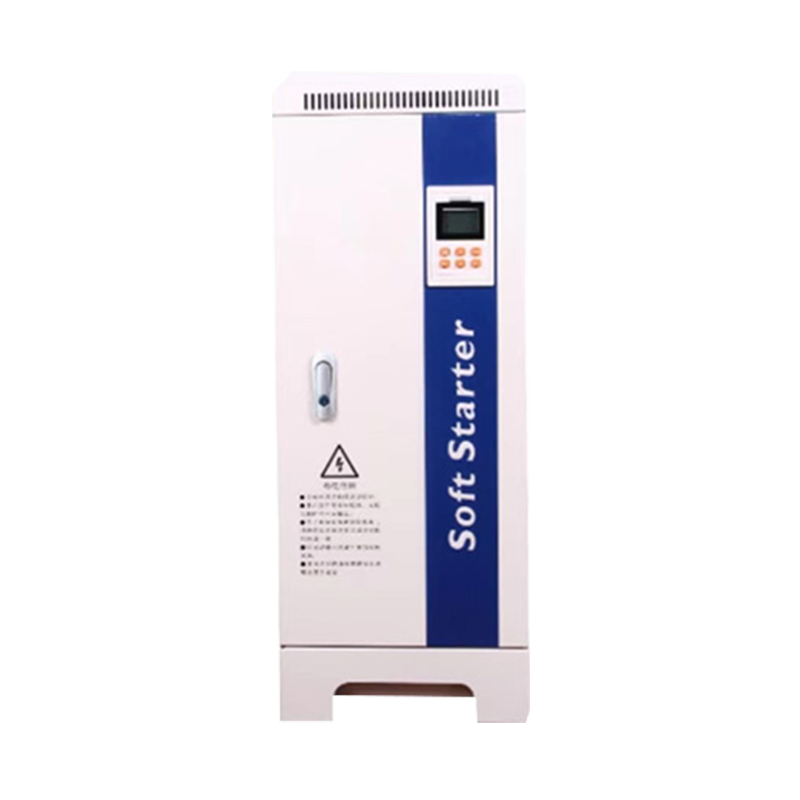
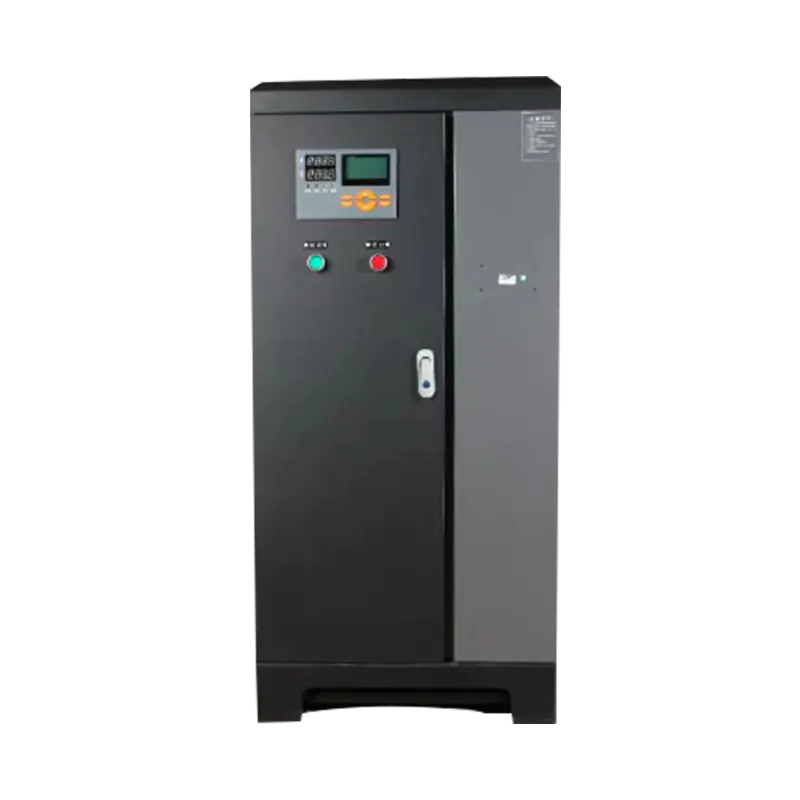
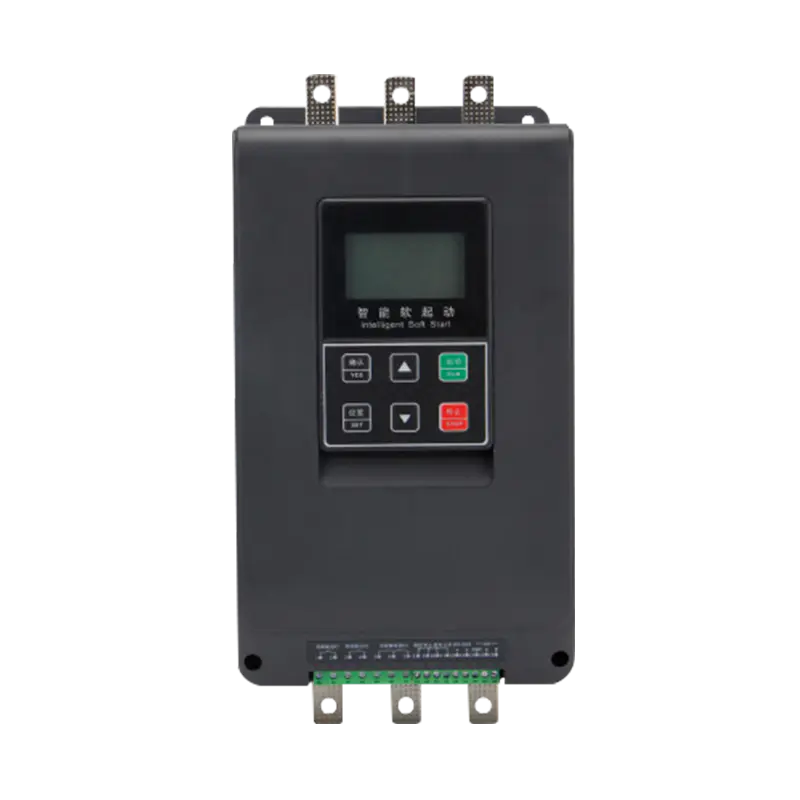
Zhejiang NENA Electric Co., Ltd. was founded in 1992 and has been deeply engaged in the electrical manufacturing industry for over thirty years. Its headquarters is located in the Wengyang Shuguang Industrial Zone, Yueqing City, Zhejiang Province—an area known as "China's Electrical Capital." The company's main products include high- and low-voltage complete switchgear, intelligent soft-starter series, frequency converters, auto-transformer reduced-voltage starters, star-delta starters, QZB series transformers, and AC contactors, among other complete electrical product offerings. The company currently employs more than 300 staff, including 52 full-time R&D technical personnel, and its products and services have covered more than 1,000 cooperative customers worldwide.
Against the industrial trend of the convergence of frequency converters and emerging technologies described above, Zhejiang NENA Electric's technological practices are mainly reflected in the following aspects:
Specialization of Core Control Chips: The company's frequency converter products adopt digital signal processing (DSP) chips specifically designed for motor control, providing sufficient computational capability to support complex control tasks such as vector control and precise torque regulation. This forms the hardware foundation for implementing intelligent control algorithms.
Full-Chain Protection and Reliability Design: The products integrate multiple protection functions, including overcurrent, overvoltage, undervoltage, and overtemperature protection, enabling timely protective measures when motors or equipment operate under abnormal conditions. This complements the "predictive maintenance" concept emphasized by emerging technology convergence—the former addresses "post-event protection," while the latter addresses "pre-event early warning." Together, they constitute a comprehensive equipment lifecycle reliability management system.
Synergistic Layout of Soft-Start and Frequency Conversion Technologies: The company simultaneously develops intelligent soft-starter series and frequency converter product lines, covering the complete motor demand scenario from startup surge suppression to full-range speed control. This reflects a systematic technology-layout approach centered on the core motor-drive scenario, rather than developing a single product category in isolation.
Scenario-Based Adaptability for Diverse Operating Conditions: From energy-saving speed regulation for fluid machinery such as fans and pumps, to high-precision control scenarios such as CNC machine tools and printing machinery, to customized voltage and power solutions for harsh operating conditions, the breadth of the company's product line coverage provides a solid product foundation for the subsequent addition of digital capabilities such as IoT monitoring and energy efficiency analysis.
It can be said that Zhejiang NENA Electric's current technological accumulation has already laid a solid foundation for the next-stage integration of industrial IoT data acquisition capabilities, the introduction of AI-driven predictive maintenance algorithms, and the exploration of engineering applications for wide-bandgap semiconductor power modules. This is highly aligned with the global frequency converter industry's developmental logic of "hardware reliability securing the baseline, while software and data capabilities build differentiation."
Challenges and Outlook
6.1 Real-World Challenges
The integration of emerging technologies with frequency converters is not without obstacles. Based on common issues identified in industry studies, the main challenges are concentrated in three areas: first, the initial cost of wide-bandgap semiconductor devices remains significantly higher than that of traditional silicon-based devices, requiring small and medium-sized enterprises to carefully weigh technology upgrades against cost control; second, there is a relative scarcity of multidisciplinary talent with expertise in power electronics, embedded software, and data science, which constrains the speed of engineering implementation for intelligent technologies; and third, as equipment networking increases, cybersecurity compliance requirements for industrial control systems are becoming increasingly stringent, and data security and system reliability must be placed on an equal footing with functional innovation.
6.2 Future Outlook
Looking ahead to the next five to ten years, the evolution path of frequency converter technology can be roughly anticipated from the following dimensions: At the device level, the cost curve of wide-bandgap semiconductors will continue to decline as industrial scale expands, and their penetration rate in medium- to high-voltage, high-power-density scenarios is expected to steadily increase. At the control level, AI algorithms will further extend from "fault prediction" to "energy efficiency self-optimization," enabling frequency converters to autonomously adjust control strategies based on real-time operating conditions. At the system level, the cross-convergence between frequency converters and grid-friendly converter technologies will continue to deepen, allowing industrial loads to participate more extensively in ancillary services such as grid frequency regulation and voltage support. At the industry level, enterprises with the trinity of advantages—"hardware reliability + software intelligence + system integration capabilities"—will occupy more favorable positions in global market competition.
For Zhejiang NENA Electric, seizing this wave of technological convergence means that, while maintaining the reliability and cost advantages of existing products, the company needs to proactively invest in the R&D reserves of IoT platforms, intelligent algorithms, and next-generation power devices, so as to secure a favorable position in the transition from an "electrical equipment manufacturer" to an "intelligent energy management solution provider."
Conclusion
As an irreplaceable core device in modern industrial electrical systems, the frequency converter is undergoing a profound technological convergence driven jointly by wide-bandgap semiconductors, artificial intelligence, the Industrial Internet of Things, and grid-friendly converter technologies. This convergence trend is not only propelling the global frequency converter market to maintain steady growth but, more importantly, it is redefining the product form, value-creation model, and competitive landscape of the frequency converter industry—transforming it from a mere "speed regulation device" into a critical "energy management node" within smart manufacturing systems and new power systems. For Zhejiang NENA Electric Co., Ltd., over thirty years of electrical manufacturing experience—particularly in the application of specialized control chips, full-chain protection design, and synergistic multi-product-line layout—has already laid a solid industrial foundation for embracing this technological convergence trend and provides ample room for the company to continue creating customer value in the next round of industrial upgrading.
References
Kërçi, T., & Milano, F. Frequency Quality Assessment of GFM and GFL Converters and Synchronous Condensers. arXiv power system research paper, discussing the impact of Grid-Forming (GFM) and Grid-Following (GFL) converters on system frequency quality.
Frequency Converter Market Size, Share, and Trends Analysis. Data Bridge Market Research, 2025.
Frequency Converter Market Size, Share & Forecast to 2033. Research and Markets, 2026.
Frequency Converter Market Size, Share, Growth & Trends. Market Data Forecast, 2025.
Variable Frequency Drive Market: Powering the Future of Industrial Automation. MarketsandMarkets Blog, 2026.
Variable Frequency Drive Market Expected to Hit USD 50.41 Billion by 2034. Polaris Market Research, 2026.
Danfoss VFD Patents: 287 in $48B Energy Efficiency Market — Technology Convergence Trend Analysis (wide-bandgap semiconductors, AI control algorithms, IoT and edge computing, cybersecurity compliance). PatSnap, 2026.
Why Wide Bandgap. PowerAmerica Institute, U.S. National Institute for Manufacturing Innovation in Wide-Bandgap Semiconductors.
Industrial Frequency Converters Market Outlook 2025–2032. Intel Market Research, 2025.
Zhejiang NENA Electric Co., Ltd. Official website product and corporate information, xnhang.com.
Disclaimer: The market size, growth rate, and forecast data cited in this paper are derived from publicly published third-party market research reports. Due to differences in statistical methodologies among institutions, numerical values may vary. This paper is intended for industrial trend reference only and does not constitute investment advice.



 English
 中文简体
中文简体 عربى
عربى




 浙公网安备33038202003754号