Abstract
The frequency converter is one of the core devices in the field of modern electrical engineering; by precisely regulating the frequency and voltage of an AC power supply, it enables the stepless control of electric motor speeds. Starting from the basic definition of a frequency converter, this article systematically elucidates its operating principles, primary types, core components, and extensive applications across industrial, commercial, and military aviation sectors, aiming to provide a comprehensive technical reference for electrical engineers and procurement decision-makers.
Keywords: Frequency Converter, Frequency Conversion, Motor Control, Variable Frequency Speed Regulation, Static Frequency Converter, Rotary Frequency Converter, PWM Technology
I. Introduction
In today's world, as the process of industrialization continues to deepen, the efficient utilization and precise control of electrical energy have become core imperatives for modern manufacturing, infrastructure construction, and even the defense sector. The frequency converter—a pivotal product of power electronics technology—empowers engineers with unprecedented control capabilities over electrical equipment by altering the frequency and voltage parameters of AC power.
Whether in regulating the speed of pumps at water pumping stations, optimizing energy efficiency in HVAC system fans, providing ground power support for aviation, or facilitating servo control in precision manufacturing machinery, frequency converters play an indispensable role. Understanding the basic definition, operating mechanisms, and application value of frequency converters constitutes foundational knowledge that every electrical engineering practitioner must master.
II. Basic Definition of a Frequency Converter
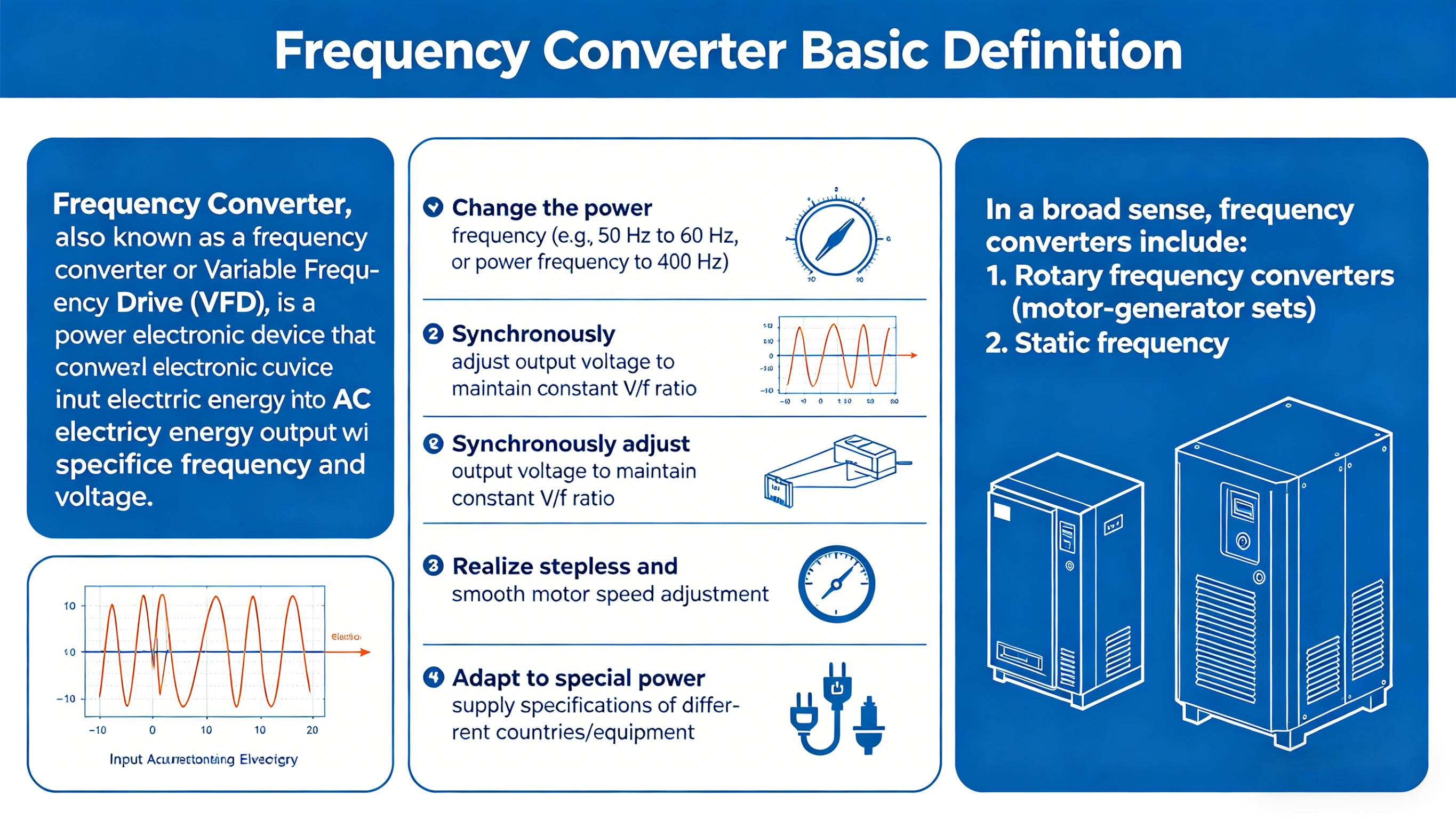
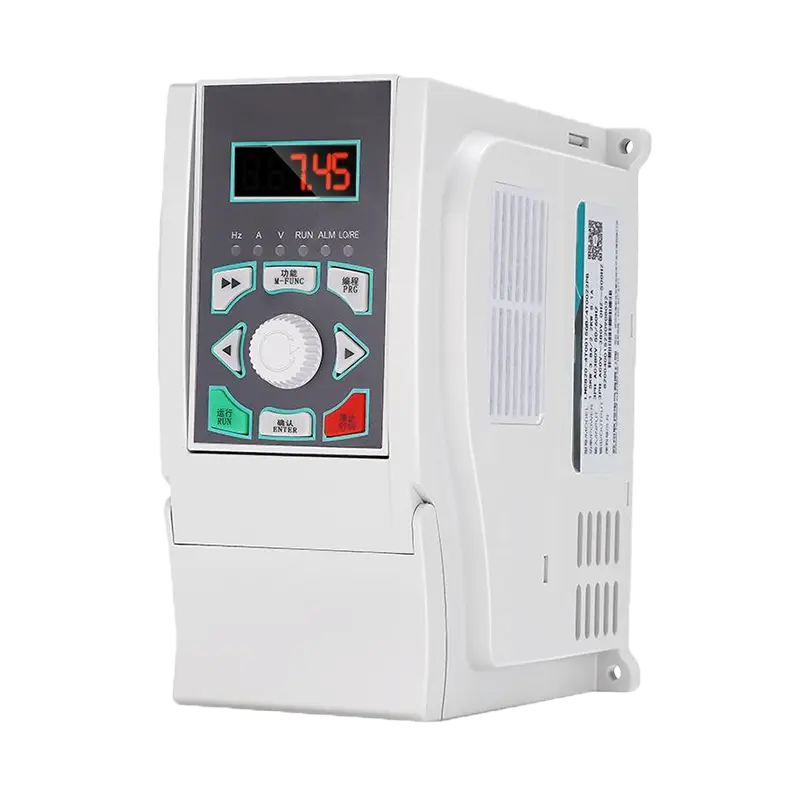
A frequency converter—also known as a frequency changer or Variable Frequency Drive (VFD)—is a power electronics device that converts incoming AC electrical energy into an AC electrical output of a specific frequency and voltage. Its core functions include:
◆ Altering the power supply frequency (e.g., converting 50 Hz to 60 Hz, or converting utility frequency to 400 Hz);
◆ Synchronously adjusting the output voltage to maintain a constant Voltage-to-Frequency (V/f) ratio;
◆ Enabling the stepless and smooth regulation of electric motor speeds;
◆ Adapting to the specific power supply requirements of different countries or specialized equipment. Broadly speaking, the term "frequency converter" encompasses all devices capable of achieving frequency transformation, including rotary frequency converters (in the form of motor-generator sets) and static frequency converters (based on solid-state power electronic devices).
III. Why Are Frequency Converters Necessary?
Global AC power grids do not adhere to a single, unified frequency standard. Currently, two major industrial frequency systems predominate worldwide:
|
Standard
|
Frequency
|
Primary Distribution Regions
|
|
IEC Standard
|
50 Hz
|
China, Europe, Australia, Africa, most Asian countries
|
|
ANSI Standard
|
60 Hz
|
United States, Canada, Mexico, parts of South America and Asia
|
|
Aviation/Military Standard
|
400 Hz
|
Aircraft onboard equipment, naval vessels, military ground support systems
|
When equipment designed for 50 Hz operation is utilized within a 60 Hz power grid environment (or vice versa), it results in motor speed deviations, overheating, and potentially even equipment damage. Frequency converters serve as the fundamental solution to this challenge of cross-frequency compatibility; simultaneously, they represent a key technological means for achieving variable-speed control of electric motors and for realizing energy conservation and consumption reduction.
IV. Principles of Frequency Converter Operation
Modern static frequency converters typically employ an "AC-DC-AC" double-conversion topology. Their core operational process can be divided into the following three stages:
4.1 Rectification Stage
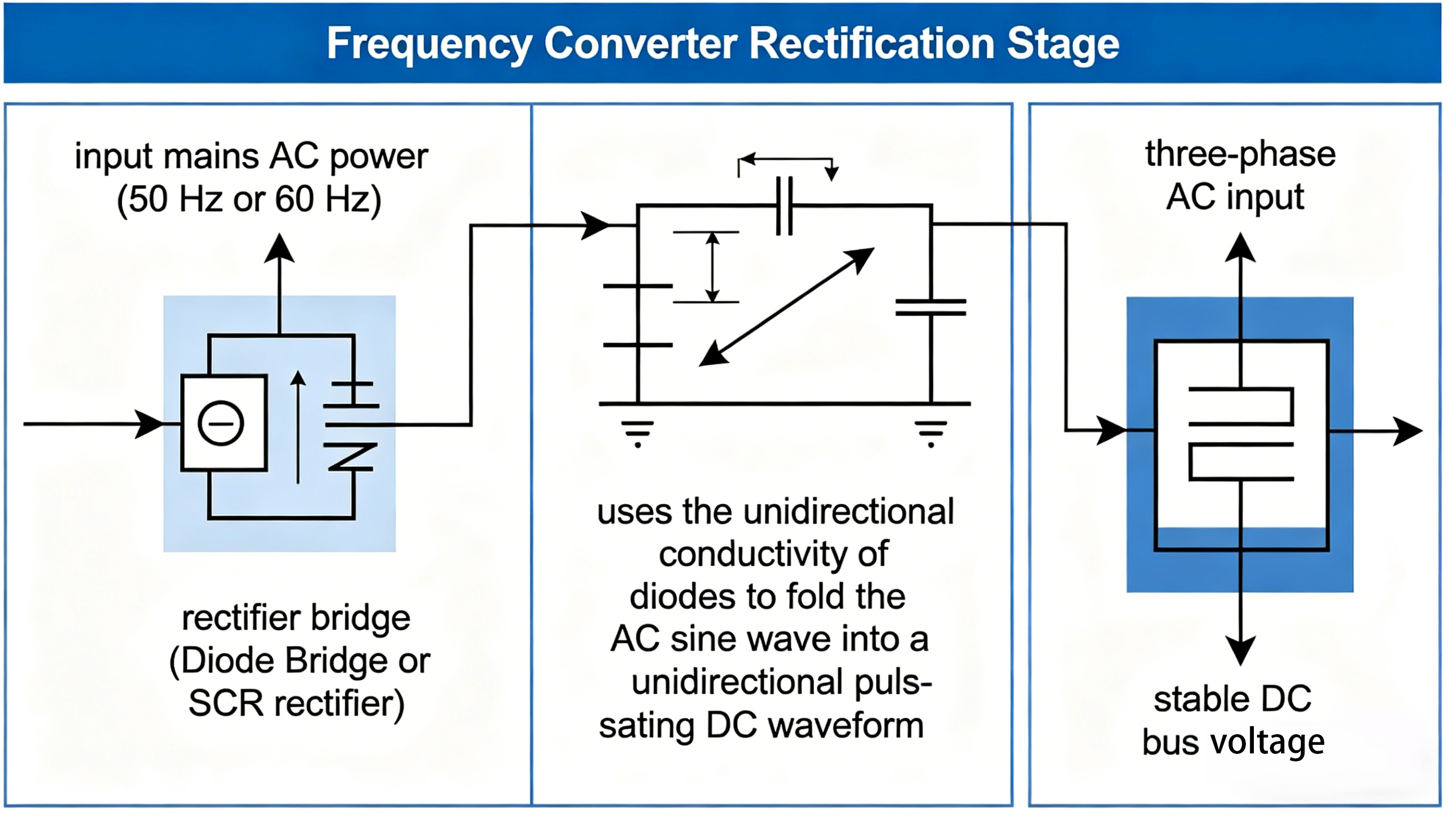
The incoming industrial-frequency AC power (50 Hz or 60 Hz) is first converted into DC power via a rectifier bridge (typically a diode bridge or an SCR rectifier). By leveraging the unidirectional conductivity of diodes, the rectifier bridge transforms the incoming AC sine wave into a unidirectional, pulsating DC waveform. Three-phase frequency converters accept a three-phase AC input and, following rectification, output a stable DC bus voltage.
4.2 DC Bus Filtering Stage
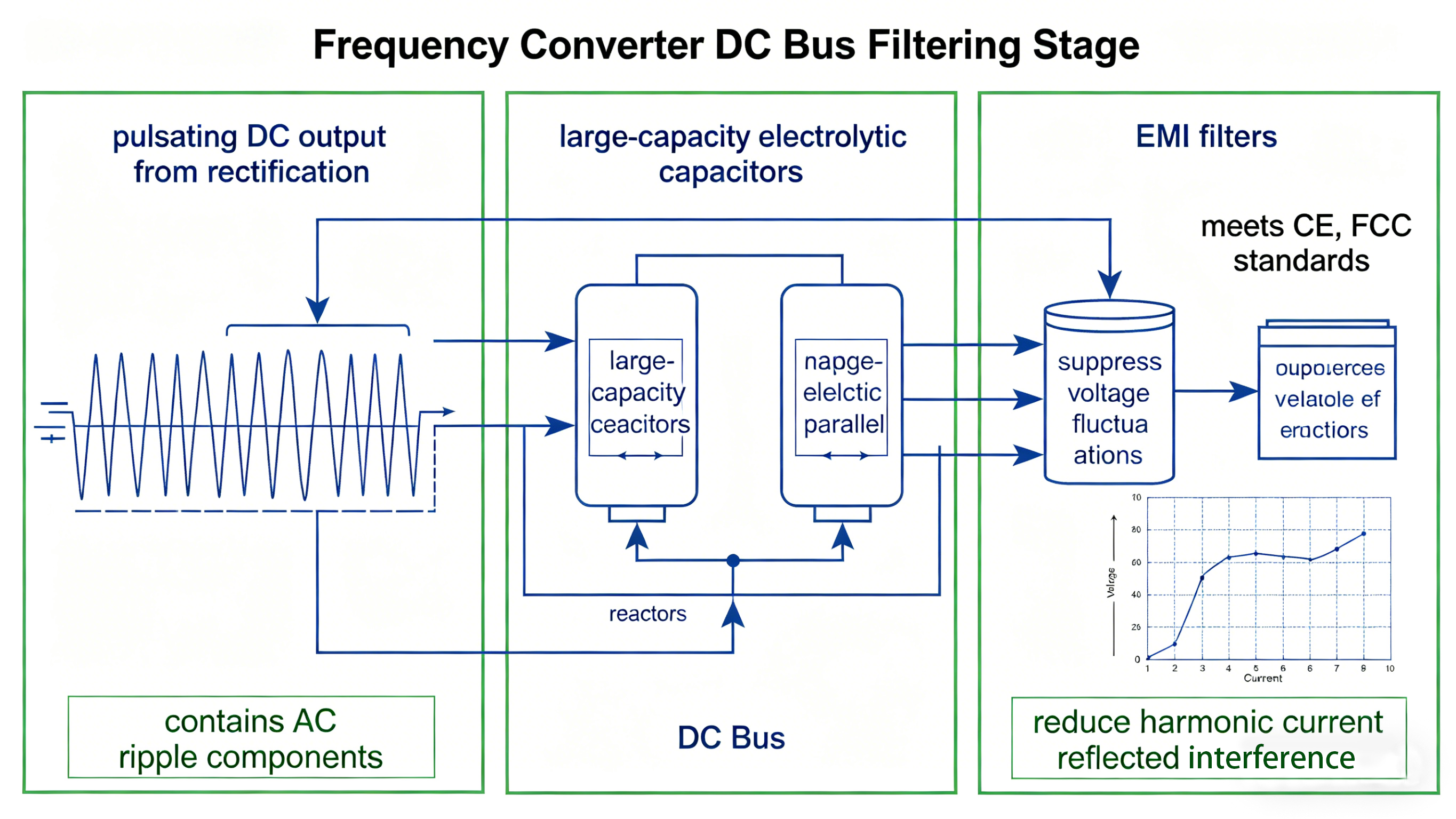
The pulsating DC output from the rectifier contains AC ripple components; therefore, it must undergo smoothing and filtering via high-capacitance electrolytic capacitors and inductors situated on the DC bus. The energy-storage characteristics of the capacitors effectively suppress voltage fluctuations, while the inductors serve to mitigate harmonic current interference reflected back into the power grid. High-quality frequency converters typically feature built-in EMI filters to ensure compliance with international electromagnetic compatibility standards, such as CE and FCC.
4.3 Inversion / PWM Output Stage
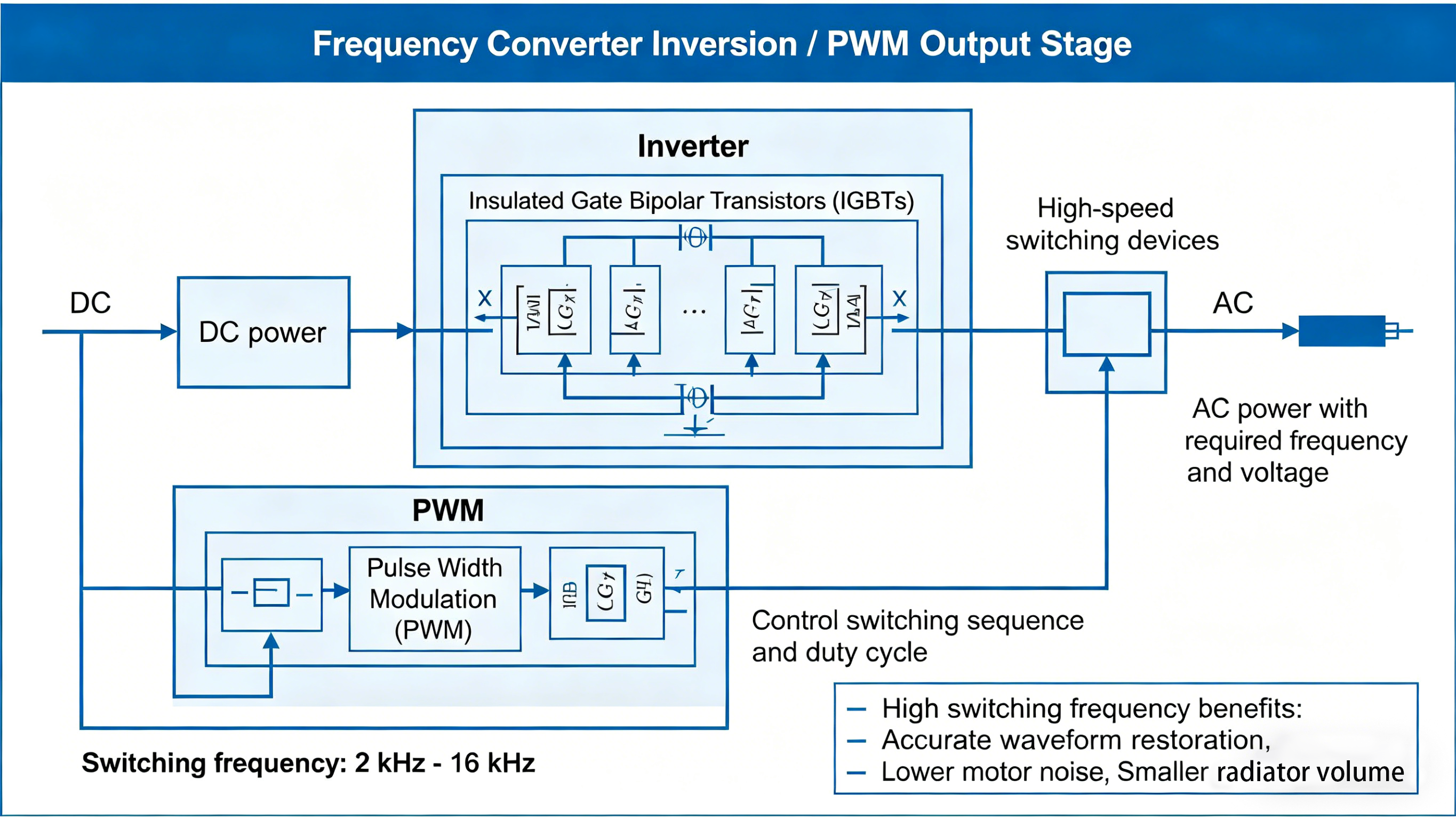
DC power is reconverted by an inverter into AC power of the required frequency and voltage. Modern variable frequency drives (VFDs) commonly employ Insulated Gate Bipolar Transistors (IGBTs) as high-speed switching devices. By utilizing Pulse Width Modulation (PWM) technology—specifically by controlling the switching timing and duty cycle of the IGBTs—they precisely synthesize the required sinusoidal waveform.
The switching frequency of IGBTs typically ranges from 2 kHz to 16 kHz. A higher switching frequency translates to more accurate waveform reproduction, reduced motor noise, and smaller heat sinks, thereby enabling a more compact device design.
V. Main Types of Frequency Converters
5.1 Static Frequency Converters (SFC)
Static frequency converters contain no rotating mechanical parts and rely entirely on solid-state power electronic devices to achieve frequency conversion. Their advantages include:
◆ Rapid response speed, allowing for precise control of output frequency and voltage;
◆ Compact size and light weight, facilitating easy installation and maintenance;
◆ High output stability and low harmonic content (particularly when utilizing 12-pulse or higher-pulse rectification);
◆ High efficiency, with typical conversion efficiencies exceeding 95%;
◆ Support for both single-phase and three-phase outputs, suitable for various frequencies such as 25 Hz, 50 Hz, 60 Hz, and 400 Hz.
5.2 Rotary Frequency Converters
Rotary frequency converters utilize a Motor-Generator (M-G) set configuration: a motor on the input side operates at a fixed speed to drive a generator; the generator's output frequency is then adjusted by altering its number of pole pairs or its rotational speed. Rotary frequency converters possess exceptional load-driving capabilities and superior electrical isolation characteristics. Consequently, they are frequently deployed in environments with stringent power quality requirements—such as for precision machine tools, broadcasting equipment, or in legacy high-power industrial applications. Their primary disadvantages include their large physical footprint, heavy weight, and shorter maintenance intervals.
5.3 Variable Frequency Drive (VFD)
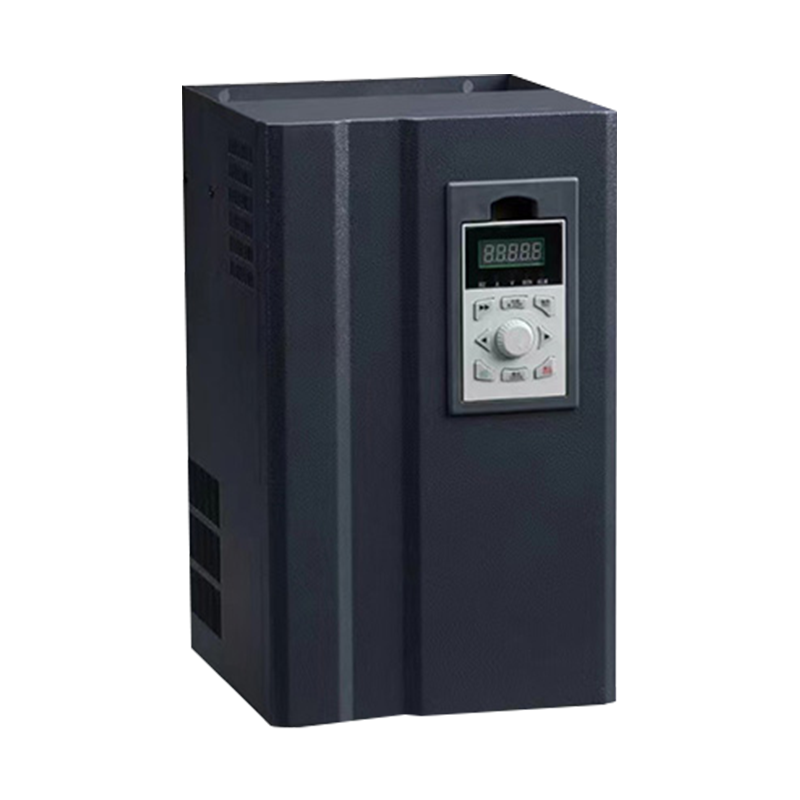
A VFD is a specialized form of static frequency converter designed specifically for the field of electric motor speed control. Its primary objective is not merely to convert frequency standards, but rather to achieve stepless regulation of motor speed by continuously adjusting the output frequency (typically adjustable within the range of 0 to 400 Hz). VFDs are widely utilized in applications involving variable-torque or constant-torque loads—such as fans, pumps, compressors, and conveyor belts—and serve as a core component in industrial energy conservation.
VI. The Core Functions of Frequency Converters
6.1 Enabling Cross-Frequency Power Conversion
Power grid frequencies vary across different countries (e.g., 50 Hz vs. 60 Hz), while specific industries (such as aviation, medical, and military sectors) often require specialized frequencies, such as 400 Hz. Frequency converters are capable of precisely converting existing grid power into the specific frequency and voltage specifications required by target equipment. This ensures the proper operation of imported machinery and cross-border equipment, thereby serving as a fundamental guarantee for international trade and equipment interoperability.
6.2 Precise Control of Motor Speed
According to the formula for a motor's synchronous speed—n = 60f / p (where *f* represents the power supply frequency and *p* represents the number of pole pairs)—motor speed is directly proportional to the power supply frequency. By continuously adjusting the output frequency via a frequency converter, precise control over the speed of asynchronous motors can be achieved. This method replaces traditional mechanical speed-regulating mechanisms (such as pulley-based variable-speed systems or hydraulic couplers), thereby significantly enhancing the system's control precision and response speed.
6.3 Significant Energy Savings
For loads such as fans and pumps, power consumption is directly proportional to the cube of the rotational speed (P ∝ n³). When production processes require a reduction in flow rate—for instance, by reducing the motor speed by 20% using a frequency converter—theoretically, power consumption can be reduced by approximately 49% (since 0.8³ ≈ 0.51). Practical engineering case studies demonstrate that, compared to traditional fixed-frequency operation schemes, variable frequency speed control systems typically achieve energy savings ranging from 20% to 50%, with a typical investment payback period of 1 to 3 years. 6.4 Soft Start and Overload Protection
When traditional electric motors are started directly at utility frequency, the starting current can reach 5 to 8 times the rated current, causing a shock to the power grid and generating intense impact stress on mechanical transmission components. By utilizing a low-frequency, low-voltage starting method to gradually accelerate the motor to its operating speed, a variable frequency drive (VFD) can limit the starting current to within 1.5 times the rated value. This effectively extends the service life of the equipment and reduces maintenance costs.
6.5 Enhancing Power Quality
High-quality VFDs are equipped with active or passive EMC filters that effectively suppress harmonic currents—thereby mitigating grid pollution—and improve the power factor of the grid (with some products achieving a power factor of 0.95 or higher). Furthermore, the DC bus capacitors built into the VFD possess inherent energy storage and buffering capabilities. These capacitors help suppress grid disturbances—such as voltage sags and flicker—on the input side, thereby providing a more stable power supply quality for sensitive loads.
VII.Key Application Areas
Leveraging their flexible frequency conversion and precise speed control capabilities, variable frequency drives have found widespread application across numerous industries:
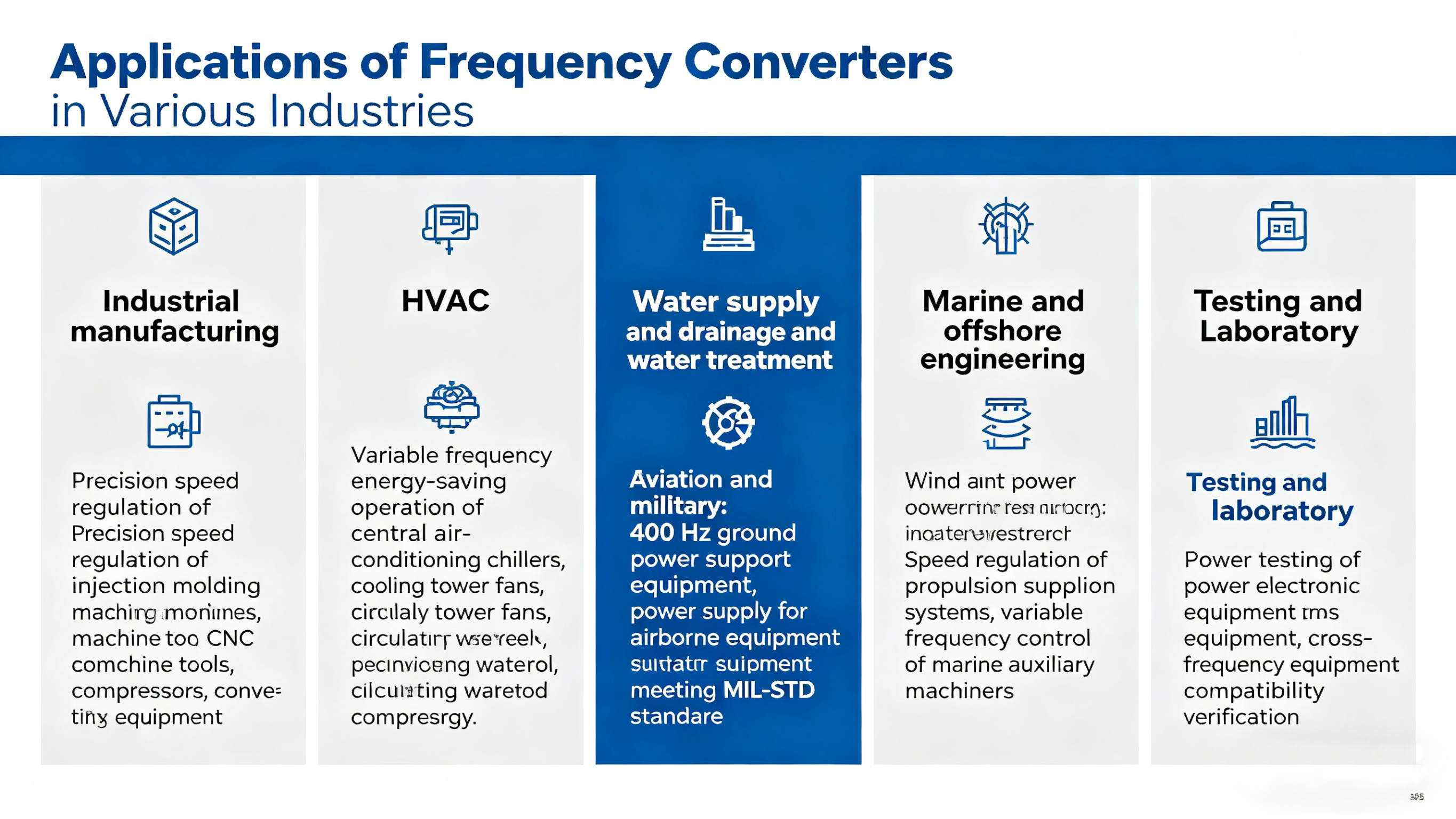
◆ Industrial Manufacturing: Precise speed control for injection molding machines, CNC machine tools, compressors, conveyor belts, and hoisting equipment;
◆ HVAC: Energy-efficient variable-frequency operation of central air conditioning chillers, cooling tower fans, and circulating water pumps;
◆ Water Supply, Drainage, and Treatment: Constant-pressure water supply for municipal pumping stations, and speed control for aeration equipment in wastewater treatment facilities;
◆ Power and New Energy: Converter control for wind power generation systems, and grid-tie integration for photovoltaic (solar) inverters;
◆ Aerospace and Defense: 400 Hz ground power support equipment, providing aircraft with onboard power supplies that comply with MIL-STD standards;
◆ Marine and Offshore Engineering: Speed control for propulsion systems, and variable-frequency control for marine auxiliary machinery;
◆ Testing and Laboratory: Power testing for power electronics equipment, and cross-frequency compatibility verification for various devices. VIII. The Professional Expertise of Zhejiang NENA Electric
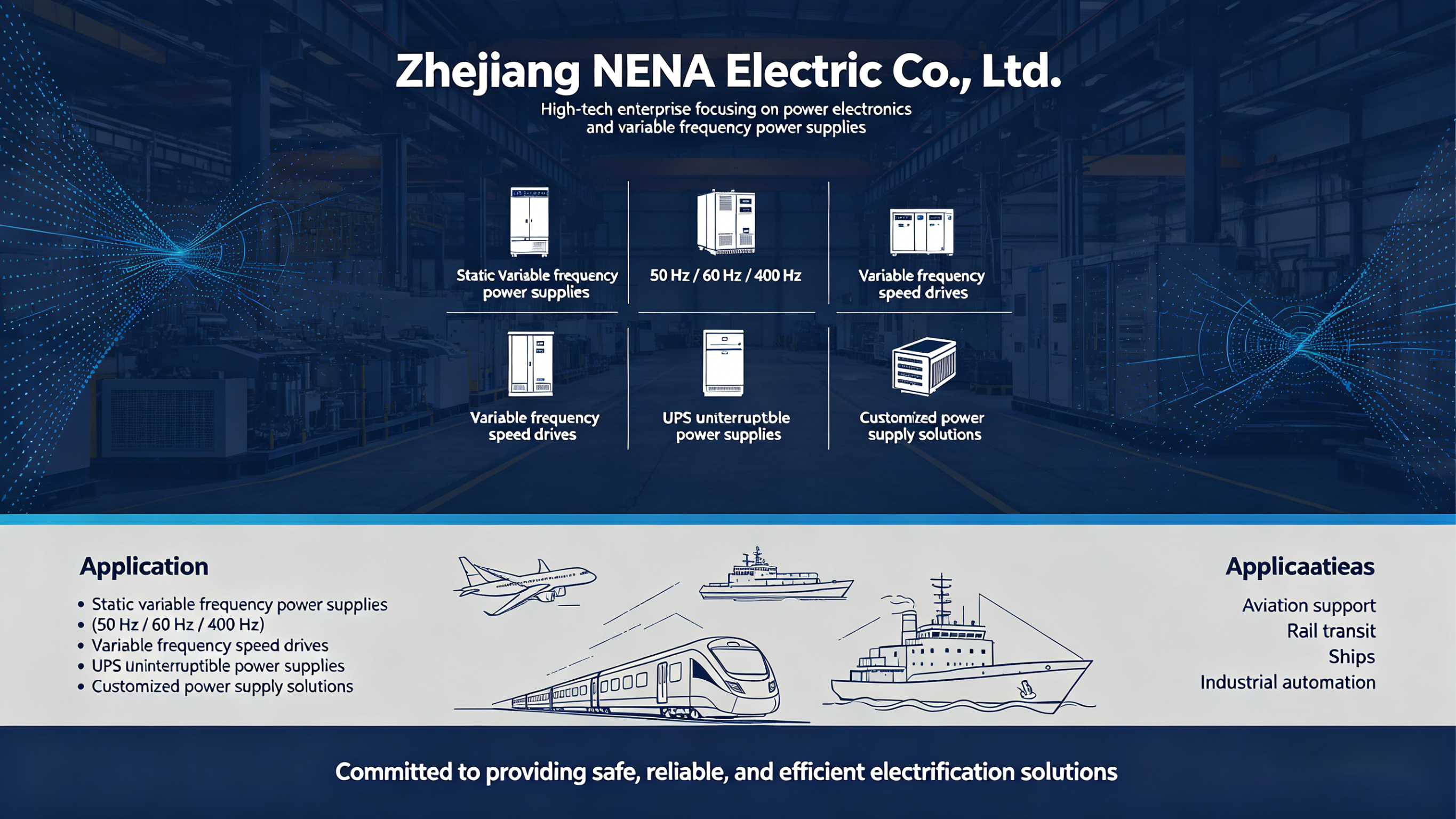
Zhejiang NENA Electric Co., Ltd. is a high-tech enterprise specializing in the fields of power electronics and variable-frequency power supplies. The company has long dedicated itself to the R&D and manufacturing of variable frequency drives (VFDs), variable-frequency power supplies, aviation ground power units, and power quality management equipment.
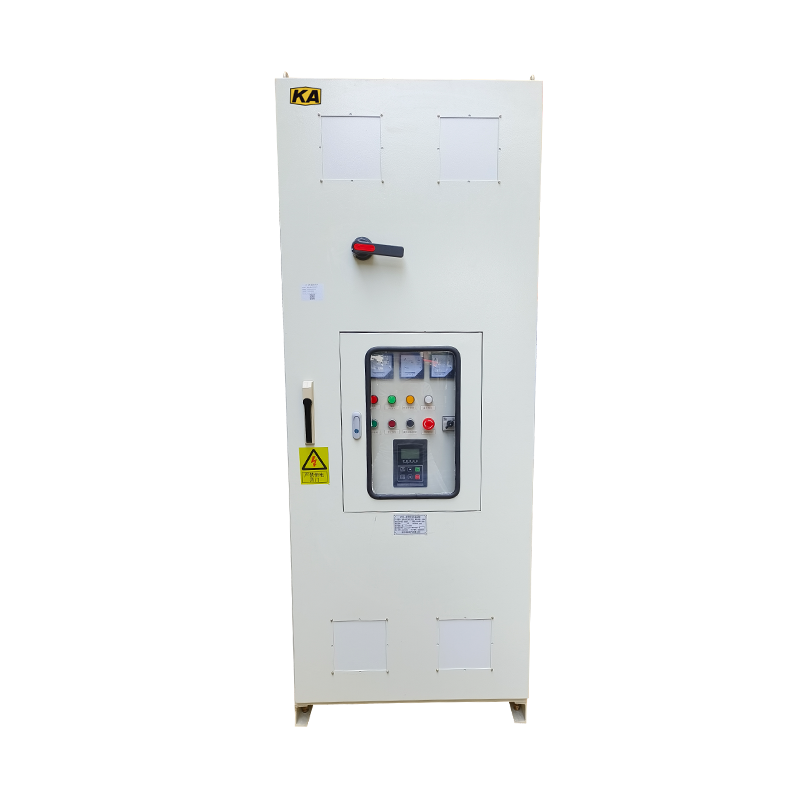
The company's product portfolio encompasses static frequency converters (50 Hz / 60 Hz / 400 Hz), variable-speed drives, UPS uninterruptible power supplies, and customized power solutions. These products are widely deployed in demanding sectors such as aviation support, rail transit, marine engineering, and industrial automation. Supported by a comprehensive R&D framework and a rigorous quality control system, NENA Electric is committed to delivering safe, reliable, and efficient electrification solutions to customers worldwide.
IX. Conclusion
As a core foundational component of modern electrical engineering, the variable frequency drive has played a pivotal role in driving the advancement of industrial automation, energy conservation, emission reduction, and the global interconnection of electrical equipment. From simple frequency format conversion to sophisticated closed-loop vector control, VFD technology continues to evolve toward higher power density, greater intelligence, lower harmonic distortion, and enhanced network connectivity.
Mastering the fundamental principles and application logic of variable frequency drives serves as a crucial starting point for grasping the broader technological landscape of modern electrical engineering. Zhejiang NENA Electric will remain driven by technological innovation, striving to provide customers with variable-frequency electrical products and system solutions characterized by superior performance and enhanced reliability.
References
[1] Frequency Inverter Organization. "What is Frequency Converter? How it works?" www.frequencyinverter.org
[2] Power Systems & Controls. "Frequency Converters — 400Hz, 100Hz, 60Hz, 50Hz & 25Hz." pscpower.com
[3] Grundfos. "Frequency Converter: Research and Insights." grundfos.com
[4] IEC 60034 Series Standards: Rotating electrical machines — Performance specifications; IEC 61800 Series Standards: Adjustable speed electrical power drive systems.



 English
 中文简体
中文简体 عربى
عربى




 浙公网安备33038202003754号