Abstract
The soft starter is one of the indispensable core components in the field of modern industrial electrical drives. During the starting process of a three-phase AC asynchronous motor, direct-on-line (full-voltage) starting often generates inrush currents reaching 5 to 8 times the rated current, posing a serious threat to grid stability and equipment lifespan. By employing Thyristor (SCR) phase control technology, a soft starter smoothly regulates the output voltage during the motor's acceleration phase; this fundamentally suppresses the starting inrush current, thereby achieving the objective of "softening" the starting process. This article systematically elucidates the definition, working principles, key technical parameters, typical application scenarios, and comparative analysis (vis-à-vis Variable Frequency Drives/VFDs) of soft starters, alongside a practical selection guide tailored for engineering applications. Its aim is to provide a comprehensive technical reference for engineers, procurement specialists, and electrical designers.
1.1 Definition and Basic Concepts
A soft starter is a solid-state power electronic device utilized for the starting control of AC motors. Its primary function is to regulate the magnitude of the voltage applied to the motor's stator windings during the starting phase, thereby ensuring a smooth and controllable rise in both motor current and torque. This process effectively mitigates the series of electrical and mechanical shock issues typically associated with traditional direct-on-line starting methods.
In accordance with the IEC 60947-4-2 standard, soft starters are classified as motor soft-starting control devices. They are widely deployed across a diverse range of industrial loads, including pumps, fans, compressors, conveyor belts, and mixers.
1.2 The Evolutionary History of Soft Starters
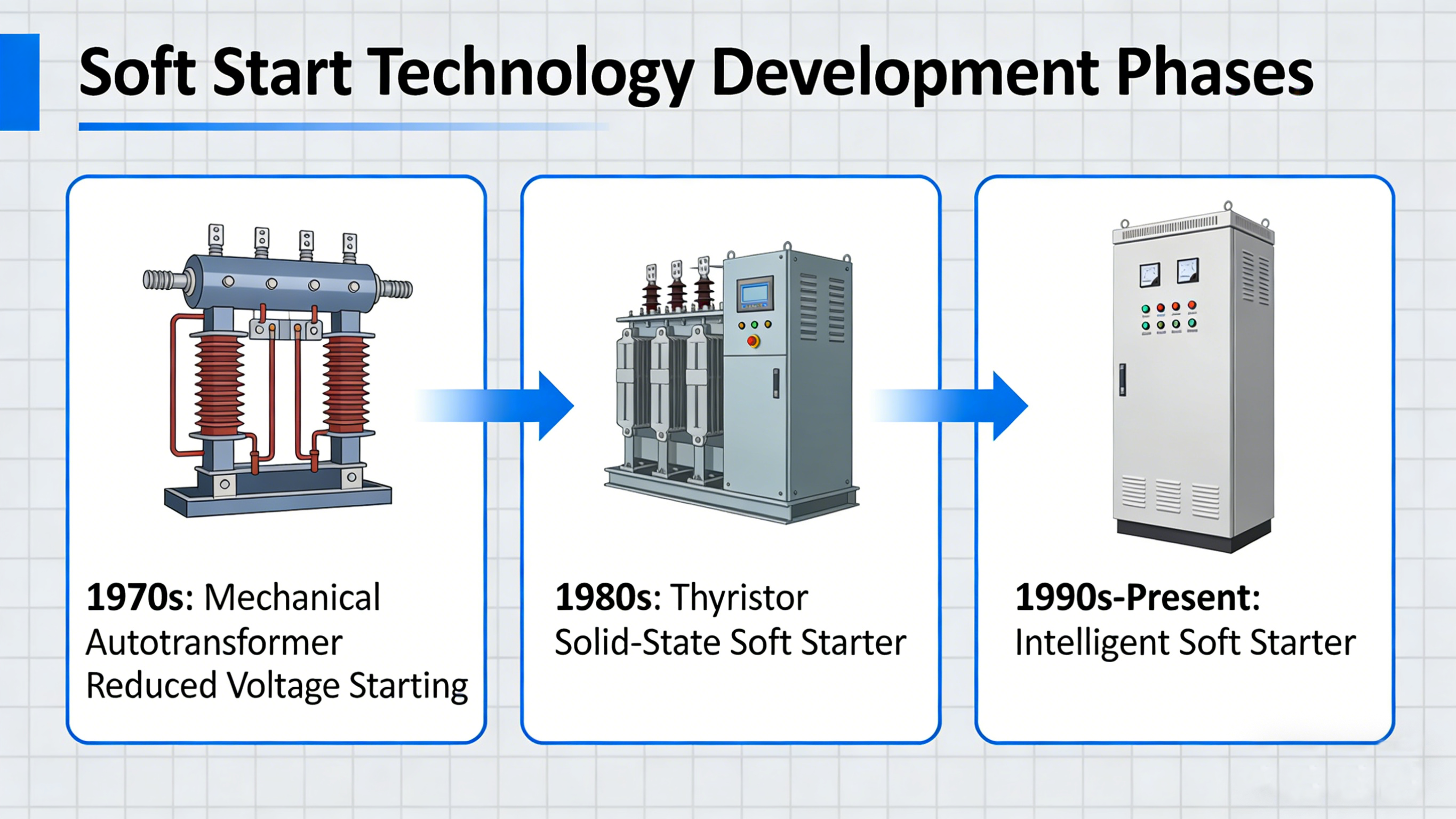
The evolution of soft-starting technology has progressed through three primary stages:
- Stage 1 (1970s): Mechanical autotransformer reduced-voltage starting. This method utilized multi-stage switching to achieve an approximation of a soft-start effect; however, the equipment was physically bulky, and abrupt current transients still occurred during the switching transitions.
- Stage 2 (1980s): The maturation of thyristor semiconductor devices paved the way for the advent of the true solid-state soft starter, enabling a continuous and stepless voltage regulation process during motor starting.
- Phase III (1990s to Present): The introduction of microprocessors and digital control technologies has endowed soft starters with advanced capabilities—such as intelligent protection, selectable starting modes, and fieldbus communication—significantly enhancing both product reliability and integration levels.
1.3 Position of the Soft Starter within the Electrical System
The soft starter is typically installed between the power supply and the electric motor, serving as a vital component of the Motor Control Center (MCC). On the power supply side, it operates in conjunction with circuit breakers, contactors, and thermal relays to form a comprehensive motor protection and control system; on the load side, it connects directly to the motor's stator terminals. Once the motor reaches its rated speed, an internal bypass contactor automatically closes, effectively isolating the soft starter's power circuitry from the main circuit. The motor then switches to direct operation at the utility frequency, thereby eliminating the thermal losses that would otherwise result from continuous current flow through power semiconductor devices.
II. In-Depth Analysis of Operating Principles
2.1 Core Control Technology: Phase Control
The fundamental operating principle of a soft starter is based on Thyristor Phase Control technology. For each phase of the AC power supply, the soft starter employs a pair of anti-parallel thyristors (SCRs) to facilitate bidirectional conduction control. By adjusting the thyristor's firing angle (conduction angle α), the effective voltage delivered to the motor during each AC cycle can be precisely regulated.
The relationship between the firing angle α and the output voltage can be approximately expressed as follows:
V_out = V_in × √[(π - α + sin(2α)/2) / π]
During the initial phase of startup, the firing angle is set close to 180° (yielding the minimum output voltage). As the startup process progresses, the firing angle gradually decreases, causing the output voltage to rise linearly; this continues until the firing angle reaches 0°, at which point the output voltage equals the grid voltage, thereby achieving full-voltage operation.
2.2 Analysis of Current-Torque Characteristics
According to the equivalent circuit theory for induction motors, the following relationship exists between the electromagnetic torque *T* and the stator voltage *V*:
T ∝ V² | I_start ∝ V
This implies that when a soft starter limits the initial startup voltage to 50% of the rated voltage, the starting current drops to approximately 50% of that seen during direct-on-line starting, while the starting torque falls to approximately 25% of that value. Engineers must strike a balance between reducing the inrush current and ensuring sufficient starting torque; this constitutes the core technical challenge in the parameter tuning of soft starters.
2.3 Main Starting Modes
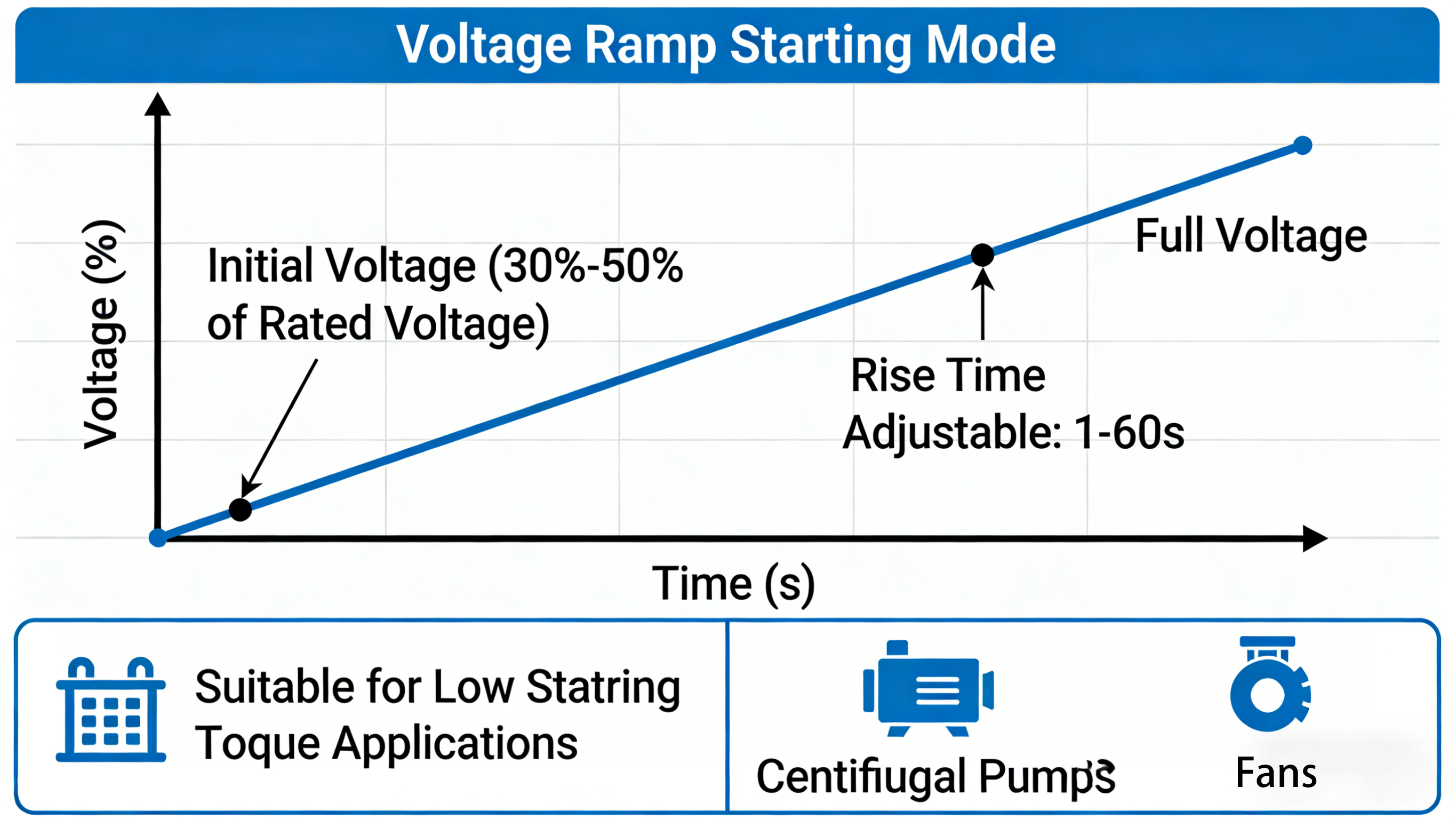
(1) Voltage Ramp Start
This is the most commonly used starting mode. The system linearly increases the voltage from a preset initial value (typically 30% to 50% of the rated voltage) up to full voltage; the ramp-up time is adjustable within a range of 1 to 60 seconds. This mode is suitable for applications where starting torque requirements are not critical and the primary objective is to suppress inrush current—such as with centrifugal pumps, fans, and similar equipment.
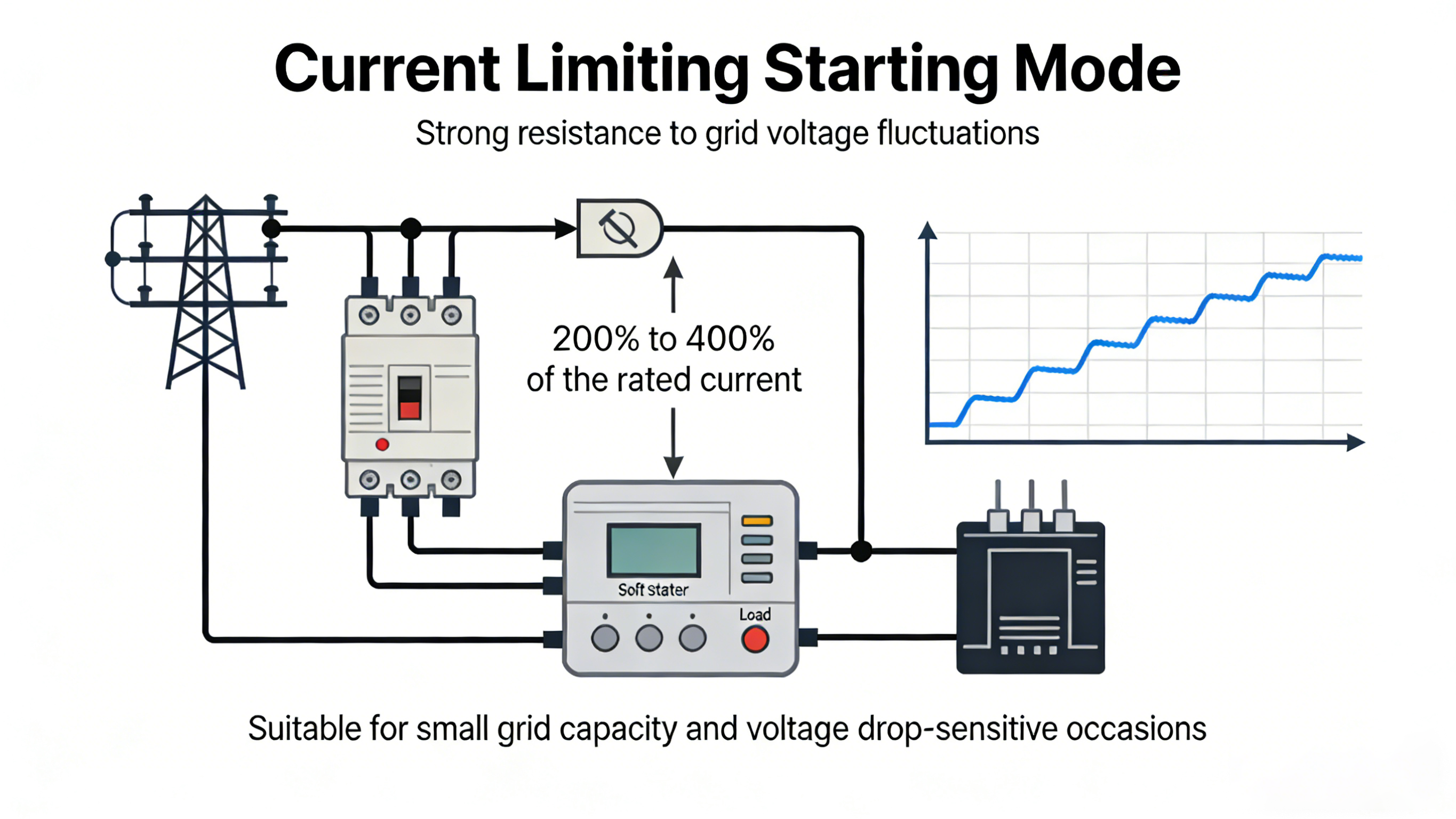
(2) Current Limiting Start
Through closed-loop current feedback control, the soft starter strictly limits the starting current to within a specified setpoint (typically 200% to 400% of the rated current), thereby achieving a constant-current ramp-up profile. This mode demonstrates strong resilience against grid voltage fluctuations and is particularly suitable for applications involving power grids with limited capacity or those that are sensitive to voltage dips.
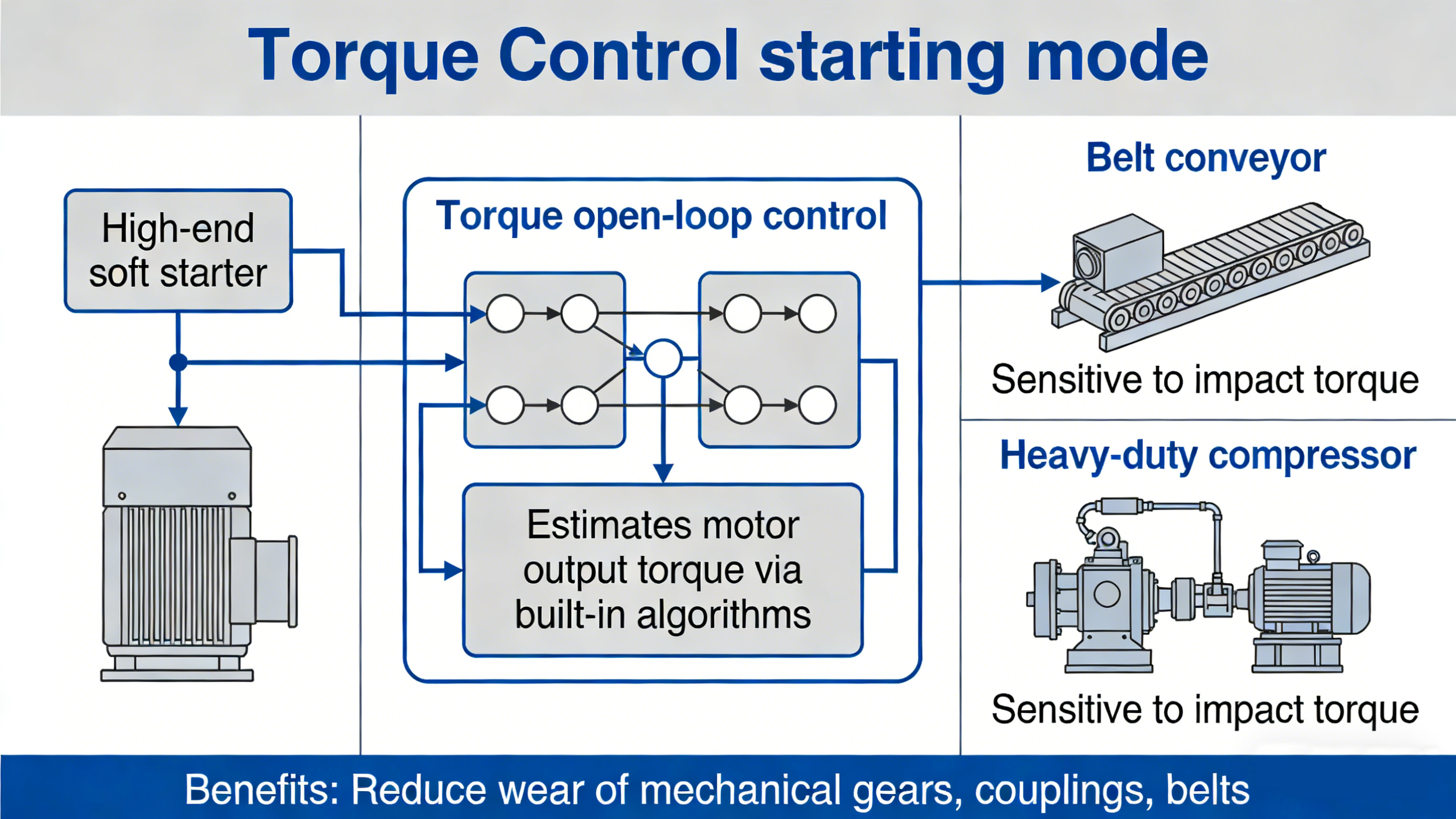
(3) Torque Control Start
High-end soft starters feature an open-loop torque control function; utilizing built-in algorithms to estimate the motor's output torque, they facilitate a smooth starting process characterized by approximately constant torque. This mode is especially beneficial for mechanical loads sensitive to torque shock—such as conveyor belts and heavy-duty compressors—as it effectively minimizes wear on mechanical gears, couplings, and belts.
(4) Soft Stop
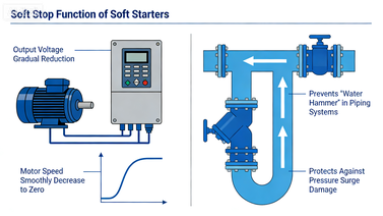
Some soft starters incorporate a "Soft Stop" function. Upon receiving a stop command, the device gradually reduces the output voltage, allowing the motor speed to decelerate smoothly to zero rather than relying solely on natural coasting. This feature is of critical importance for preventing the "Water Hammer" effect in fluid-conveying pipelines, thereby effectively protecting the piping system from damage caused by pressure surges.
2.4 Bypass Contactors and Thermal Design
Since thyristors exhibit a forward voltage drop of approximately 1.5V when conducting, continuous operation with high-power motors results in significant power loss (typically ranging from 0.5% to 1% of the motor's rated power). Consequently, the vast majority of soft starters are equipped with a built-in bypass contactor: once the motor reaches full operating speed, the bypass contactor automatically engages, diverting the main circuit current to bypass the thyristors. This reduces operating losses to nearly zero, thereby significantly enhancing system efficiency and extending the service life of the thyristors.
III.Core Technical Advantages
3.1 Significant Reduction in Starting Inrush Current
This constitutes the fundamental technical value of a soft starter. Traditional Direct-On-Line (DOL) starting methods generate a starting current that is 5 to 8 times the rated current; this causes momentary voltage dips in the power grid, disrupts the normal operation of other equipment within the same power supply system, and accelerates the aging of the motor winding insulation. Soft starters effectively limit the starting current to within 2 to 4 times the rated current, thereby fundamentally improving power quality.
3.2 Extended Service Life for Motors and Mechanical Systems
The electromagnetic shock forces and thermal stresses induced by inrush currents are among the primary causes of premature aging in motor winding insulation. According to Arrhenius's Law, for every 10°C rise in the temperature of insulating material, its service life is reduced by approximately 50%. By facilitating a smooth start, soft starters eliminate this cyclical thermal shock, thereby effectively extending the service life of the motor insulation.
From a mechanical perspective, the torque shock generated by direct starting causes fatigue damage to mechanical components such as couplings, gearboxes, pulleys, and pump impellers. The smooth acceleration characteristics of soft starters significantly reduce peak mechanical stresses, thereby decreasing maintenance frequency and minimizing the probability of unexpected downtime.
3.3 Simplified Electrical System Design
Prior to the advent of soft starters, the primary methods for reducing starting current included Star-Delta (Y-Δ) starting and reduced-voltage starting via autotransformers. These solutions involved the timed switching of multiple contactors, resulting in complex circuitry; furthermore, they still generated significant current transients during the switching moments and entailed substantial maintenance effort. Soft starters replace all the aforementioned components with a single device, thereby significantly simplifying the design of the control cabinet and reducing both the component count and wiring complexity. 3.4 Comprehensive Motor Protection Functions
Modern soft starters integrate a rich array of motor protection functions, typically including:
- Overload Protection: Electronic thermal protection based on a thermal model, replacing traditional thermal relays.
- Phase Loss Protection: Real-time monitoring of three-phase current balance to detect open-phase faults.
- Undervoltage/Overvoltage Protection: Automatic tripping when the power supply voltage exceeds the permissible range.
- Ground Fault Detection: Identification of leakage faults caused by deteriorating insulation to ground.
- Locked-Rotor Protection: Limits current-induced damage when the motor fails to start normally.
- Overheat Protection: Built-in temperature sensors monitor the junction temperature of the thyristors.
- Start Attempt Limitation: Prevents overheating caused by frequent starting attempts.
3.5 Compact Design and Ease of Maintenance
Compared to Variable Frequency Drives (VFDs), the circuit structure of a soft starter is relatively simple; it does not involve DC buses, large electrolytic capacitors, or complex inverter units. Consequently, it possesses inherent advantages such as a compact footprint, light weight, lower heat dissipation requirements, and reduced maintenance complexity. For applications where variable speed control is not required, the soft starter represents the most cost-effective solution for motor starting control.
IV. Typical Application Scenarios
4.1 Pump Systems
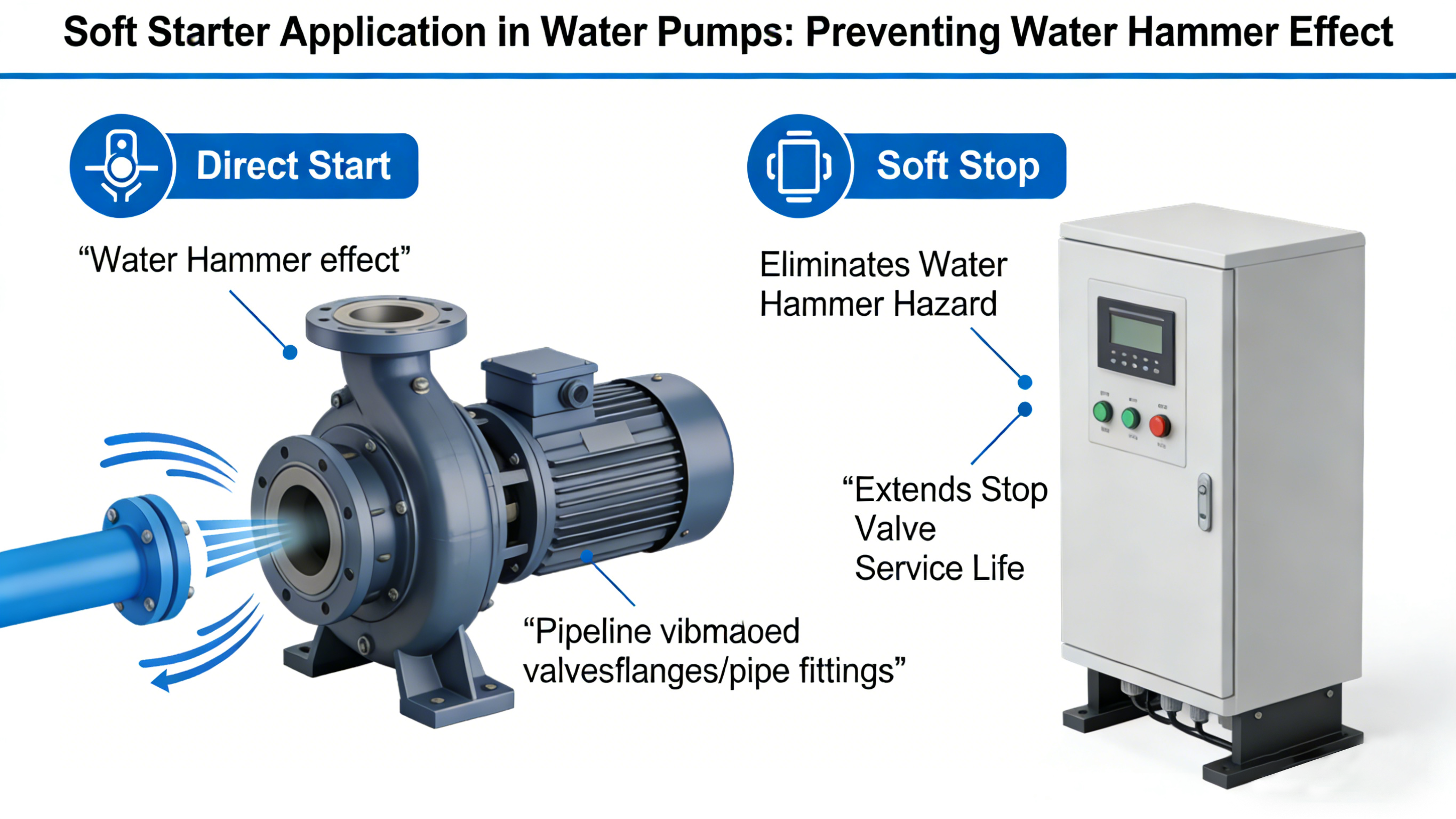
Pump systems represent the most typical and widespread application area for soft starters. When a centrifugal pump is started directly, the rapid surge in rotational speed causes an abrupt change in the liquid flow velocity within the piping, resulting in the "water hammer effect." In mild cases, this triggers pipe vibration; in severe cases, it leads to damage to valves, flanges, and pipe fittings. The soft-stop function of a soft starter ensures that the pump decelerates smoothly during the shutdown process, thereby fundamentally eliminating the hazards of water hammer and extending the service life of shut-off valves.
4.2 Fan Systems
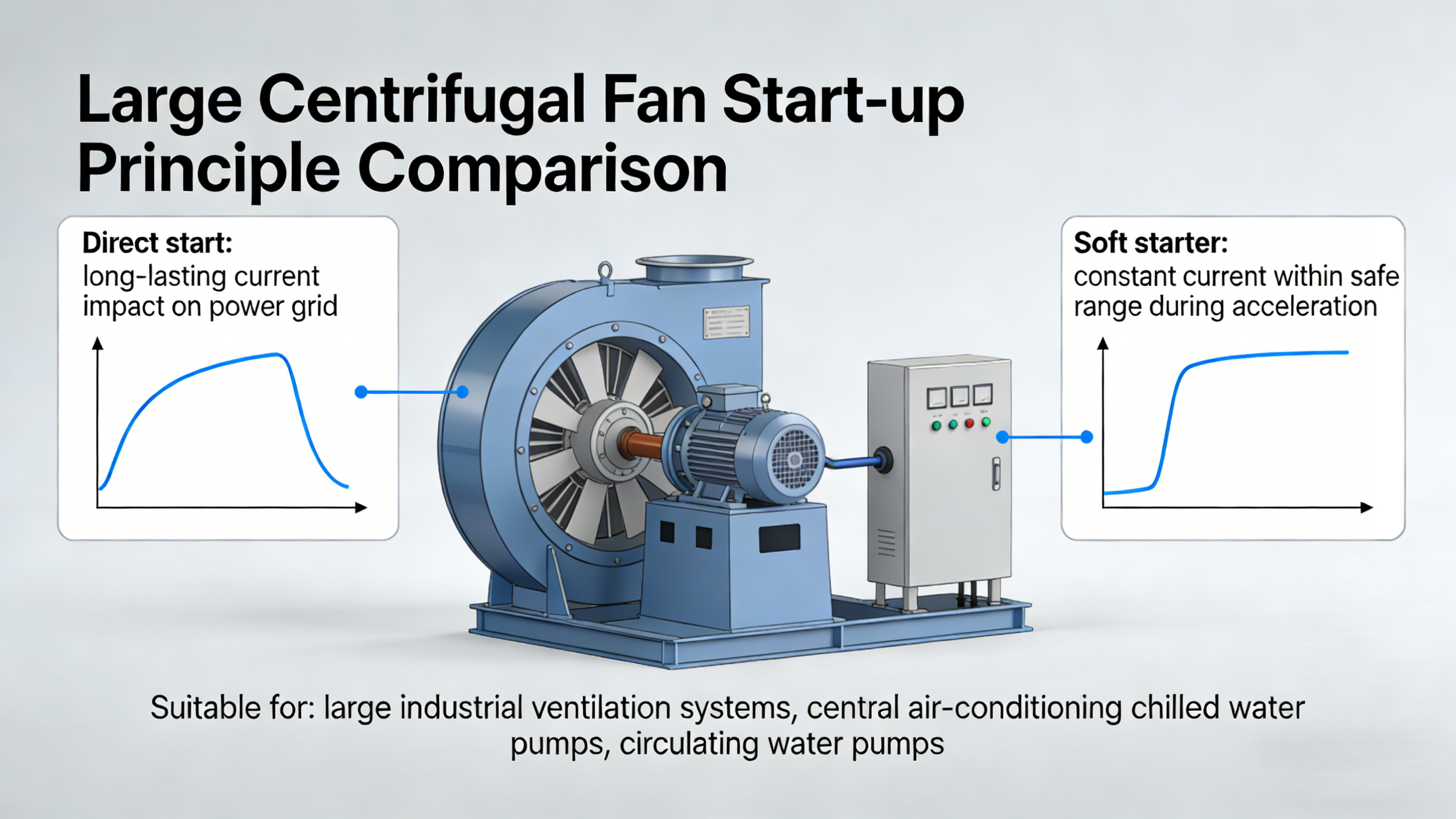
Large centrifugal fans possess significant rotational inertia; consequently, direct starting results in a prolonged duration of current surges, imposing a severe impact on the power grid. The constant-current starting mode of a soft starter maintains the current within a safe range throughout the fan's entire acceleration process. This feature is particularly well-suited for applications involving large-scale industrial ventilation systems, central air conditioning chilled water pumps, and circulating water pumps.
4.3 Compressors
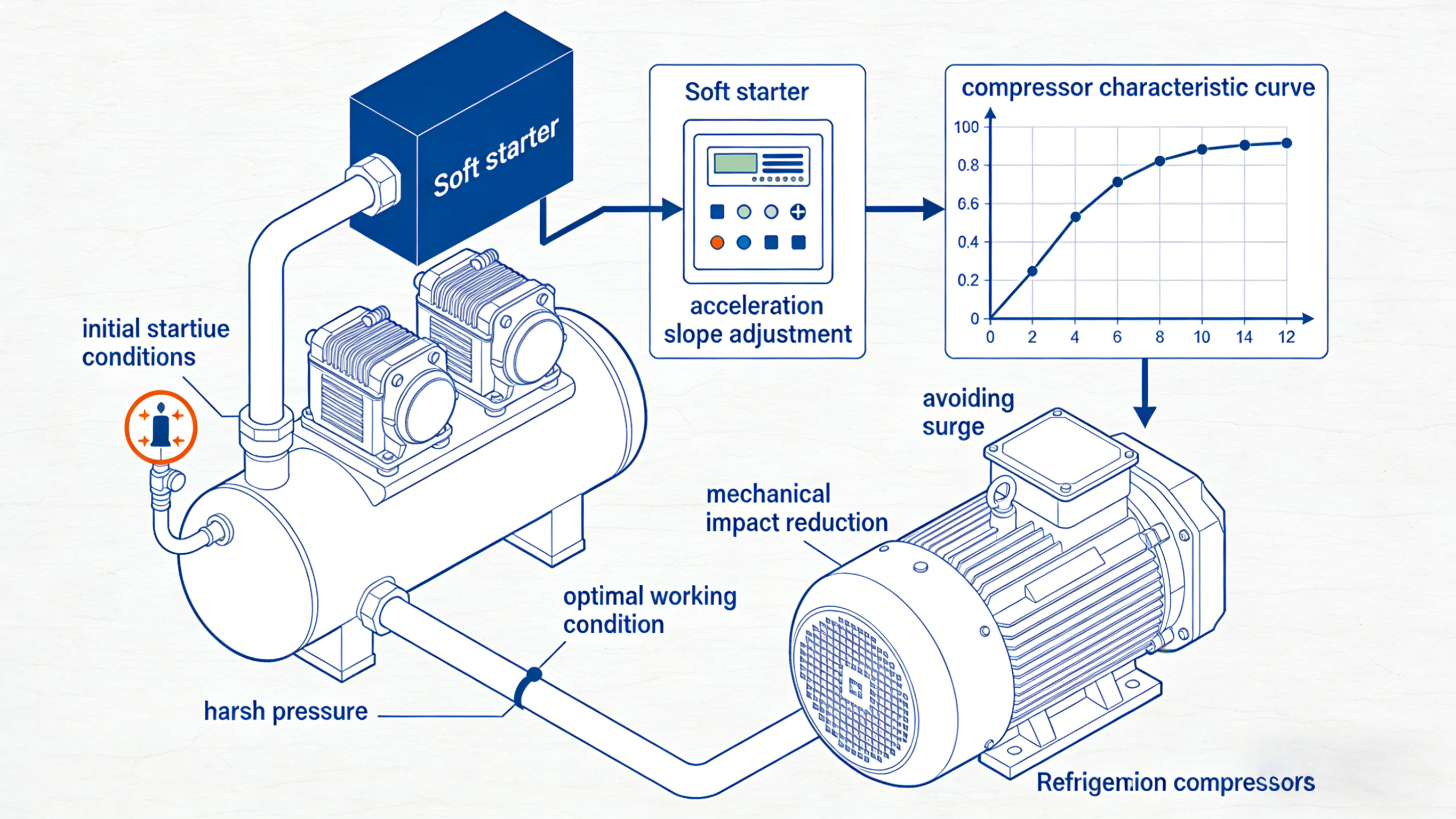
Air compressors and refrigeration compressors often face demanding starting conditions, as they must overcome pipeline back pressure the instant they begin operation. A soft starter allows for the precise configuration of initial torque and acceleration ramp rates based on the compressor's specific characteristic curves. This ensures that the compressor completes its start-up process under optimal operating conditions, thereby preventing surging and mechanical shock.
4.4 Conveyor Belts and Transport Systems
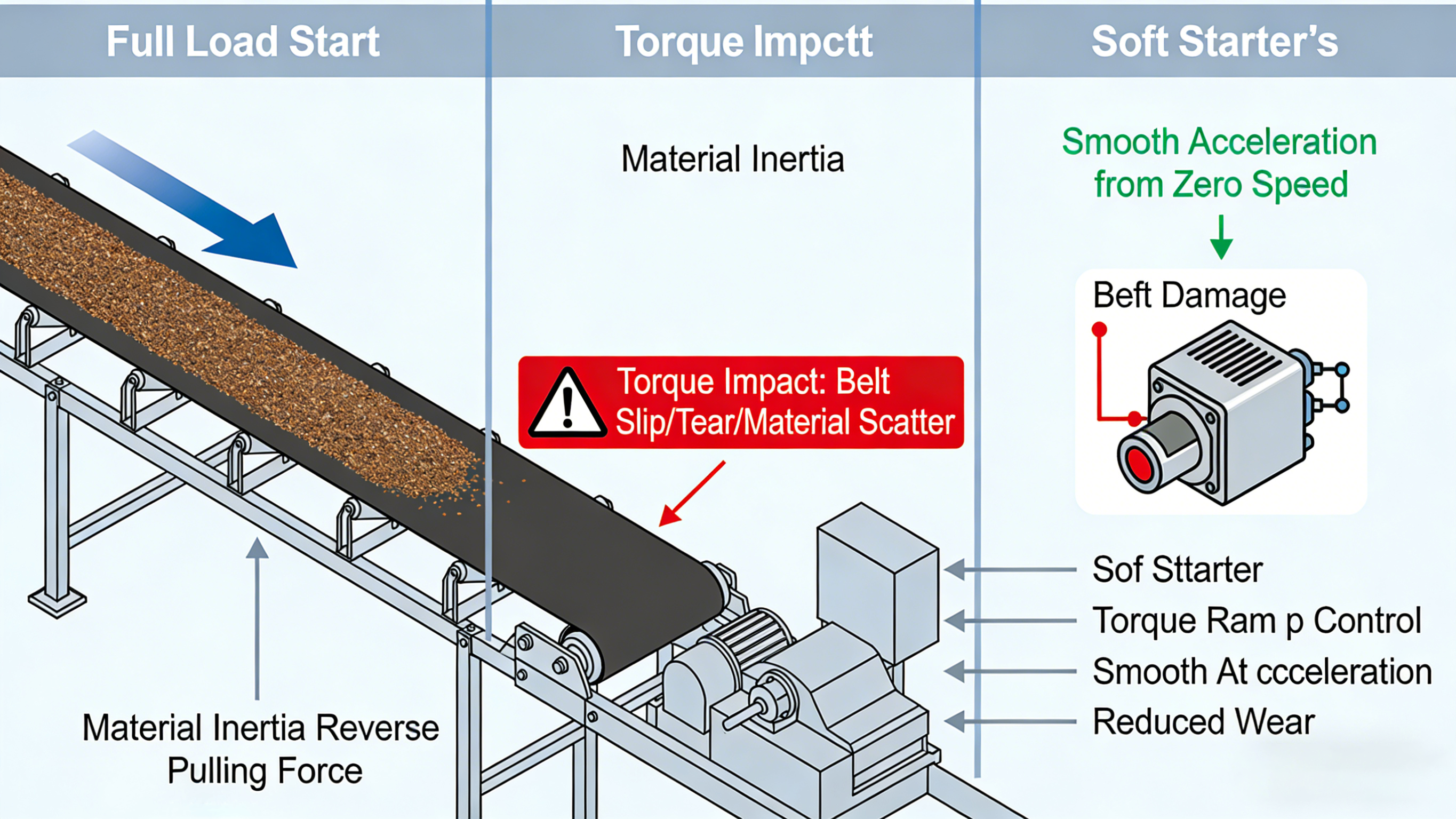
When a conveyor system starts under full load, the inertia of the conveyed materials generates immense counter-tension. The torque shock produced by direct starting can lead to belt slippage, tearing, or even the spillage of materials. The torque ramp control feature of a soft starter ensures that the conveyor accelerates smoothly from zero speed, significantly reducing wear and tear on the conveyor belt and drive components.
4.5 Mixers and Grinding Equipment
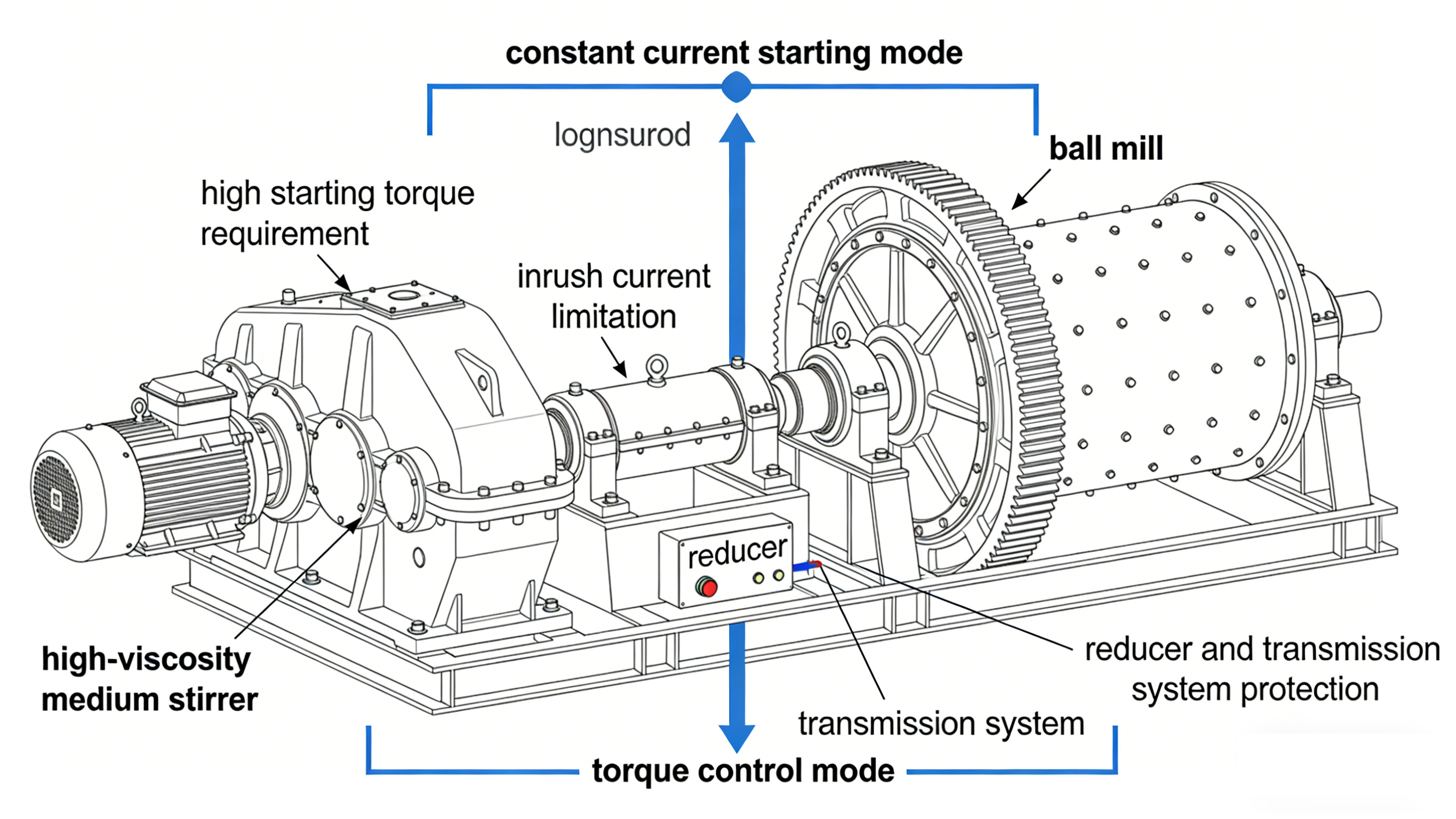
For heavy-duty machinery—such as mixers handling high-viscosity media or ball mills—the demand for starting torque is exceptionally high. Such applications require a combined approach utilizing both constant-current starting and torque control modes. This strategy ensures the provision of sufficient starting torque while effectively limiting inrush currents, thereby protecting the gearbox and the entire transmission system.
 V.In-Depth Comparison: Soft Starters vs. Variable Frequency Drives (VFDs)
In engineering practice, soft starters and Variable Frequency Drives (VFDs) are frequently considered as potential candidates within the same motor control solution. Understanding the technical differences between the two is a prerequisite for making sound engineering decisions.
|
Comparison Item
|
Soft Starter
|
Variable Frequency Drive (VFD)
|
|
Core Function
|
Start/Stop Protection, Current-Limited Soft Starting
|
Full-Range Speed Control, Precise Regulation
|
|
Speed Control Capability
|
None (Limited to Start/Stop Phase)
|
Continuously Adjustable Across Full Speed Range
|
|
Energy Efficiency
|
Moderate (During Start/Stop Phase)
|
Significant (Especially under Variable Load Conditions)
|
|
Initial Cost
|
Low
|
High (Approx. 2–4 times the cost of a soft starter)
|
|
Maintenance Complexity
|
Low
|
Relatively High
|
|
Installation Footprint
|
Compact
|
Larger
|
|
Harmonic Interference
|
Low
|
Relatively High (Requires Filters)
|
|
Typical Applications
|
Water Pumps, Fans, Compressors
|
Precision Equipment Requiring Speed Control
|
|
Overload Protection
|
Comprehensive Built-in Protection
|
Comprehensive Built-in Protection
|
5.1 Core Technical Differences
Once the motor reaches its rated speed, a soft starter disengages from the main circuit (via a bypass contactor); consequently, it possesses no capability to regulate motor speed during normal operation, and its functional scope is limited exclusively to the motor's starting and stopping phases.
In contrast, a Variable Frequency Drive (VFD) employs a three-stage architecture—rectification, filtering, and inversion—to convert the utility power supply into an AC power source with continuously adjustable frequency and voltage. This enables precise speed control across the entire operating range, from zero speed up to super-synchronous speeds, ensuring that the VFD remains actively involved in the control process throughout the motor's entire operation.
5.2 Selection Decision Logic
Engineering decisions may follow the following decision-making path:
- If the application requires only smooth starting and stopping, with no need for speed regulation → Prioritize the selection of a soft starter (lower cost, simpler maintenance).
- If the application requires continuous speed regulation throughout the operating range (e.g., energy-saving fans, pumps requiring precise flow control) → A VFD is mandatory.
- If the application requires high starting torque (e.g., fully loaded conveyor belts, large compressors) → A soft starter's torque control mode is capable of handling this requirement; however, if speed regulation is also required, a VFD should be selected.
- If the system is sensitive to harmonic distortion (e.g., in hospitals or environments housing precision instrumentation) → Soft starters generate lower harmonic injection and therefore possess an inherent advantage.
- If the budget is limited and speed regulation is not required → The initial cost of a soft starter is typically 25% to 50% of that of a VFD with equivalent power capacity.
VI.Engineering Selection Guide
6.1 Overview of Selection Dimensions
|
Selection Dimension
|
Key Considerations
|
Recommended Parameters
|
|
Motor Rated Power
|
Match Motor Nameplate Power
|
Soft Starter Power ≥ Motor Power
|
|
Power Supply Voltage Level
|
380V / 660V / Medium Voltage
|
Verify On-site Supply Voltage
|
|
Starting Torque Requirements
|
Load Starting Characteristics
|
Adjustable Range: 30%–100% of Rated Torque
|
|
Ambient Temperature
|
Cabinet Cooling & Derating
|
Standard: -10°C to +40°C
|
|
Protection Class (IP Rating)
|
Dusty/Humid Environments
|
IP20–IP65 (Select as Required)
|
|
Communication Protocols
|
Integration with PLC/SCADA
|
Modbus RTU / Profibus / EtherNet
|
|
Protection Functions
|
Load Protection Requirements
|
Overload, Phase Loss, Undervoltage, Thermal Protection
|
|
Certification Requirements
|
Market Access Standards
|
CE / UL / CCC, etc.
|
6.2 Recommendations for Key Parameter Settings
(1) Initial Voltage Setting
The initial voltage is typically set to 30%–50% of the rated voltage. For centrifugal loads (pumps, fans), 30%–40% is usually sufficient to provide the necessary starting torque; for heavy-duty, constant-torque loads (compressors, fully loaded conveyors), this value may be appropriately increased to 50%–60% to ensure the load can overcome the initial resistive torque.
(2) Start Time Setting
The start time (Ramp-up time) should be determined based on a comprehensive assessment of the load's GD² (flywheel moment) and specific process requirements. The general principle is that a longer start time results in lower current surges; however, if the start time is excessively long (typically >60 seconds), the prolonged current flow through the thyristors may cause overheating. In such cases, it is necessary to verify the soft starter's thermal capacity rating (specifically for S3 duty cycles).
(3) Current Limit Setting
In constant-current starting mode, the current limit value is typically set to 250%–350% of the motor's rated current. Setting this value too low may prevent the motor from starting or result in an excessively long start time; conversely, setting it too high defeats the purpose of current-limiting protection. It is recommended to use the maximum permissible voltage drop within the system as a constraint to calculate the maximum allowable starting current, and then set the current limit value accordingly.
6.3 Installation and Heat Dissipation Considerations
- The soft starter should be mounted vertically to ensure unimpeded natural convection cooling channels; a minimum clearance of 100 mm must be maintained both above and below the unit.
- When the ambient temperature exceeds 40°C, the soft starter's rated current capacity must be derated in accordance with the manufacturer's derating curves (typically a reduction of approximately 2% for every 1°C rise in temperature).
- When installed inside a control cabinet, ensure that the cabinet's forced ventilation and heat exchange capacity satisfy the requirements derived from thermal balance calculations.
- The soft starter should not be installed in environments containing corrosive gases, condensing moisture, or severe vibrations; if such conditions are unavoidable, select a specialized product with an enhanced protection rating (IP54/IP65).
6.4 Coordination with Upstream and Downstream Equipment
- Circuit Breaker: The tripping curve of the circuit breaker must be coordinated and synchronized with the soft starter's protection response sequence to prevent nuisance tripping of the circuit breaker caused by the soft starter's current-limiting function. **Input Reactor: In applications with strict requirements regarding grid harmonics, an input reactor can be installed on the input side of the soft starter to further suppress the injection of harmonic currents.
- Bypass Contactor: If an external bypass contactor scheme is utilized, ensure that the contactor engages only after the motor has reached its rated speed to prevent switching under impact current conditions.
- Communication Configuration: When integrating into a PLC or SCADA system, it is recommended to use the Modbus RTU protocol, configuring function blocks for start/stop commands, fault code retrieval, and operational status monitoring.
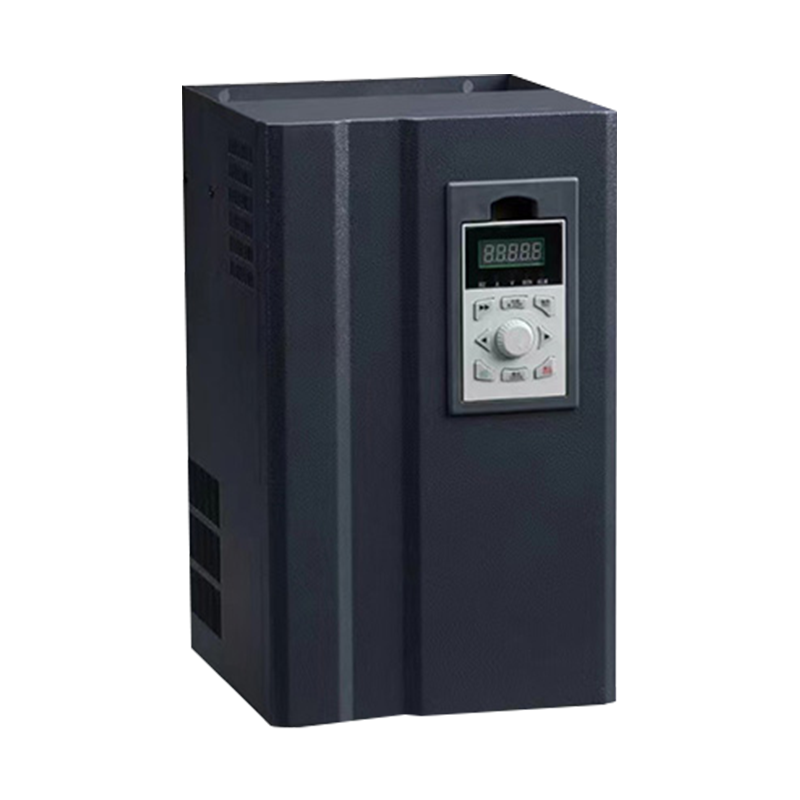
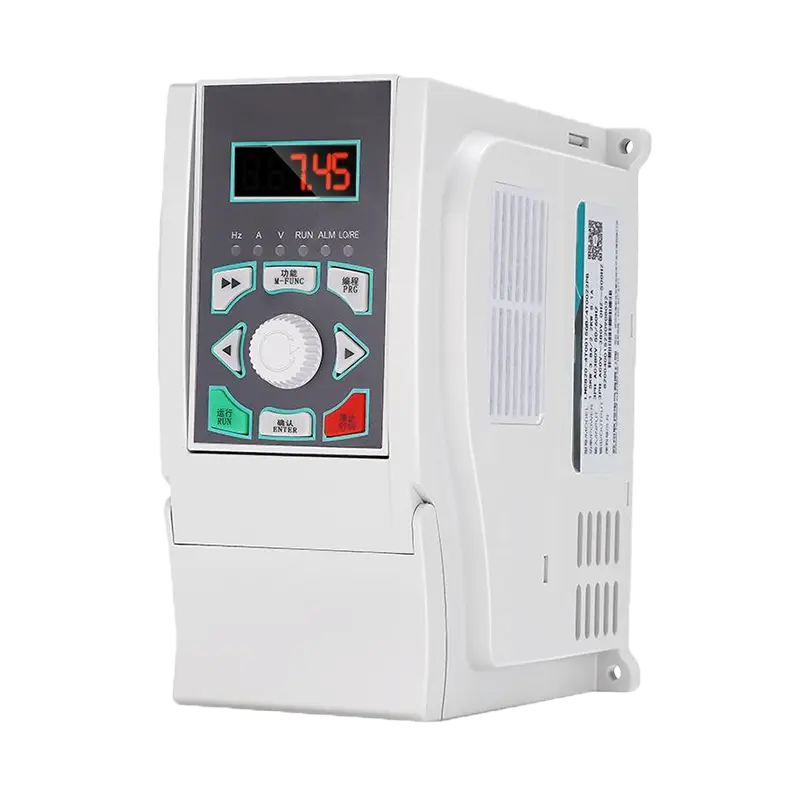
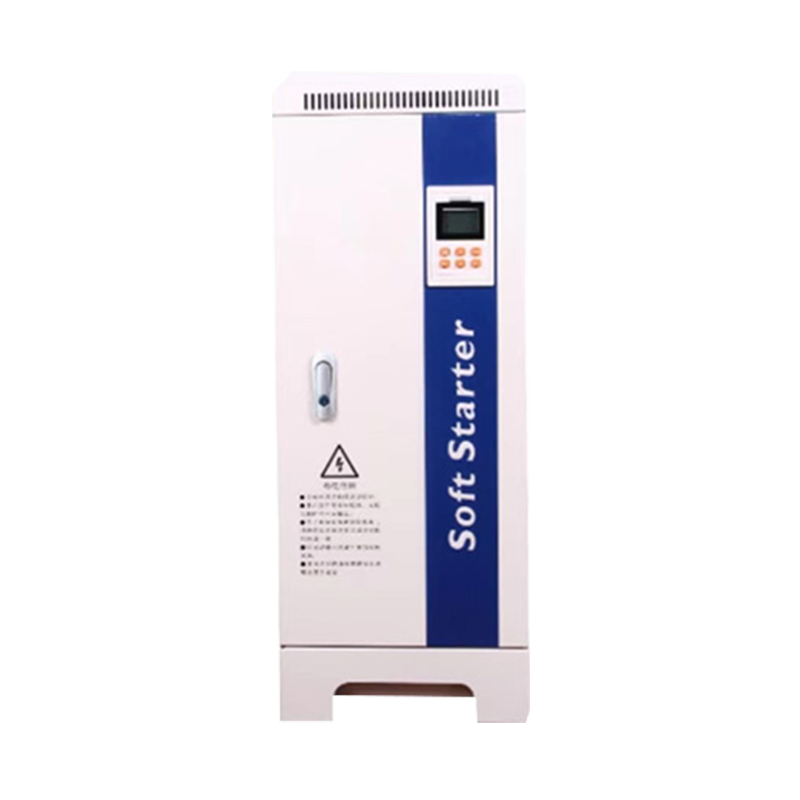
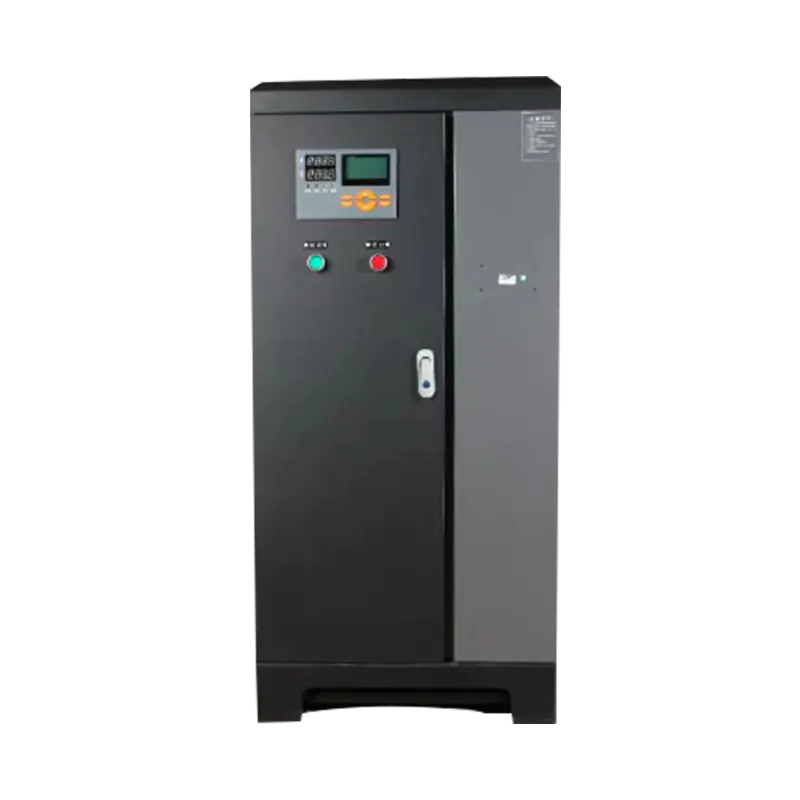
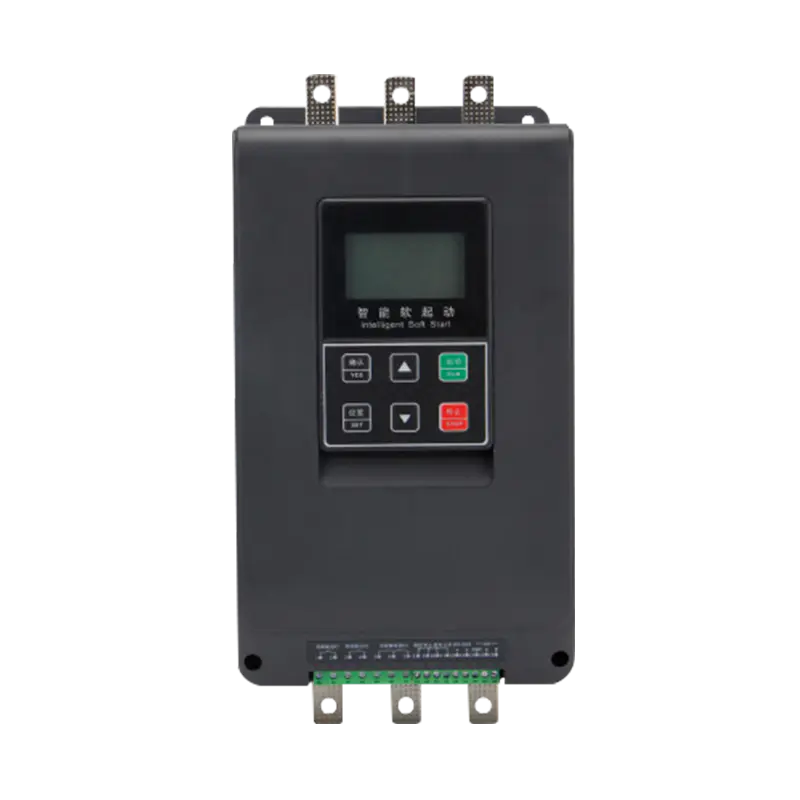
VII.Introduction to the NENA Soft Starter Product Series
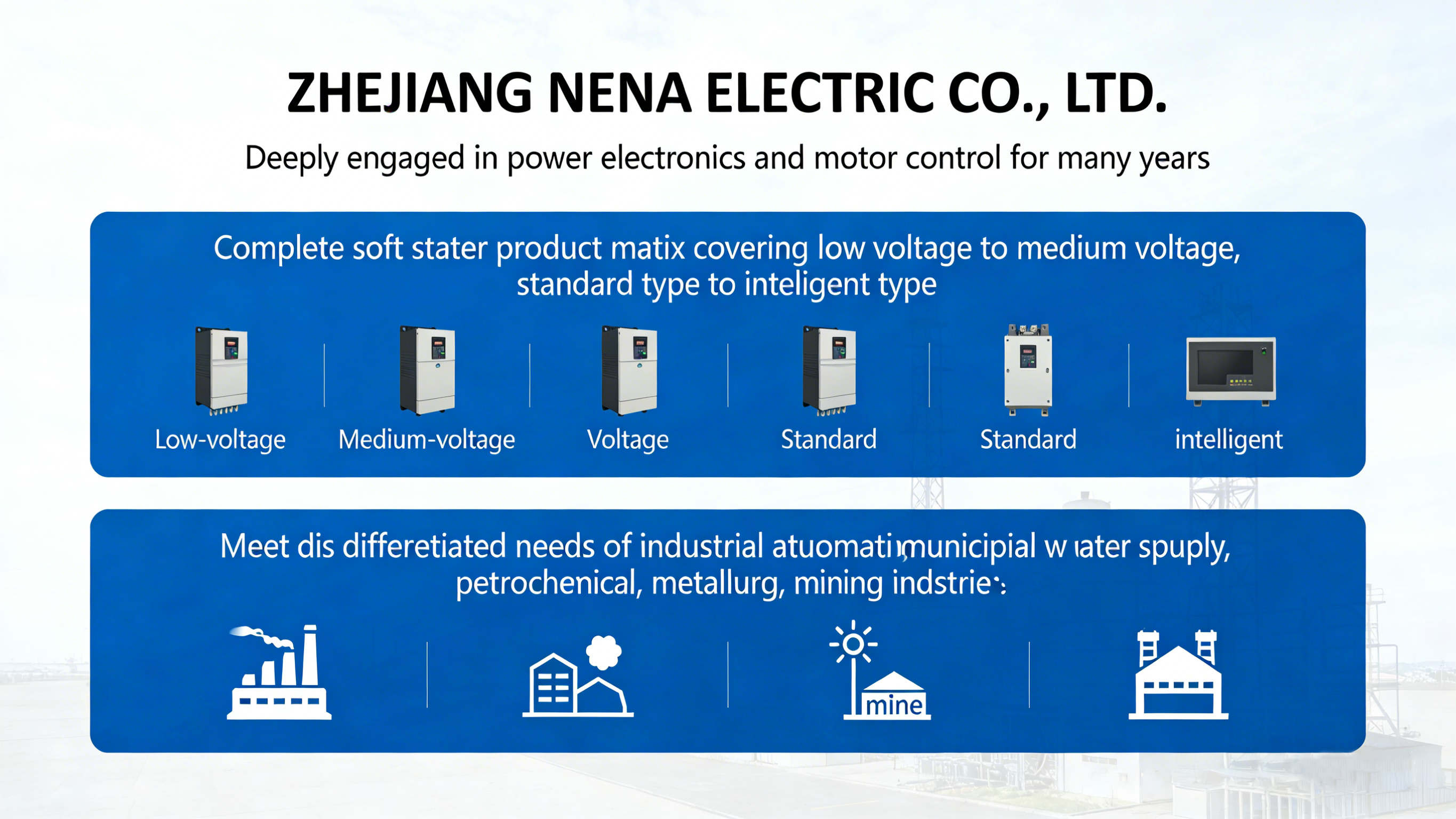
Zhejiang NENA Electric Co., Ltd. has dedicated itself to the fields of power electronics and motor control for many years. Driven by continuous investment in R&D, the company has established a comprehensive soft starter product matrix—spanning low-voltage to medium-voltage ranges, and standard to intelligent models—that fully meets the diverse and differentiated needs of various industries, including industrial automation, municipal waterworks, petrochemicals, metallurgy, and mining.
7.1 Core Product Features
- Wide Power Coverage:The product range covers power ratings from 5.5 kW to 2000 kW, supporting voltage levels across low-voltage series (200V–690V) as well as medium-voltage series (3 kV, 6 kV, 10 kV).
- Multi-Layered Protection Architecture: Integrates over 10 distinct protection functions, including overload, phase loss, undervoltage, overvoltage, ground fault, locked rotor, overheating, and start-up timeout.
- Intelligent Start-up Algorithms: Supports multiple start-up modes—such as voltage ramp, constant current limiting, torque control, and specialized pump control—with one-touch switching capability.
- Industrial Communication Interfaces: Features Modbus RTU as a standard configuration, with optional fieldbus interfaces such as Profibus-DP, PROFINET, and EtherNet/IP, enabling seamless integration into digital factory architectures.
- High-Reliability Design: Utilizes industrial-grade thyristors and features a built-in bypass contactor; boasts an MTBF (Mean Time Between Failures) exceeding 100,000 hours, with the entire product series holding CE and CCC certifications.
- User-Friendly Interface: Equipped with a 4-line LCD display and a rotary encoder, supporting both Chinese and English operation menus for intuitive and convenient parameter configuration.
7.2 Industry Solution Capabilities
NENA delivers system-level solutions that extend far beyond individual products. From comprehensive design schemes for Motor Control Centers (MCCs)—including factory pre-tuning of soft starter parameters and on-site commissioning support—to remote operation, maintenance, and diagnostic services, we provide all-encompassing assistance to help customers enhance equipment operational efficiency and reliability while reducing total lifecycle operating costs.
VIII.Conclusion
Leveraging precise thyristor phase control technology, soft starters effectively eliminate electrical and mechanical shocks during the critical start-up and shut-down phases of electric motors. This provides a robust technical safeguard for grid stability, motor longevity, and mechanical system reliability. Compared to Variable Frequency Drives (VFDs), soft starters offer significant cost advantages in applications where speed control is not required; conversely, when compared to traditional reduced-voltage starting methods, soft starters hold a decisive advantage in terms of overall performance sophistication and reliability.
As industrial automation and intelligent manufacturing continue to advance, a new generation of soft starters—featuring integrated fieldbus communication, intelligent protection diagnostics, and predictive maintenance capabilities—is emerging as a critical infrastructure component for the digital transformation of motor drive systems.
Zhejiang NENA Electric Co., Ltd. remains steadfast in its commitment to driving product evolution through technological innovation and empowering customer value through professional service. Should you require technical assistance with product selection or wish to explore customized solutions, we invite you to contact our team of expert engineers.
Reference Standards and Literature
- IEC 60947-4-2: Low-voltage switchgear and controlgear – AC semiconductor motor controllers and starters
- IEEE 519-2022: Standard for Harmonic Control in Electric Power Systems
- Eaton Corporation: "How to Choose Between a Soft Starter and a Variable Frequency Drive"
- Schneider Electric: "Soft Starter vs VFD: Key Differences and Application Guidelines"
- GB/T 21714-2023: General Technical Conditions for Soft Starters (Chinese National Standard)



 English
 中文简体
中文简体 عربى
عربى




 浙公网安备33038202003754号